Blog
Gardening has evolved far beyond choosing attractive plants and hoping for the best. Today’s informed gardeners recognize that successful, sustainable gardens are built on a foundation of strategic planning, scientific understanding, and awareness of the legal and environmental framework in which they operate. Whether you’re transforming a blank canvas or refining an established space, the decisions you make now will shape your garden’s performance, maintenance burden, and even your property’s value for years to come.
This comprehensive resource brings together the essential knowledge areas that distinguish thriving, low-maintenance gardens from those requiring constant intervention. From understanding how climate patterns are shifting hardiness zones to selecting the right rootstock for your fruit trees, from complying with drainage regulations to measuring soil health through biological indicators—each element plays a crucial role in creating a garden that works with nature rather than against it. The following sections will equip you with the frameworks, metrics, and practical insights to make informed decisions at every stage of your gardening journey.
Strategic garden planning and long-term design
The most successful gardens aren’t accidents—they’re the result of deliberate planning that considers both immediate needs and future evolution. A well-conceived master plan serves as your roadmap, allowing you to build in stages while ensuring each phase contributes to a coherent whole.
Why phased implementation saves money and stress
Many gardeners feel overwhelmed by the gap between their vision and their current resources. A master plan solves this by establishing the end goal while breaking implementation into manageable, budgeted phases. You might install hardscaping and primary structure in year one, major plantings in year two, and refinements in year three. This approach prevents costly mistakes—like installing a patio only to realize it blocks access to where your greenhouse should go—and allows you to learn from early phases before committing to later ones. Crucially, it also spreads costs across multiple seasons, making ambitious projects financially accessible.
The property value equation
Garden improvements can meaningfully impact property valuation, but not all projects deliver equal returns. Strategic investments in structured outdoor living spaces, mature screening, and well-maintained lawns typically show the strongest correlation with increased sale prices. A five-year planning horizon allows you to prioritize elements that add both functional value and market appeal—establishing trees that will reach meaningful size, developing attractive boundaries, and creating distinct zones that expand your home’s usable space. The key is selecting improvements that future buyers will value, not just personal preferences that appeal to a narrow audience.
Navigating the legal and regulatory landscape
Garden projects increasingly intersect with planning regulations, environmental legislation, and neighbor relations law. Understanding these requirements before you build can save you from expensive modifications or even enforcement action requiring complete removal of non-compliant structures.
Planning permission and permitted development
Not every garden project requires formal planning permission, but the boundaries can be surprisingly complex. Decking, for instance, may be permitted development in most locations but requires full planning permission within conservation areas or if it raises the ground level significantly. Similarly, outbuildings, garden rooms, and even substantial alterations to boundary treatments may trigger planning requirements depending on their size, height, and proximity to boundaries. The safest approach is to consult your local planning authority’s guidelines before purchasing materials or hiring contractors.
Permeable surfacing requirements
Recent regulatory changes have made drainage and permeability central considerations for any new hard surfacing. Driveways and large paved areas must now allow water infiltration to reduce surface runoff and flooding risk. This means traditional impermeable concrete or tarmac installations may not comply with current standards unless they incorporate drainage to permeable areas. Gravel, permeable pavers, and porous resin-bound surfaces offer compliant alternatives that can be just as durable and attractive while managing water responsibly.
High hedges and boundary disputes
Your privacy screening can become a legal liability if it grows beyond acceptable limits. The High Hedges Act provides a framework for resolving disputes when evergreen barriers exceed two meters in height and cause demonstrable harm to neighbors through excessive shading or imposing presence. While you have every right to establish effective screening, being aware of these thresholds can help you select appropriate species, plant at reasonable distances, and maintain hedges at heights that provide privacy without triggering complaints or enforcement action.
Water use restrictions and irrigation systems
During periods of water scarcity, hosepipe bans restrict certain uses—but the specifics matter. Drip irrigation systems are often exempt from standard hosepipe bans because they deliver water efficiently to root zones with minimal waste, unlike sprinklers or handheld hoses used for general watering. Understanding which systems remain legal during restrictions can inform your irrigation choices, potentially allowing you to maintain vulnerable plants even during dry spells when conventional watering is prohibited.
Understanding your growing environment
Successful plant selection begins with honest assessment of what your site can support. No amount of care can permanently sustain plants fundamentally mismatched to their environment—a principle that becomes clear when attempting to grow calcifuges like rhododendrons on alkaline soil.
Climate shifts and hardiness zone redefinition
Gardeners have long relied on hardiness zone maps to determine which plants can survive winter temperatures in their area. However, changing climatic patterns are rendering older zone classifications increasingly unreliable. Many regions are experiencing warmer winters, altered rainfall patterns, and shifting last-frost dates. This creates both opportunities—marginally hardy plants now succeeding where they once failed—and risks, as traditional reliable performers struggle with new temperature extremes or moisture patterns. Staying informed about updated zone classifications and observing actual conditions in your microclimate helps you make plant selections based on current reality rather than outdated assumptions.
Soil pH and the limits of amendment
Perhaps no gardening principle is more frequently violated than matching plants to existing soil pH. While you can temporarily modify soil chemistry, attempting to permanently alter fundamental soil character is a losing battle. Chalky soils will always revert to alkalinity; trying to grow acid-loving plants in them requires constant amendment, creates nutrient imbalances, and ultimately fails. The most sustainable approach is to embrace your soil’s natural pH and select plants adapted to those conditions—or to grow incompatible plants in containers with appropriate growing media.
Drainage and air-filled porosity
Healthy root systems require both moisture and oxygen. In containers especially, understanding air-filled porosity—the percentage of growing medium volume occupied by air after drainage—is crucial. Too little air space leads to waterlogging and root disease; too much results in growing media that dries out too rapidly. A simple drainage test, measuring how quickly water percolates through your potting mix, helps you assess whether your medium provides the balance most plants need, typically around 10-20% air-filled porosity after watering. Adjusting with grit, perlite, or organic matter allows you to optimize structure before problems develop.
Plant selection and establishment strategies
The form in which you purchase plants and the rootstocks onto which fruit trees are grafted have profound implications for establishment speed, ultimate size, and long-term performance.
Bare-root versus container-grown plants
The debate between bare-root and pot-grown plants centers on establishment vigor versus convenience. Bare-root specimens, available during dormancy, typically establish more robust root systems because they haven’t spent months circling in containers developing problematic root structures. They’re also significantly less expensive and easier to transport. However, they must be planted during a narrow window in the dormant season. Container-grown plants offer planting flexibility throughout the growing season and immediate visual impact, but may take longer to establish truly strong, radiating root systems. For hedging, fruit trees, and roses, bare-root often delivers superior long-term results; for perennials and specimens requiring specific placement timing, containers provide practical advantages.
Decoding rootstock designations
When selecting fruit trees, the rootstock designation—such as M27, M9, or MM106—determines far more than just ultimate tree size. These coded rootstocks control vigor, influence fruiting precocity, affect disease resistance, and dictate anchorage requirements. M27, for instance, produces extremely dwarfing trees suitable for containers or very small spaces, but requires permanent staking and excellent soil. More vigorous rootstocks create larger trees requiring less intensive management but more space. Understanding these designations allows you to match the tree not just to your available space but to your maintenance willingness and soil quality.
Award schemes and performance indicators
The RHS Award of Garden Merit (AGM) logo signals that a plant has demonstrated excellent performance, availability, and disease resistance in trials. While not an absolute guarantee—local conditions always matter—AGM designation provides a useful filter when choosing among similar varieties. However, it’s worth understanding that these awards are periodically reviewed and sometimes withdrawn if cultivars decline in quality or better alternatives emerge. Using AGM as one factor among several—alongside suitability to your specific conditions and aesthetic preferences—helps narrow options without eliminating potentially perfect choices that may not have been formally trialed.
Light requirements for early propagation
Starting seeds indoors extends the growing season but raises the question of whether windowsill light suffices or supplementary grow lights are necessary. In late winter, when many gardeners begin sowing, natural daylight is both weak and brief. Windowsill seedlings often become etiolated—stretched and weak—as they strain toward insufficient light. Dedicated grow lights positioned close to seedlings provide the intensity and duration needed for compact, sturdy growth. For occasional propagation, a bright south-facing windowsill may suffice with careful management, but serious seed-raising, especially of light-demanding species in early spring, benefits enormously from supplementary lighting.
Sustainable and regenerative growing practices
Truly sustainable gardening means creating systems that require decreasing intervention over time, building soil health, supporting beneficial organisms, and selecting practices appropriate to specific plants and conditions.
Matching mulch to plant requirements
The common advice to mulch everything with organic matter is dangerously oversimplified. While moisture-loving, nutrient-demanding plants thrive with composted bark or leaf mold, Mediterranean herbs like thyme and oregano actively suffer under organic mulches. These plants evolved in lean, free-draining soils and rot when surrounded by moisture-retentive, nutrient-rich decomposing material. For such plants, gravel mulch provides weed suppression and moisture conservation while maintaining the sharp drainage and lean conditions they require. Successful mulching means matching material to plant ecology, not applying a universal solution.
Efficient irrigation and water management
Beyond legal compliance during restrictions, drip systems represent best practice for water efficiency. By delivering water directly to root zones at slow rates, they minimize evaporation, reduce disease pressure from wet foliage, and ensure deep water penetration that encourages robust root development. Initial installation requires more planning than simply dragging a hose around, but the long-term savings in water, time, and plant health make properly designed drip systems valuable investments, particularly for vegetable gardens, mixed borders, and any areas not suited to drought-tolerant planting.
Disease prediction through environmental monitoring
Many fungal and bacterial diseases require specific environmental conditions—particularly leaf wetness duration—to infect plants. By monitoring how long foliage remains wet after rain or dew, you can predict infection risk for common diseases and time preventive treatments more precisely. This approach moves from calendar-based spraying to condition-triggered intervention, reducing chemical use while improving effectiveness. Simple wetness sensors or even careful observation of drying patterns helps you understand your garden’s disease pressure and make informed protection decisions.
Regenerative approaches and biological indicators
The ultimate goal of sustainable gardening is creating self-regulating systems that maintain fertility and pest balance with minimal external input. Soil biology—particularly earthworm populations—provides tangible evidence of improving soil health. A simple worm count, conducted by excavating a measured soil volume and tallying individuals, offers a practical metric for tracking regeneration success. Increasing worm populations over a twelve-month period indicate improving organic matter, better structure, and more active nutrient cycling. The question becomes not whether to stop inputs entirely, but how to gradually reduce intervention as soil biology strengthens and natural balances establish themselves.
The transition from conventional to regenerative management isn’t instantaneous. Most gardens require several years of reduced tillage, appropriate organic matter addition, and minimized chemical disruption before biological systems robust enough to largely self-manage develop. Patience and measurement—through indicators like worm counts, soil structure assessment, and observation of pest-predator balance—help you recognize when your garden is genuinely transitioning to a lower-input equilibrium rather than simply being neglected.
Successful gardening synthesizes art and science, personal vision and ecological reality, immediate aesthetics and long-term sustainability. By grounding decisions in evidence—understanding how plants actually establish, what regulations actually require, how soil systems actually function—you create gardens that deliver more pleasure with less frustration. Each topic explored here opens into deeper specialist knowledge; your journey forward depends on which aspects most align with your specific site, goals, and curiosity. The foundation, however, remains constant: informed choices, appropriate to context, implemented with patience and attention to how your garden actually responds.
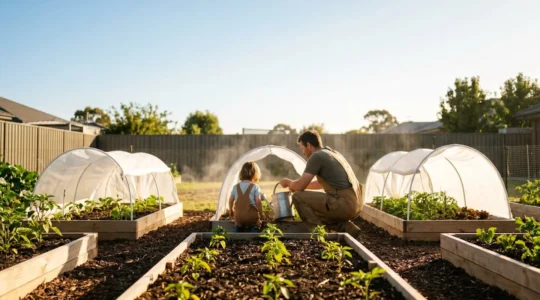
Heatwave Red Alert: A UK Gardener’s Emergency Guide to Saving Your Plants
In summary: When temperatures pass 30°C, your garden’s survival depends on rapid, intelligent action, not just more water. Effective shading, smart watering timing, and the right mulch are your three most powerful tools for immediate thermal triage. Reviving heat-stressed plants…
Read more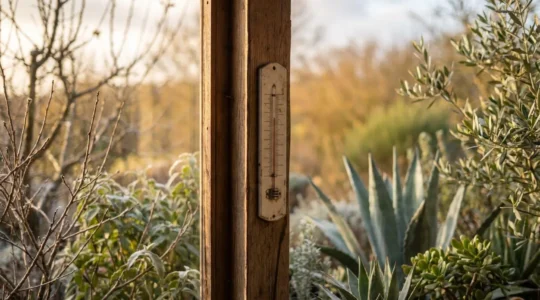
Redrawing the Map: How Climate Change Redefines UK Gardening Beyond Hardiness Zones
The traditional RHS hardiness map is becoming a lagging indicator; true climate resilience comes not from chasing zones, but from re-engineering your garden as a dynamic ecosystem designed to absorb volatility. Warmer winters don’t just mean fewer frosts; they enable…
Read more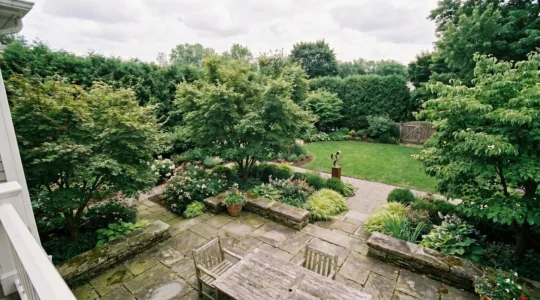
Long-Term Garden Strategy: A 5-Year Roadmap to Maximise Property Value
The biggest mistake homeowners make is treating their garden as a decoration; the biggest gains come from managing it as a long-term financial asset. Prioritising hardscaping and infrastructure *before* planting can prevent the loss of 30-50% of your vegetation investment….
Read more