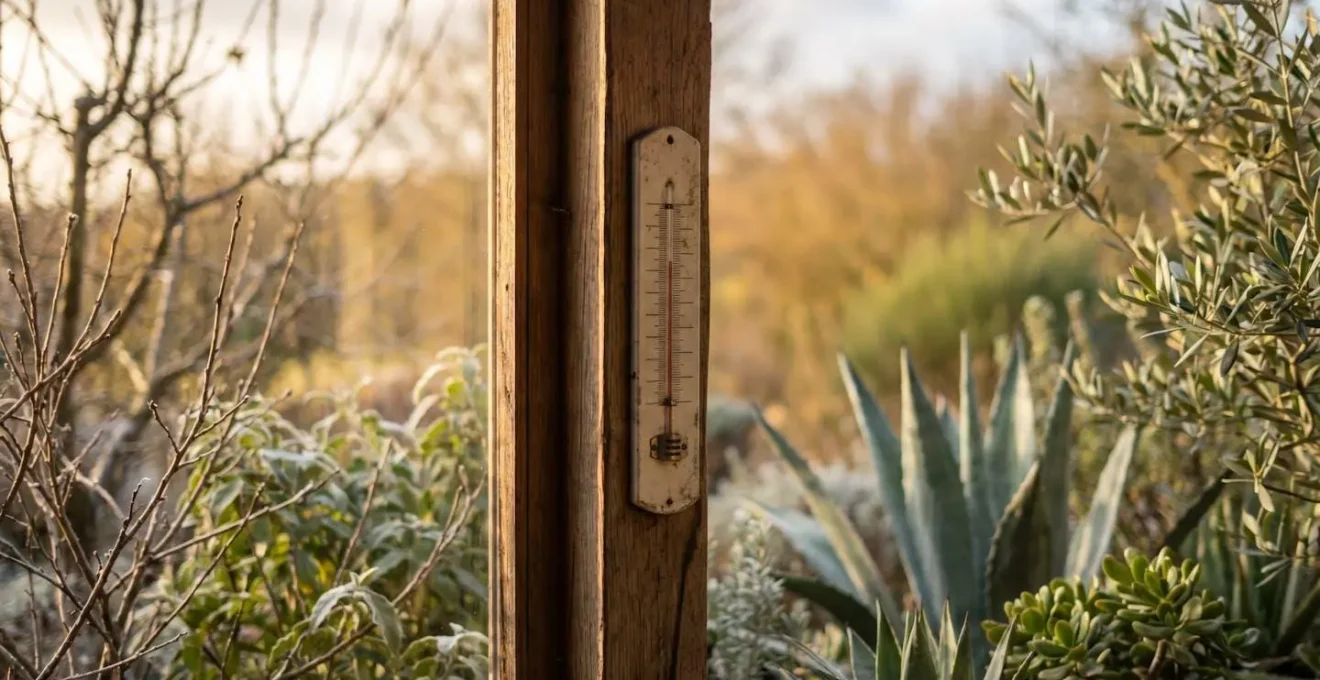
The traditional RHS hardiness map is becoming a lagging indicator; true climate resilience comes not from chasing zones, but from re-engineering your garden as a dynamic ecosystem designed to absorb volatility.
- Warmer winters don’t just mean fewer frosts; they enable pest populations to survive and thrive, requiring active, year-round management.
- Earlier springs create a “phenological mismatch,” paradoxically increasing the risk of devastating late frost damage to premature blooms and foliage.
Recommendation: Shift from static, calendar-based gardening to a dynamic, observation-led approach focused on building systemic resilience in your soil, water systems, and plant diversity.
For the long-term gardener, the signs are undeniable. Tender plants that once required a winter fleece now stand defiant through January. Spring seems to arrive weeks earlier, only to be ambushed by a vicious April frost. These are not isolated quirks of weather; they are data points indicating a fundamental shift in our climate. The traditional RHS hardiness zones, our reliable guides for decades, are struggling to keep pace with this new, volatile reality. Many gardeners now focus on planting more exotic, Mediterranean species, seeing the opportunity in warmer temperatures.
But this view is dangerously incomplete. Simply swapping a delphinium for a lavender bush misses the profound strategic challenge. The issue is not just a gentle warming, but an increase in extremes: intense rainfall followed by prolonged drought, unseasonably mild winters that fail to kill off pests, and the deceptive promise of an early spring. Relying solely on a shifting hardiness zone is like navigating a storm with a map of yesterday’s tides. The true task ahead is not to simply react to change, but to proactively redesign our gardens from the ground up.
This requires a paradigm shift. We must move beyond viewing the garden as a static collection of plants and begin treating it as an interconnected, dynamic system. This article will deconstruct the key climatic challenges redefining UK gardening and provide a data-backed framework for building a truly resilient garden. We will explore how to manage overwintering pests, select plants for a future of extremes, mitigate the paradoxical danger of late frosts, and engineer systems for water, wind, and diversity that can withstand the unpredictable decades to come.
To navigate these new challenges, it is essential to understand the distinct but interconnected factors at play. The following sections break down the core components of building a climate-resilient garden, offering strategic insights and practical actions for each.
Summary: A Strategic Guide to Climate-Resilient Gardening in the UK
- Why Pests No Longer Die off in Winter and What to Do?
- Plants for 2030: Selecting Species for Hotter, Drier Summers
- The Late Frost Danger: Why Earlier Springs Are More Destructive?
- Tanks or Ponds: Storing Water for the ‘New Normal’ Rainfall Patterns
- When to Prune in a Year Without a Real Winter?
- The Monoculture Risk: Why Diversity is Your Insurance Policy?
- How to Position Windbreaks Without Creating Damaging Turbulence?
- Designing for Climate Resilience: Gardens That Survive Flood and Drought
Why Pests No Longer Die off in Winter and What to Do?
One of the most immediate consequences of our changing climate is the breakdown of a crucial natural control: the winter cold snap. For generations, gardeners have relied on hard frosts to decimate populations of overwintering pests and their eggs. This ecological service is failing. Milder, wetter winters now provide a haven for aphids, slugs, and other damaging insects, allowing them to remain active or emerge far earlier in the season. This isn’t anecdotal; data-backed research confirms this trend. For instance, studies using long-term suction trap records have demonstrated that extremely mild winters are directly linked to the earlier spring flight of damaging species like the peach-potato aphid in the UK.
This means our pest management strategies must evolve from seasonal reactions to a year-round, integrated approach. The old model of “spray when you see them” is insufficient when pest pressure is constant. The new imperative is to build systemic resilience by fostering a garden ecosystem that actively polices itself. This involves a two-pronged strategy: diligent monitoring and the deliberate creation of habitat for natural predators.
Instead of waiting for an infestation, we must become proactive observers, tracking the first signs of pest activity and correlating it with weather patterns. Simultaneously, we must turn our gardens into sanctuaries for beneficial insects like lacewings, hoverflies, and ladybugs, as well as birds and bats. By providing year-round food sources, water, and shelter for these allies, we create a standing army of pest controllers that remains effective even through the mildest of winters. This approach transforms the garden from a vulnerable monoculture into a robust, self-regulating community.
This shift from reactive to proactive management is the first pillar of a climate-resilient garden, turning a growing threat into an opportunity for deeper ecological engagement.
Plants for 2030: Selecting Species for Hotter, Drier Summers
The allure of planting an olive or citrus tree in a British garden is powerful, a tangible symbol of our changing climate. While this is an exciting prospect, a truly visionary planting strategy for the coming decades goes far beyond simply choosing “drought-tolerant” species. We must think in terms of legacy and system functionality, selecting plants that not only survive hotter, drier summers but also contribute to the overall resilience of the garden ecosystem. The stakes are high; globally, climate change research reveals that drought costs the agricultural industry an estimated $80 billion per year, a stark reminder of water’s critical role.
This calls for a portfolio diversification approach to planting. Your ‘blue-chip stocks’ are the long-lived, deep-rooted trees and shrubs adapted to both drought and occasional deluges—think species like ornamental oaks, Cistus, or Phlomis. These form the structural backbone of the garden. The next layer is your ‘growth stocks’: perennials and grasses that are quick to establish and offer high rewards in terms of pollinator support and aesthetic value, but may require more active management. Finally, your ‘speculative assets’ are the more tender, experimental plants that you can afford to lose in a harsh year. This layered strategy ensures your garden as a whole remains stable, even if some components fail.
Beyond individual species, consider the function. Plants with silvery or hairy leaves (stachys, artemisia) are masters of reflecting sunlight and reducing water loss. Those with extensive fibrous root systems (many ornamental grasses) are brilliant at binding soil and preventing erosion during intense downpours. Selecting plants is no longer just a matter of aesthetics; it’s an act of ecological engineering for a future climate.
This long-term perspective, as visualized by the act of planting a sapling, transforms gardening from a seasonal hobby into an act of legacy-building. Each carefully chosen plant is an investment in a future where the garden not only survives but thrives, adapting alongside the climate. It’s about creating a living inheritance that is beautiful, functional, and resilient.
Ultimately, the plants we choose for 2030 and beyond will define the character and viability of our gardens in a profoundly altered world.
The Late Frost Danger: Why Earlier Springs Are More Destructive?
Paradoxically, one of the greatest threats in a warming world is the cold. Specifically, the late spring frost. As winters become milder, plants are tricked into breaking dormancy and producing tender new growth and blossoms weeks ahead of their traditional schedule. This premature growth is exceptionally vulnerable. When an inevitable, seemingly random late frost event occurs in April or even May, the damage can be catastrophic, wiping out an entire season’s worth of fruit or flowers. This phenomenon, known as phenological mismatch, is where the timing of a plant’s life cycle becomes dangerously out of sync with the season’s climatic realities.
This is not a hypothetical risk. It is a documented and increasing threat. Rigorous analysis by the World Weather Attribution Network found that climate change made late frosts in spring 2021 20% to 120% more likely in Western Europe. The warmer the baseline, the more advanced the plant growth, and the more devastating the impact of any subsequent cold snap. This creates a high-stakes gamble for gardeners and commercial growers alike.
The vulnerability to this mismatch is not uniform across all species, which provides a crucial insight for strategic garden design. It highlights the importance of understanding the ecological origin and strategy of the plants we cultivate.
Case Study: The European Vulnerability to Phenological Mismatch
A comprehensive 59-year analysis of late-spring frost occurrences has revealed a telling divergence between continents. The study found that 35% of European and 26% of Asian temperate forests now face increasing frost damage, while this threat only applies to 10% of North American forests. The reason lies in evolutionary strategy. Many European and Asian woody species are ‘opportunistic’, rapidly responding to the first signs of warming air to get a head start. In contrast, many North American species are more ‘conservative’, relying on other cues like day length, which makes them less likely to be fooled by an early warm spell. This research underscores that in our new climate, the ‘opportunistic’ strategy of many native and long-cultivated European plants has become a significant liability.
Mitigating this risk involves diversifying our planting portfolios to include more ‘conservative’ species, using horticultural fleece not as an afterthought but as a planned intervention, and carefully siting vulnerable plants in sheltered microclimates. The late frost is a potent reminder that climate change is not a simple linear warming, but a chaotic disruption of long-established natural rhythms.
Tanks or Ponds: Storing Water for the ‘New Normal’ Rainfall Patterns
The climate ‘new normal’ for the UK is not just about a lack of water, but about its delivery. We are seeing a marked shift towards a more Mediterranean pattern: long, dry spells punctuated by intense, almost tropical downpours that result in significant run-off and flash flooding. For the gardener, this means that rain, when it comes, is an increasingly precious resource that must be captured and stored. Relying on mains water is not only expensive and unsustainable but will likely face restrictions during the prolonged droughts that are becoming more common. The key to water security in the garden is to view every surface as a potential catchment area.
The potential is enormous and often underestimated. The average house roof is a highly efficient water collector. Simple calculations from home rainwater harvesting demonstrate that one inch of rain runoff from a 1,000-square-foot roof yields 600 gallons of water—over 2,700 litres. This is not insignificant; it is a strategic reserve that can mean the difference between a thriving garden and a desiccated landscape during a summer drought. The challenge lies in creating sufficient storage capacity to bridge the dry periods.
This requires an engineered ecology approach to water. Simple water butts are a starting point, but a resilient system requires thinking bigger. This could involve linking multiple butts together, investing in large-capacity tanks (from 1,000-litre IBCs to larger modular systems), or integrating natural storage solutions like a wildlife pond or a dedicated rain garden. A rain garden is a shallow depression planted with water-loving species, designed to hold and slowly absorb overflow from tanks, recharging groundwater instead of overwhelming drains. Ponds, meanwhile, act as significant reservoirs while also creating vital habitat. The choice between a tank or a pond is not an either/or; a truly resilient system often integrates both, creating a network of hard and soft water storage solutions tailored to the garden’s specific needs and topography.
By transforming our mindset from water consumer to water harvester, we take a critical step towards creating a self-sufficient and climate-proof garden.
When to Prune in a Year Without a Real Winter?
The gardener’s calendar, with its comforting list of monthly tasks, is rapidly becoming obsolete. Nowhere is this more evident than with pruning. “Prune roses in February,” “Trim wisteria after flowering”—these fixed-date adages were based on a predictable climate with a distinct, dormant winter. In a year without a real winter, where plants may show new growth in January, these rules become not just irrelevant but potentially harmful. Pruning at the wrong time can stimulate soft, vulnerable growth that is immediately damaged by a late frost, or it can remove flower buds that have formed unseasonably early.
The solution is to abandon the calendar and learn to read the language of the plants themselves. An adaptive pruning protocol replaces rigid dates with observation-based cues. This means assessing each plant individually and pruning based on its specific signals and the garden’s immediate microclimate. Is the sap rising? Are the buds swelling? Has the first major flush of growth hardened off? These are the new triggers for action. This approach requires more skill and attention than following a simple schedule, but it is the only way to prune effectively and safely in our new, unpredictable climate.
This observational method also allows for more strategic, long-term plant management. In a stressful climate, shrubs can become less productive. Instead of hard-pruning a stressed plant, which can be a shock, a multi-year rejuvenation pruning can be implemented. By removing one-third of the oldest, woodiest stems each year, the plant is gradually renewed, turning climate stress into an opportunity for regeneration. This is a far more nuanced and resilient approach than the wholesale cutting dictated by the old calendar.
Your Action Plan: An Adaptive Pruning Protocol
- Observe Plant-Specific Cues: Prioritise plant signals over calendar dates. Prune after the first main flush of spring growth completes or when new buds begin swelling, rendering fixed schedules obsolete.
- Implement Rejuvenation Pruning: For stressed shrubs showing reduced productivity, remove one-third of the oldest stems annually over three years. This turns climate stress into a gradual renewal opportunity.
- Conduct Risk-Assessment Pruning: Focus winter pruning on structural integrity. Prevent wind-rock damage in waterlogged soils and reduce potential snow-load on evergreens, even in mild, snow-free winters.
- Use Phenology Indicators: Utilise cues from hardy native trees (e.g., oak leaf emergence) to time the pruning of more frost-sensitive plants, abandoning reliance on traditional last-frost-date calendars.
- Document and Learn: Keep a detailed garden journal to record plant responses to your new pruning timings. This builds invaluable, location-specific knowledge as climate patterns continue to shift.
By learning to listen to our plants, we can move from being task-followers to becoming responsive, effective partners in their health and longevity.
The Monoculture Risk: Why Diversity is Your Insurance Policy?
In a stable climate, a garden of neatly repeated box hedges and a flawless lawn was a sign of control and order. In our new, volatile climate, it is a portrait of extreme vulnerability. Such monocultures are a high-risk gamble; a single new pest, disease, or extreme weather event can devastate the entire planting. The blight that has decimated box hedging across the UK is a stark warning of the dangers of low diversity. In the face of unpredictable change, biodiversity is not a ‘nice-to-have’—it is your most critical insurance policy.
The most resilient systems in nature are a complex web of interdependencies. We must emulate this by adopting a portfolio diversification strategy for our gardens. This means moving away from large blocks of single species and towards mixed plantings, guilds, and polycultures. A plant guild is a community of plants that support each other. A classic example is a fruit tree guild, which can be designed like a financial portfolio to hedge against risk.
In this model, the central fruit tree is your ‘blue-chip stock’. Around it, you plant ‘bonds’—nitrogen-fixing ground covers like clover that build soil fertility. You add ‘growth stocks’ like comfrey, which mine deep-soil minerals and can be chopped and dropped for mulch. ‘Insurance policies’ come in the form of aromatic pest-deterrent plants like chives and tansy. Finally, ‘dividends’ are paid by pollinator-attracting herbs like borage and lavender, ensuring a good fruit set. This is not just a collection of plants; it is an engineered, self-supporting ecosystem where each element contributes to the health and resilience of the whole. If one component fails, the system is diverse enough to absorb the shock.
By embracing this complexity, we create gardens that are not only more robust and resilient but also more interesting, productive, and full of life.
How to Position Windbreaks Without Creating Damaging Turbulence?
As weather patterns become more extreme, managing wind becomes an essential component of garden design. Stronger gales can cause physical damage, increase water loss from plants (desiccation), and significantly lower ambient temperatures, stunting growth. The traditional response—a solid wall or fence—is often counterproductive. While it may seem intuitive to block the wind completely, solid barriers create a zone of high pressure on the windward side, forcing air up and over the top. This air then dumps down on the leeward side in a vortex of damaging turbulence, often causing more harm in the ‘sheltered’ zone than if there were no barrier at all.
The key to effective wind management is not to block it, but to filter it. The goal is to create a semi-permeable windbreak that slows the wind down rather than stopping it dead. The ideal windbreak has approximately 50% porosity, allowing some air to pass through while gently disrupting its flow. This reduces wind speed over a much greater distance—up to ten times the height of the windbreak—without creating the destructive turbulence associated with solid structures.
Achieving this requires a layered, living solution. A mixed hedge containing a variety of species with different habits is far more effective than a monolithic wall of Leylandii. An engineered windbreak might consist of three tiers: a low layer of tough shrubs like lavender or rosemary, a medium layer of evergreens such as holly or Viburnum tinus, and a taller layer of slender, flexible trees like columnar oaks or birch. This multi-layered structure is not only effective at filtering wind but also provides invaluable wildlife habitat, seasonal interest, and a diverse range of textures and forms. Before planting, it is crucial to map the wind’s behaviour in your specific garden, using simple methods like tying ribbons to canes to identify wind tunnels and eddies.
By designing with permeability in mind, the windbreak is transformed from a static barrier into a dynamic, living feature that enhances the garden’s resilience and microclimate.
Key Takeaways
- Embrace Systemic Design: Shift focus from individual plants to engineering a resilient ecosystem. Soil health, water management, and biodiversity are the new foundations, not plant selection alone.
- Observe, Don’t Assume: Abandon rigid, calendar-based tasks. Learn to read the language of your plants and the local environment to guide pruning, watering, and pest management.
- Diversity is Your Primary Insurance: Reduce risk by moving away from monocultures. A diverse portfolio of plants, structured in guilds and layers, creates a robust system that can absorb shocks from pests, diseases, and weather extremes.
Designing for Climate Resilience: Gardens That Survive Flood and Drought
The ultimate goal of a climate-adapted garden is to create a landscape that can gracefully handle both extremes of our new weather reality: prolonged drought and torrential deluge. This requires a fundamental re-engineering of the garden’s most basic element: the ground itself. The foundation of resilience is not in the plants, but in the soil and the land’s topography. A truly resilient garden is designed to act like a sponge—soaking up and storing water during downpours and releasing it slowly back to plants during dry spells.
This is achieved through a combination of soil amendment and land-shaping. Techniques from permaculture provide a powerful toolkit. Hügelkultur mounds, created by burying logs and woody debris under soil, act like raised beds that lift plants above waterlogged ground while the decomposing wood inside becomes a massive water-retaining sponge. Swales, or contour-hugging ditches, are designed to intercept rainwater runoff, slowing it down and allowing it to soak deep into the soil, recharging groundwater reserves instead of flooding drains. These are not just functional but can be beautifully integrated as sculptural landscape features.
The soil itself must be engineered for maximum water-holding capacity. This is about more than just adding compost. Incorporating biochar, a form of stable charcoal, permanently increases the soil’s porosity, improving both drainage in wet conditions and moisture retention in dry ones. Inoculating soil with mycorrhizal fungi creates a vast underground network that dramatically extends the reach of plant root systems, allowing them to access water and nutrients from a much larger soil volume. A thick, 4-6 inch layer of organic mulch over the surface is the final piece, reducing evaporation by up to 70% and moderating soil temperature extremes.
This focus on building a living, absorbent soil structure is the cornerstone of a garden that can thrive on volatility. It moves beyond reacting to weather events and instead creates a foundational system that is inherently prepared for whatever the climate throws at it, ensuring the long-term health and survival of the entire garden ecosystem.
Begin today to implement these soil and water management strategies, transforming your garden from a passive space into a proactive, living system prepared for the challenges of the coming decades.