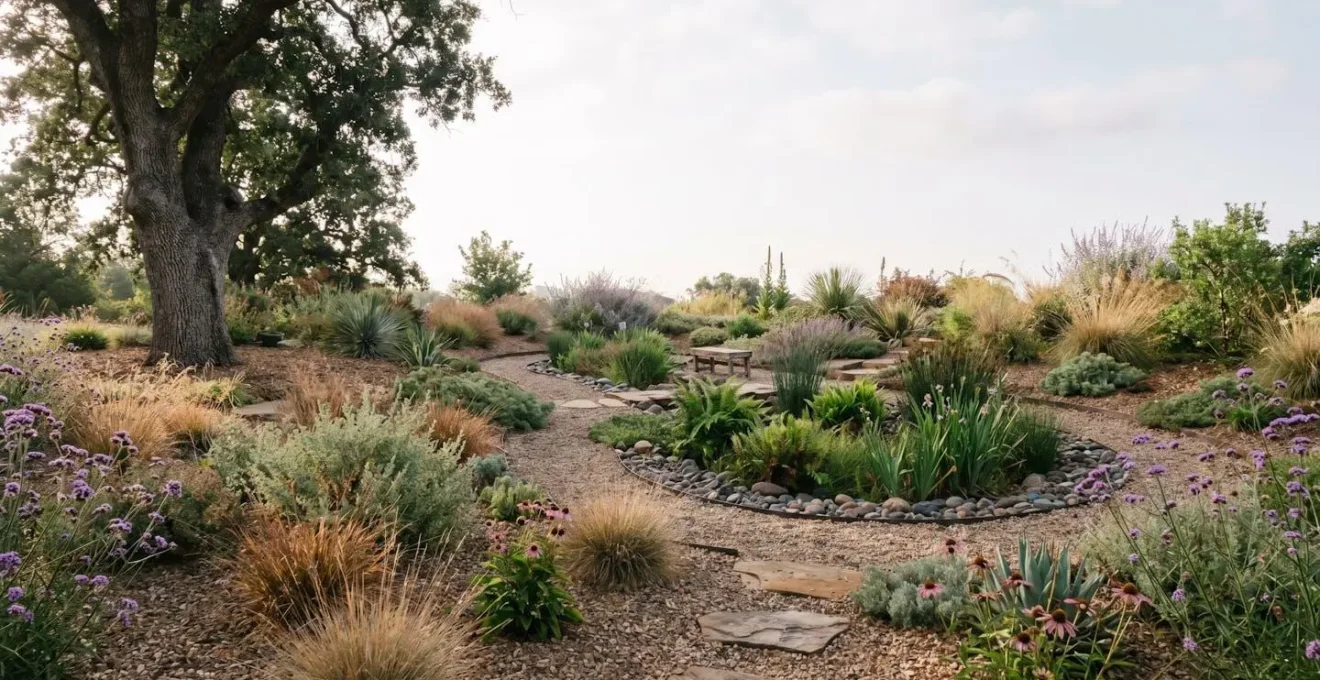
The key to a climate-resilient garden is not a special plant list, but re-engineering the physical landscape to actively manage water.
- Gardens must handle two opposite extremes: periods of intense rainfall and prolonged dry spells.
- Structural solutions like gravel layers, deep-rooted trees, and shaped earth passively regulate water, reducing gardener intervention.
Recommendation: Shift focus from selecting ‘survivor’ plants to designing a ‘survivable’ environment through strategic soil and landform modifications.
For any homeowner with a garden, the pattern has become distressingly familiar. Winter brings flash floods that turn lawns into lakes, while summer delivers baking heat that cracks the earth and wilts even the hardiest plants. The cycle of replacing dead landscaping is not just costly and frustrating; it’s a clear signal that traditional gardening methods are failing in the face of increasingly volatile weather patterns. The typical response involves searching for drought-tolerant species or installing better drainage, treating the symptoms separately.
While this advice has some merit, it fundamentally misses the core of the problem. You are fighting a war on two fronts—deluge and drought—and a strategy focused on only one will inevitably fail. But what if the true path to a resilient garden wasn’t about finding magical plants that tolerate both drowning and dehydration? What if the solution lay in redesigning the garden’s very structure—its soil, its shape, its layers—to function as an integrated water management system?
This guide takes a preparatory approach, treating your garden as a critical piece of infrastructure to be fortified. We will move beyond simple plant selection and delve into the structural and systemic changes that create a truly resilient landscape. We will examine how to engineer your garden’s hydro-dynamics, reinforce its structural integrity from the roots up, and build systemic redundancy through diversity. This is about creating a garden that doesn’t just survive extreme weather, but actively regulates its own micro-environment.
This article outlines the key strategic interventions for building a resilient garden. The following sections provide a clear roadmap, from foundational choices about drainage to emergency actions during a heatwave.
Summary: A Blueprint for a Future-Proof Garden
- Why Gravel Gardens Handle Both Deluge and Drought Best?
- Rooting Depth: Which Trees Won’t Topple in 80mph Winds?
- The Monoculture Risk: Why Diversity is Your Insurance Policy?
- How to Shape Your Land to Hold Water Longer in Summer?
- Autumn Planting: Why It’s Now Safer Than Spring Planting?
- Plants That Survive Both Drowning and Drought in Rain Gardens
- Fleece or Sheets: Improvising Shade During a Red Warning?
- Handling Summer Heat Stress: How to Cool Roots When Temperatures Hit 30°C?
Why Gravel Gardens Handle Both Deluge and Drought Best?
In a climate of extremes, the surface of your garden is the first line of defence. Traditional lawns and organic mulches like bark can become problematic; lawns get waterlogged and compact, while bark can float away in a deluge. A gravel garden, by contrast, acts as an engineered system for managing water. Its performance in both wet and dry conditions stems from fundamental principles of hydro-dynamics and soil science.
During a downpour, a deep layer of gravel provides unparalleled drainage. Water moves rapidly through the voids between the stones, preventing surface pooling and allowing it to percolate into the subsoil instead of running off. Unlike soil, gravel does not compact under heavy rain, ensuring its drainage capacity remains consistent over time. This rapid infiltration is critical for preventing flash flooding and soil erosion in your garden. Furthermore, this structure prevents the topsoil from becoming an anaerobic swamp, protecting plant roots from rot.
Conversely, during a drought, the same gravel layer becomes a protective shield. It significantly reduces evaporation from the soil surface, keeping the root zone cooler and moister for longer. This ‘stone mulch’ effect is far more durable than organic mulches. It also suppresses weed growth without the need for chemical herbicides, reducing competition for scarce water resources. By designing a garden with a gravel surface, you are not just choosing an aesthetic; you are installing a passive, dual-function water regulation system.
Ultimately, a gravel garden is a pragmatic choice for homeowners seeking a low-intervention, high-resilience landscape that is prepared for both extremes.
Rooting Depth: Which Trees Won’t Topple in 80mph Winds?
As winter storms intensify, the sight of a toppled tree is a costly reminder of nature’s power. The stability of a tree is not determined by its trunk’s thickness alone, but by the unseen architecture of its root system. For a garden to be truly resilient, its vertical elements must possess immense structural integrity. This means selecting trees based on their rooting habits, favouring deep taproots over shallow, fibrous systems.
A tree with a deep taproot acts like a ship with a proper anchor. This central root drives deep into the subsoil, providing a powerful vertical hold against the rotational forces exerted by high winds on the canopy—a phenomenon known as the ‘sail effect’. This deep anchor not only prevents uprooting but also makes the tree more drought-resistant by accessing moisture from deeper soil layers, a critical advantage during dry summers. In contrast, trees with shallow, spreading fibrous roots are far more vulnerable to being blown over, especially when the ground is saturated and soft from a recent deluge.
As the illustration shows, the deep taproot creates a level of stability that a surface-level root mat cannot match. When selecting trees for a resilient garden, species like oaks (Quercus), pines (Pinus), and walnuts (Juglans) are generally known for their deep-rooting tendencies. It is an investment in long-term stability, ensuring your largest garden assets are prepared for the increasing frequency of high-wind events. Choosing the right tree is an act of preparation, not just landscaping.
This long-term planning perspective is essential, as the choices made today will determine the garden’s ability to withstand storms decades from now.
The Monoculture Risk: Why Diversity is Your Insurance Policy?
A garden composed of a single type of plant, or very few, is a fragile system. Whether it’s a perfect lawn, a hedge of a single species, or a bed of identical flowers, a monoculture is a single point of failure. A new pest, a specific disease, or a particular weather condition can wipe out the entire planting in one season. From a climate adaptation perspective, this is an unacceptable risk. The solution is to build systemic redundancy through biodiversity.
A diverse garden, rich in different species, forms, and plant families, is inherently more resilient. Pests and diseases that target one species will leave others untouched. Some plants will thrive in a wet year, while others will perform better in a dry one. This variety creates a stable, self-regulating ecosystem. As a recent study confirms, diverse plant communities contribute significantly to productivity and ecosystem capacity to withstand disturbances. This is not just an aesthetic choice; it’s a core principle of risk management.
Creating this diversity involves several layers of planning.
- Structural Diversity: Combine trees, shrubs, perennials, and groundcovers to create different layers. This structure provides varied habitats and intercepts rainfall at multiple levels, reducing erosion.
- Genetic Diversity: Even within a single species, use different cultivars. Avoid planting a row of genetically identical clones from a single nursery.
- Temporal Diversity: Include plants with different flowering and fruiting times to support wildlife throughout the year, which in turn helps with pollination and pest control.
Think of your garden’s biodiversity as you would a financial portfolio. A diversified portfolio spreads risk and is better able to weather market volatility. Similarly, a biodiverse garden is your insurance policy against the unpredictable nature of a changing climate.
Building this living insurance policy requires a shift in mindset from creating a static picture to cultivating a dynamic and resilient ecosystem.
How to Shape Your Land to Hold Water Longer in Summer?
In a resilient garden, water is a precious resource to be captured, stored, and slowly released. Instead of viewing rainfall as a problem to be drained away as quickly as possible, we must see it as an asset to be managed. This requires shaping the land itself to create zones of passive regulation that hold water during a deluge and provide a reservoir during a drought. One of the most effective techniques for this is the German concept of Hugelkultur, or “mound culture.”
A Hugelkultur bed is essentially a large, raised bed built over a core of decaying wood. You create it by digging a trench, filling it with large logs, branches, and other organic matter, and then covering it with compost and topsoil to form a mound. This structure functions like a massive sponge. During heavy rains, the woody core absorbs and stores vast quantities of water, preventing runoff and waterlogging in the surrounding area. It becomes a slow-release irrigation system.
As the illustration reveals, during subsequent dry spells, the decomposing wood slowly releases this stored moisture back into the root zone of the plants growing on the mound. This drastically reduces or even eliminates the need for supplemental watering. Furthermore, as the wood decomposes, it releases a steady stream of nutrients and creates a warm, aerated soil environment that is ideal for plant growth. By building a Hugelkultur mound, you are creating a long-term, self-fertilizing, and self-watering garden feature that turns waste wood into a valuable asset for climate resilience.
Other land-shaping techniques, such as digging swales on contour, follow the same principle: slow the water down, spread it out, and let it sink into the ground.
Autumn Planting: Why It’s Now Safer Than Spring Planting?
The traditional gardening calendar, with its focus on a flurry of spring planting, is becoming increasingly unreliable. Unseasonably warm spells followed by late frosts, and springs that are either too wet to work the soil or too quickly transition to summer heat, are making spring establishment a gamble. For perennials, shrubs, and trees, a strategic shift to autumn planting is now the safer, more resilient choice.
Planting in the autumn allows plants to establish their root systems over the winter. The soil is still warm from the summer, but the air is cool, reducing water stress on the foliage. The plant can focus all its energy on developing a deep, robust root network in the moist winter soil without the pressure of having to support flowers, fruit, or extensive leaf growth. When spring arrives, the plant is already well-anchored and ready to take full advantage of the growing season. It will be far more resilient to the potential “flash droughts” and heatwaves of the following summer.
This shift is a direct response to observed changes in weather patterns. As one expert notes, the changing climate makes traditional timing difficult.
In recent years, seasonal patterns have become more unstable. Wetter Midwest springs are making soil too soggy to dig. Long periods of dry weather mixed with occasional heavy rain events have left gardeners facing flooded yards.
– Christy Rollinson, PhD (Forest Ecologist), The Morton Arboretum – Five Ways to Grow Resilient Gardens
By adapting your planting calendar, you are aligning your gardening practices with these new realities. You are working with the seasons as they are now, not as they used to be. This simple change in timing is a low-cost, high-impact strategy for increasing the survival rate of your long-term plantings.
This proactive adjustment demonstrates a core tenet of resilience: flexibility and the willingness to abandon outdated practices.
Plants That Survive Both Drowning and Drought in Rain Gardens
A rain garden is a specialized form of engineered ecology designed to be a focal point for water management. It is a shallow depression strategically located to capture runoff from roofs, driveways, and other impervious surfaces. While the primary function is to manage stormwater, its success depends on selecting plants that can tolerate the extreme cycle of being submerged during a storm and potentially very dry between rain events. This requires plants that are, in essence, amphibious.
The key to a successful rain garden is zoning. You must match the plant to its ideal position within the garden’s micro-topography. This creates a resilient mini-ecosystem where each plant is placed to thrive.
- Zone 1: The Lowest Point. This is the wettest area that will hold water the longest. It requires true wetland plants that are adapted to having their roots submerged for periods. Species like Blue Flag Iris (Iris versicolor) are ideal, as they possess specialized tissues (aerenchyma) that transport oxygen to their roots even when underwater.
- Zone 2: The Slopes. The middle ground of the rain garden experiences periodic flooding but drains relatively quickly. This zone is suitable for moisture-tolerant perennials like Joe Pye Weed (Eutrochium purpureum) or Cardinal Flower (Lobelia cardinalis) that can handle wet feet but don’t want to be constantly submerged.
- Zone 3: The Berm/Edge. The highest and driest part of the rain garden is the surrounding berm. This area is perfect for more drought-tolerant native grasses and perennials that will benefit from the moisture in the soil but are never in standing water.
By zoning a rain garden, you are not just planting; you are creating a diverse, functional habitat that slows water, filters it, and supports beneficial insects and wildlife.
A properly designed rain garden transforms a drainage problem into a beautiful, functional landscape feature that enhances your property’s ecological value.
Key Takeaways
- The foundation of resilience is re-engineering the ground itself—using materials like gravel and landforms like mounds to passively manage water.
- Systemic redundancy through biodiversity is a non-negotiable insurance policy against pests, diseases, and unpredictable weather.
- Adapting your methods and timing, such as shifting major plantings to autumn, is a critical, low-cost strategy for increasing plant survival.
Fleece or Sheets: Improvising Shade During a Red Warning?
When extreme heat warnings are issued, you must be prepared to act quickly to protect vulnerable plants from sun scorch and heat stress. While professional shade cloth is the ideal solution, not every homeowner has it on hand. In an emergency, you must improvise. Understanding the properties of common household materials is critical to making the right choice and avoiding doing more harm than good.
The primary goal of emergency shade is to reduce the intensity of solar radiation without trapping heat. This means breathability is as important as UV protection. Draping a material directly on a plant can block airflow, creating a “greenhouse effect” that cooks the plant, which is often worse than the sun exposure itself. The material must be suspended above the plants on a frame—even a simple one made of bamboo canes or tomato stakes—to allow for crucial air circulation.
When it comes to materials, not all are created equal. Old bed sheets are often the best improvised option, but horticultural fleece, commonly used for frost protection, can be a dangerous choice in the heat, as a comparative analysis of emergency materials shows.
| Material | UV Protection | Breathability | Heat Trapping Risk | Cost | Best Use Case |
|---|---|---|---|---|---|
| Old Bed Sheets | Moderate (blocks ~50-60% UV) | Excellent – allows airflow | Low (if properly ventilated) | Free (repurposed) | Short-term emergency shade for delicate plants |
| Horticultural Fleece | Low-Moderate | Variable – can trap heat without airflow | High (if draped directly on plants) | Low-Moderate | Frost protection; risky for heat events |
| Professional Shade Cloth (30-50%) | High (engineered UV blocking) | Excellent – designed for airflow | Very Low | High | Long-term installation, commercial growing, extreme heat |
The most important part of this strategy is pre-emption. You must be able to recognize the early signs of heat stress before the official warning is issued and the damage is done.
Action Checklist: Reading Heat Stress Signs
- Leaf Curling: Check if leaves are curling inward or rolling up. This is a plant’s attempt to reduce the surface area exposed to the sun.
- Loss of Turgor: Observe if leaves and stems appear wilted, limp, or floppy, even if the soil itself is still moist to the touch.
- Foliage Discoloration: Look for a subtle greyish tint or a dulling of the normally vibrant green colour of the foliage.
- Flower/Bud Drop: Inspect plants like tomatoes and peppers for signs that they are dropping unopened flower buds, which is a classic sign of heat stress.
- Deploy Shade Protocol: If two or more of these signs are present, immediately deploy your improvised shade structures. Do not wait for the plant to look severely wilted.
This level of preparedness transforms a frantic reaction into a calm, methodical response, safeguarding your garden assets.
Handling Summer Heat Stress: How to Cool Roots When Temperatures Hit 30°C?
When air temperatures soar, the real battle for a plant’s survival is fought underground. Soil temperatures can rise to dangerous levels, damaging fine root hairs and inhibiting the plant’s ability to absorb water and nutrients, even if the soil is moist. The most resilient gardens employ proactive strategies to cool the root zone, focusing on insulation and efficient, subsurface irrigation.
One of the most effective, low-tech methods is the use of a deep organic mulch (4-6 inches) of straw, shredded leaves, or wood chips. This layer acts as insulation, shielding the soil from direct sun and keeping the root zone significantly cooler than that of bare earth. Another ancient and incredibly effective technique is the use of olla (pronounced “oy-ya”) irrigation. An olla is an unglazed terracotta pot that is buried in the soil with only its neck exposed. It is filled with water, which slowly seeps through the porous clay directly into the root zone.
This method is exceptionally efficient, reducing water use by up to 70% compared to surface watering by eliminating evaporation. Crucially, the process of evaporation from the pot’s surface actively cools the surrounding soil, providing a direct cooling effect to the plant’s roots. This combination of deep mulching and subsurface irrigation creates a stable, cool, and moist underground environment, even when the surface is scorching.
Case Study: Low-Tech Resilience Under Extreme Drought
Kim Stoddart, a prominent climate-resilient gardening advocate, put these methods to the ultimate test. As detailed in a report on her experience, her homestead’s water supply dwindled to just 10 gallons per day during a severe drought, forcing her to cease watering her crops. Despite weeks without water, she reported ‘amazing results’ from her plants grown using deep mulching and no-till methods. Her practical experience provides powerful validation that these low-tech systems can create enough resilience for plants to survive even under extreme conditions.
Your next step is to conduct a thorough audit of your own landscape’s vulnerabilities and begin implementing these structural and systemic changes. A resilient garden is not built in a day, but through a series of deliberate, preparatory actions.