In summary:
- Overcome a lifeless winter garden by focusing on more than just flowers; embrace structure, scent, and texture.
- Select plants for a sequence of interest, using layered bulbs, long-lasting colourful bark, and carefully chosen flowering shrubs.
- Involve the family in winter gardening activities to transform it from a chore into a shared experience of discovery.
- Use dark evergreen backdrops like Yew to make winter colours pop, while remaining mindful of plant toxicity.
The quiet melancholy of a November garden can be a difficult sight for any passionate gardener. After the final blaze of autumn glory, the landscape often settles into a long, four-month slumber of grey skies and bare earth, a period stretching into the cold heart of February. The common advice often feels limited: a few hardy pansies, perhaps some evergreen foliage. But these solutions rarely capture the imagination or truly lift the spirit during the darkest days of the year. They treat the winter garden as a space to be endured rather than enjoyed.
What if the solution wasn’t just about finding a few plants that survive the cold, but about designing a truly dynamic and multi-sensory experience? What if the winter garden could become a classroom for your children, a source of magical moments, and a canvas for subtle beauty that only this season can provide? The secret to filling the November and February gaps lies in moving beyond a simple list of plants. It involves a strategic layering of colour, texture, and structure, transforming the garden into a place of discovery, not dormancy.
This guide will show you how to orchestrate a continuous display of interest. We will explore not just what to plant, but how to combine these elements—the glowing bark of a dogwood against a dark hedge, the powerful scent of a shrub by the doorway, and the sequential magic of a bulb lasagna—to create a garden that is truly alive, all year round.
This article provides a structured approach to transforming your winter garden. The table of contents below outlines the key strategies we will explore, from specific plant choices to advanced design concepts that create a vibrant, engaging space even in the depths of winter.
Summary: A New Vision for the Winter Garden
- 3 Shrubs That Actually Flower in January in the UK
- Berries or Bark: Which Lasts Longer into February?
- The Frost Mistake: Planting Winter Bedding in Frost Pockets?
- The Lasagna Method: Layering Bulbs for 3 Months of Color?
- Why You Need Yew Hedges to Make Winter Flowers Pop?
- Dogwood or Willow: Which Has the Brightest Winter Bark?
- Frost on Grasses: Designing for the ‘Golden Hour’ in Winter
- 3 Structural Deciduous Shrub Varieties for Winter Interest in Urban Gardens
3 Shrubs That Actually Flower in January in the UK
The idea of vibrant, fragrant flowers in the depths of January might seem like a gardener’s fantasy, but it’s an achievable reality. The key is selecting a few hardworking shrubs that defy the season. These plants are not just about a splash of colour; they provide a vital lifeline for the year’s first pollinators and a sensory boost for us. As the experts at Thompson & Morgan note, “Winter-flowering shrubs lift the soul on grey days.” They provide not just colour, but often a powerful scent designed to attract the few insects braving the cold.
To make the most of these winter heroes, placement is everything. The goal is to create moments of unexpected delight. A fragrant shrub near a doorway, a burst of yellow visible from the kitchen window, or a plant buzzing with the first bees of the year can transform a bleak day. It’s about designing an experience, not just planting an object.
Here are three exceptional choices to bring your January garden to life:
- Sarcococca confusa (Christmas Box): This is the champion of winter scent. Its tiny, creamy-white flowers are almost invisible, but their fragrance is extraordinary—a sweet, vanilla-like perfume that can fill a small garden. Plant it near paths or doorways for a powerful, nose-level fragrance that greets you every time you pass.
- Mahonia x media ‘Winter Sun’: For a dramatic splash of colour, Mahonia is unbeatable. Its bright yellow, fragrant flower spikes erupt from architectural, holly-like leaves, creating a bold, sculptural statement. It’s also an excellent early food source for the first bees, making it a living classroom for children to observe the stirring of nature.
- Viburnum tinus ‘Eve Price’: A true winter workhorse, this evergreen shrub produces clusters of pink buds that open to white flowers from late winter right through to spring. It’s robust, reliable, and provides colour, structure, and a food source for pollinators. As recommended by the Royal Horticultural Society, enriching the soil with well-rotted compost will encourage even more prolific blooming.
When gardening with family, always be mindful of plant choice. While beautiful, some winter-flowering plants like Daphne are highly toxic. Always check plant labels and teach children the golden rule: never eat any part of a plant without asking an adult first. This simple precaution ensures the garden remains a place of joy and safe discovery.
By choosing wisely, you can fill your garden with scent and colour, turning a grey January into the first chapter of the gardening year.
Berries or Bark: Which Lasts Longer into February?
As January’s fleeting flowers fade, the search for colour in February often leads to a choice between the jewel-like clusters of berries and the vibrant, glowing stems of winter bark. Both offer a visual treat, but their longevity and impact are quite different. While a holly bush laden with red berries is an iconic winter image, this food source is often stripped bare by hungry birds well before February arrives. For guaranteed, lasting colour that powers through to spring, coloured bark is the undisputed winner.
Shrubs like Dogwood (Cornus) and Willow (Salix) don’t just add colour; they interact with the low winter light in a way berries cannot. Their stems seem to glow with an inner fire, especially when backlit by the rising or setting sun. This effect turns a dreary, overcast day into a dramatic light show. The key to this vibrant display, however, is not just planting them, but actively managing them. As the editorial team at Fine Gardening magazine points out, “The brightest color appears on year-old stems, so regular pruning is essential.” This practice, known as coppicing or stooling, involves cutting the stems back hard in early spring, encouraging a fresh flush of brilliantly coloured growth for the following winter.
This image perfectly captures the intense, matte red of Cornus sanguinea ‘Midwinter Fire’. The tactile texture, highlighted by delicate frost crystals, shows how bark provides not just colour but also a close-up structural interest that berries lack. This is a colour that is weatherproof and bird-proof, a reliable feature that you can design around, knowing it will be there to brighten the garden on the last day of February just as it did on the first.
Ultimately, while berries provide a wonderful but temporary feast for wildlife, coloured bark offers a season-long spectacle for the gardener.
The Frost Mistake: Planting Winter Bedding in Frost Pockets?
One of the most common and disheartening winter gardening errors is watching a beautiful display of expensive winter bedding—pansies, cyclamen, violas—turn to mush after the first hard frost. Often, this isn’t bad luck; it’s a planning mistake. Many gardens have ‘frost pockets’, low-lying areas where cold air sinks and settles, creating a microclimate that is significantly colder than the rest of the garden. Planting delicate flowers in these zones is a recipe for failure and a waste of money.
Instead of fighting these natural cold spots, the strategic gardener learns to identify and work with them. This is a perfect opportunity to turn a gardening challenge into a fun, educational science experiment for the whole family. Understanding the unique topography of your own garden is the first step to successful winter design. It’s about making smart choices, placing tough plants in tough spots, and saving the more tender specimens for sheltered locations. This not only saves you money but also teaches valuable lessons about microclimates and plant hardiness.
Rather than seeing these cold spots as a problem, reframe them as an opportunity. They are the perfect place to plant things that are enhanced by frost, like ornamental grasses whose seed heads look magical when coated in ice crystals. By embracing the conditions, you create a garden that is not only more resilient but also more interesting.
Your Frost Detective Mission: A 5-Step Garden Audit
- Map the Frost: On a cold, frosty morning, give your kids a ‘Frost Detective’ mission. Have them place small flags or markers in the parts of the garden where the frost is thickest and lasts the longest. This creates a real-world map of your garden’s coldest zones.
- Identify the Pockets: Use the map to identify your primary frost pockets. These are typically the lowest points in your garden, at the bottom of slopes, or in areas where walls or dense hedges trap cold air and prevent it from flowing away.
- Plant for Frost Effects: In these identified frost pockets, choose plants that look spectacular when frosted. Plant architectural ornamental grasses like Miscanthus or Pennisetum, whose seed heads become intricate ice sculptures. The bare, twisted stems of ‘Harry Lauder’s Walking Stick’ also look magical when rimed with frost.
- Conduct a ‘Sacrificial’ Experiment: To teach the concept visually, plant a single, inexpensive tray of pansies in a suspected frost pocket. Compare their fate after a cold night with identical plants in a more sheltered spot. This is a powerful, hands-on lesson in microclimates.
- Plan Future Plantings: Use your frost map to inform all future planting decisions. Position your hardiest, most resilient plants in the cold spots and reserve your more tender or expensive plants for sheltered areas, such as near the house wall or under the canopy of an evergreen tree.
This proactive approach not only prevents the “frost mistake” but transforms you into a more observant and successful gardener, creating a resilient garden that thrives in partnership with the season.
The Lasagna Method: Layering Bulbs for 3 Months of Color?
While winter shrubs and stems provide the backbone of the cold-season garden, the first true sign that spring is on its way comes from the bulbs. However, a common approach is to have a huge burst of one type of flower, like daffodils, followed by nothing. The ‘Lasagna Method’ is a game-changing planting technique that solves this problem, creating a continuous succession of colour in a single pot or patch of ground for up to three months.
The concept is simple and brilliant: you layer different types of bulbs in a deep container, just like making a lasagna. The largest, latest-blooming bulbs go at the bottom, and the smallest, earliest-blooming bulbs go on top. As one wave of flowers finishes, the next is already pushing its way through. This turns a single pot into a slow-motion fireworks display that can start with crocuses in February, continue with narcissi in March, and finish with tulips in April.
This is a wonderfully engaging activity for the whole family. It teaches children about planning, patience, and the magic hidden within the soil. Assigning roles like ‘Head Digger’, ‘Bulb Placer’, and ‘Soil Tucker-inner’ turns a gardening task into a memorable team project. The pot may look like nothing but dirt all winter, but it holds the promise of spring—a powerful lesson in hope and anticipation.
Here’s a simple recipe for a three-month container display:
- Choose Your Container: Select a large, deep pot (at least 30-45 cm deep) with good drainage holes. Good drainage is essential to prevent the bulbs from rotting over a wet winter.
- The Bottom Layer (Late Spring): Add a layer of soil or compost, then plant your latest, largest bulbs. This is typically for late-spring tulips. Plant them pointy-side up, leaving a little space between them.
- The Middle Layer (Mid-Spring): Cover the first layer with a few inches of soil. Now add your mid-season bulbs, such as daffodils (choose a smaller variety like Narcissus ‘Tête-à-Tête’) or hyacinths. You can plant these more densely.
- The Top Layer (Early Spring): Add another layer of soil and plant your smallest, earliest bulbs like Crocus, Galanthus (Snowdrops), or Iris reticulata. These will be the first to appear.
- Finish and Wait: Cover the top layer with soil, water it well, and perhaps top with a decorative mulch or a few winter pansies for immediate interest. Then, all that’s left is to wait for the magic to begin in late winter.
By investing a little time in autumn, you guarantee yourself a front-row seat to the unfolding spectacle of spring, right from the very first bloom.
Why You Need Yew Hedges to Make Winter Flowers Pop?
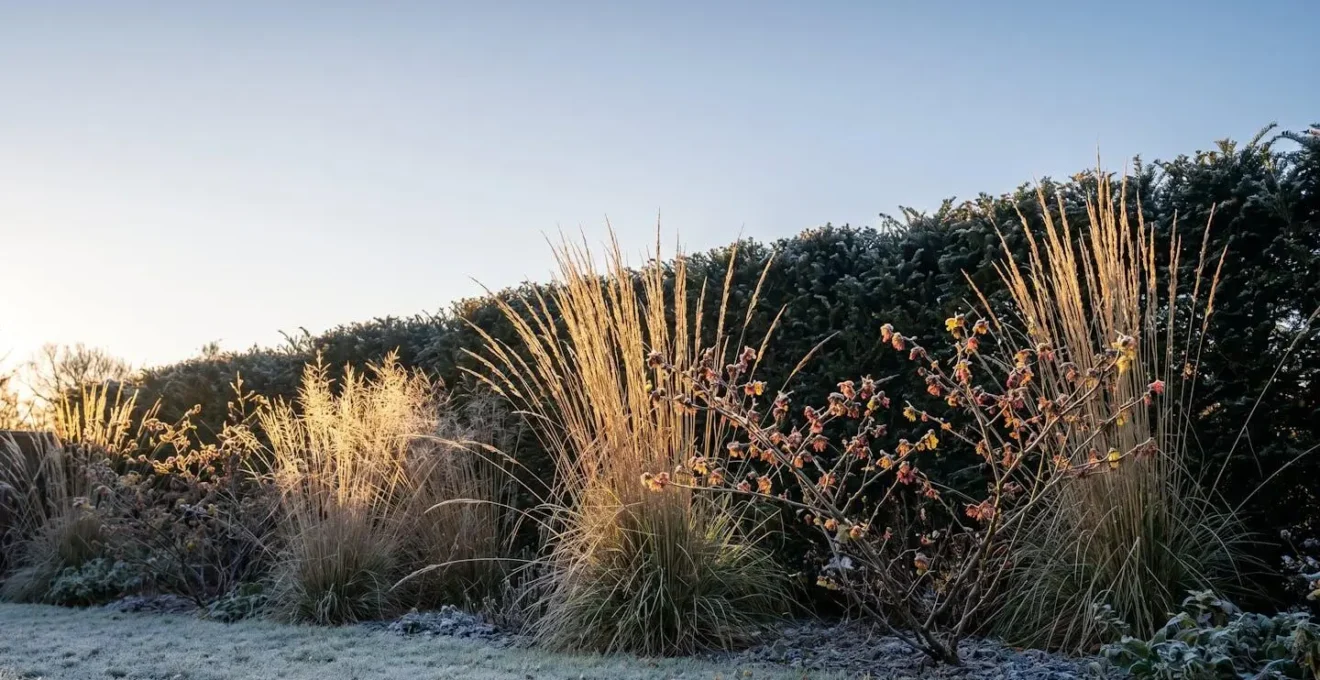
Creating a stunning winter garden is as much about contrast as it is about the plants themselves. A single yellow witch hazel flower can be lost against a pale winter sky, but against a dark, solid backdrop, it becomes a beacon. This is where evergreen hedging, and particularly Yew (Taxus baccata), plays a crucial role. A dense, dark green Yew hedge acts like the velvet lining of a jewellery box, making every speck of winter colour—the yellow of a Mahonia, the white of a Sarcococca, or the glowing red of dogwood stems—pop with dramatic intensity.
Yew is a classic choice for this role due to its very dark, non-reflective needles and its tolerance of hard pruning, allowing you to create a sharp, architectural backdrop. This living wall not only enhances colours but also provides shelter, creating a more favourable microclimate for tender plants to thrive. It blocks wind and can absorb and radiate a small amount of heat, providing a crucial advantage during the coldest months. But while the aesthetic benefits are undeniable, there is a critical safety consideration when using Yew, especially in a family garden.
Nearly all parts of the Yew, including the leaves and seeds, are highly toxic if ingested. The fleshy red ‘berry’ (called an aril) that surrounds the seed is the only non-toxic part, but the seed within is dangerous. This makes education and careful planning essential.
According to the Child Accident Prevention Trust, while serious poisoning by plants is uncommon in the UK, teaching children never to eat plants or berries they have picked in the garden without checking with an adult first is essential. Poisonous berries can easily look like safe snack berries. For families, choosing male yew plants that don’t produce berries, or positioning hedges away from high-traffic play areas, are practical safety strategies.
– Garden Safety Expert Advice, Child Accident Prevention Trust
This expert advice highlights a proactive approach. You don’t need to avoid these wonderful structural plants; you simply need to manage them wisely. Opting for male varieties of Yew which do not produce the tempting red arils is an excellent strategy for family gardens. Alternatively, using the hedge as a boundary feature away from primary play zones minimizes risk while maximizing aesthetic impact.
By balancing the immense design value of a Yew hedge with responsible, safety-conscious management, you can create a winter garden that is both breathtakingly beautiful and a safe space for family enjoyment.
Dogwood or Willow: Which Has the Brightest Winter Bark?
When it comes to the fiery stems that light up the winter garden, the two main contenders are Dogwoods (Cornus) and Willows (Salix). Both offer spectacular colour through the bleakest months, but they deliver their display in different ways. The choice between them often comes down to the specific effect you want to achieve and the amount of maintenance you are prepared to do. The question of which is “brightest” depends on the light.
Dogwood stems, particularly varieties like Cornus alba ‘Sibirica’ or Cornus sanguinea ‘Midwinter Fire’, have a matte, almost chalky finish. Their colour, which ranges from bright crimson to fiery orange-red, seems to ‘glow’ with an internal luminescence, especially in the low, angled light of a winter afternoon. They look best planted in bold drifts where their collective mass creates a haze of colour.
Willows, on the other hand, such as Salix alba ‘Britzensis’ or the yellow-stemmed Salix alba var. vitellina, tend to have a waxy, glossy sheen to their bark. This makes them ‘shine’ and reflect light, looking particularly brilliant after rain when their stems are wet. Their growth is often more vigorous and wild than that of dogwoods. This flexibility is a feature in itself, lending them well to children’s crafts like weaving wreaths or creating ‘magic wands’.
The following table, drawing on insights from horticultural experts, breaks down the key differences to help you choose the best option for your garden’s needs.
| Feature | Dogwood (Cornus) | Willow (Salix) |
|---|---|---|
| Stem Color | Bright red to maroon-red (matte finish) | Yellow-orange to orange-red (waxy bloom) |
| Light Quality | ‘Glows’ in low, angled sun | ‘Shines’ after rain, reflective surface |
| Stem Flexibility | Stiff stems, perfect for weaving stars | Flexible stems, great for wreaths or ‘magic wands’ |
| Annual Pruning | Remove 1/3 of oldest stems in late winter | Severe cutback to near ground level annually |
| Growth Rate | Moderate, 6-8 feet unpruned | Aggressive, 6-8 feet of new growth per season |
| Best for Kids’ Crafts | Winter stars, straight arrangements | Wreaths, flexible woven projects |
Ultimately, there is no single “brightest” option; there is only the right choice for your specific site and desired aesthetic. For a warm, glowing effect, choose Dogwood. For a bright, shining beacon, choose Willow.
Frost on Grasses: Designing for the ‘Golden Hour’ in Winter
While flowers and bark provide the obvious notes of colour in the winter garden, a truly masterful design also plays with light, structure, and movement. This is where ornamental grasses come into their own. Many gardeners mistakenly cut them back in autumn, but leaving them standing through winter unlocks a whole new dimension of beauty. Their dried stems, leaves, and particularly their seed heads are designed to catch and hold the light, transforming the garden during the winter ‘golden hour’.
The ‘golden hour’—that magical period shortly after sunrise and before sunset—is even more precious in winter when the sun’s angle is low all day. This low, raking light sets the garden ablaze. The architectural seed heads of grasses like Miscanthus, Calamagrostis, and Pennisetum act like thousands of tiny lampshades, catching the light and glowing in shades of silver, gold, and bronze. When a hard frost coats these structures, the effect is magnified tenfold. Each seed head becomes a delicate, sparkling chandelier, a moment of ephemeral magic that is the essence of winter gardening.
To maximize this effect, planting position is key. Place your ornamental grasses where they will be backlit by the morning or evening sun. This is a perfect strategy for those identified ‘frost pockets’, turning a problem area into the garden’s main stage. The beauty, however, is not purely visual. As horticultural design analysis often highlights, a great garden engages multiple senses. The dry, rustling sound that frosted grasses make in the winter wind adds an auditory layer to the experience, a soft shushing that is the unique soundtrack of the winter garden. It’s a reminder that even in its quietest state, the garden is alive.
Imagine walking out on a crisp February morning. The air is still, the sun is low, and a patch of Miscanthus is glowing like a bonfire, each frosted plume perfectly defined, rustling gently in the breeze. This isn’t a scene from a grand estate; it’s a carefully orchestrated moment of beauty, achievable in any garden with a little foresight.
By designing for the golden hour, you choreograph these moments, ensuring your garden offers profound beauty and sensory delight even on the coldest days of the year.
Key takeaways
- A successful winter garden is a multi-sensory experience, engaging sight, scent, and even sound.
- Structure is paramount; use evergreen backdrops to enhance colour and deciduous skeletons to catch light and frost.
- Plan for succession with layered bulbs and a mix of plants that offer interest from November through February.
- Involve the family in winter garden tasks and observations to create shared memories and learning opportunities.
3 Structural Deciduous Shrub Varieties for Winter Interest in Urban Gardens
For gardeners in urban settings with small patios, balconies, or courtyards, the challenge of creating winter interest can seem even greater. With space at a premium, every plant must work hard for its place. While evergreen structure is valuable, some of the most fascinating winter effects come from deciduous shrubs whose bare branches form intricate, living sculptures. These plants provide architectural interest all winter long and can be cleverly used to create magical, interactive features for the whole family, even in the smallest of spaces.
The key is to select compact or contorted varieties that offer a strong silhouette. Their twisted, gnarled, or colourful branches provide a framework that can be admired on its own or used as a canvas for creative projects. This transforms a simple potted plant into a dynamic focal point that changes with the seasons and interacts with its environment, from casting dramatic shadows to supporting homemade decorations. It’s about seeing the potential for play and art in the bare bones of the winter garden.
Here are three ideas for turning structural shrubs into magical centerpieces in an urban garden:
- The Living Sculpture: Choose a shrub with highly contorted branches like Corkscrew Hazel (Corylus avellana ‘Contorta’), also known as ‘Harry Lauder’s Walking Stick’. Its twisted, spiralling stems are fascinating in their own right and thrive in a large container. It becomes a piece of natural art for your patio.
- The Fairy Light Framework: The bare, intricate branches of a contorted shrub are the perfect armature for weaving in a string of warm-white, battery-powered fairy lights. This creates a magical evening effect visible from your windows, bringing the garden’s beauty indoors and banishing the gloom on long winter nights.
- The Shadow-Play Theatre: Position a shrub with a strong, open structure near a light-coloured wall. Place a simple, solar-powered spotlight at its base. As evening falls, the light will cast dramatic, moving shadows on the wall, creating a natural ‘shadow-play theatre’ that shifts with the slightest breeze. This provides endless fascination for children and adults alike.
By involving children in caring for these plants—simple tasks like watering or hanging homemade bird feeders from the branches—the shrub becomes more than just a decoration. It becomes a cherished part of the home, a connection to the natural world that teaches observation and care, proving that a lack of space is no barrier to a magical and engaging winter garden.
The ultimate goal is to shift your perspective: a winter garden isn’t empty, it’s simply revealing its beautiful bones. By celebrating this structure, you create a garden that is captivating, inspiring, and full of life, right through to the first signs of spring.