In summary:
- Stop fighting pests and start managing habitats. The goal is to build a self-regulating garden ecosystem.
- Support the entire lifecycle of beneficial insects—especially the voracious larvae—not just the adults.
- Provide consistent food and shelter from early spring to late autumn to build a permanent predator population.
- Practice strategic patience. Learn to recognize when to wait for natural predators and when a simple jet of water is the only intervention needed.
There are few sights more disheartening for a gardener than discovering a prized plant suddenly covered in a teeming mass of aphids. The leaves curl, the growth stunts, and the sticky honeydew appears overnight. The common advice is predictable: plant some dill, avoid pesticides, or even buy a container of ladybirds to release. While well-intentioned, these tactics often feel like temporary fixes, a constant battle against an inevitable tide.
This approach treats the symptom, not the cause. It positions the gardener as a perpetual firefighter, always reacting to the next outbreak. But what if the goal wasn’t to fight pests at all? What if you could shift your role from a pest-fighter to an ecosystem architect? The key to long-term, sustainable aphid control isn’t just attracting a few beneficial insects; it’s about systematically designing a habitat that supports a permanent, thriving population of predators that do the work for you.
This requires a strategic mindset. It means understanding the lifecycle of your insect allies, providing food and shelter through the lean times, and learning to read the ecological cues that tell you when to act and when to simply wait. This guide will walk you through the core principles of becoming a habitat architect, transforming your garden into a resilient ecosystem where aphids are not a crisis, but simply a part of the food chain.
To master this strategic approach, we will explore the essential components of building a resilient garden ecosystem. The following sections break down the key tactics, from identifying your allies to providing year-round support.
Summary: Beyond Attraction: How to Architect a Garden That Eliminates 90% of Your Aphids
- Larvae vs Adult: Recognizing a Ladybird Larva Before You Squish It?
- Log Piles or Bug Hotels: Which Actually Works for Lacewings?
- The Nectar Gap: Why Double Flowers Starve Beneficial Insects?
- Sacrificial Plants: Growing Nasturtiums to Lure Aphids Away?
- February to November: Keeping Predators Fed in the Shoulder Seasons?
- The 2-Week Rule: When to Wait for Ladybirds Instead of Spraying?
- Which Seed Heads Provide the Most Calories for Winter Birds?
- Controlling Aphid Infestations: Water Jets vs Soap Sprays?
Larvae vs Adult: Recognizing a Ladybird Larva Before You Squish It?
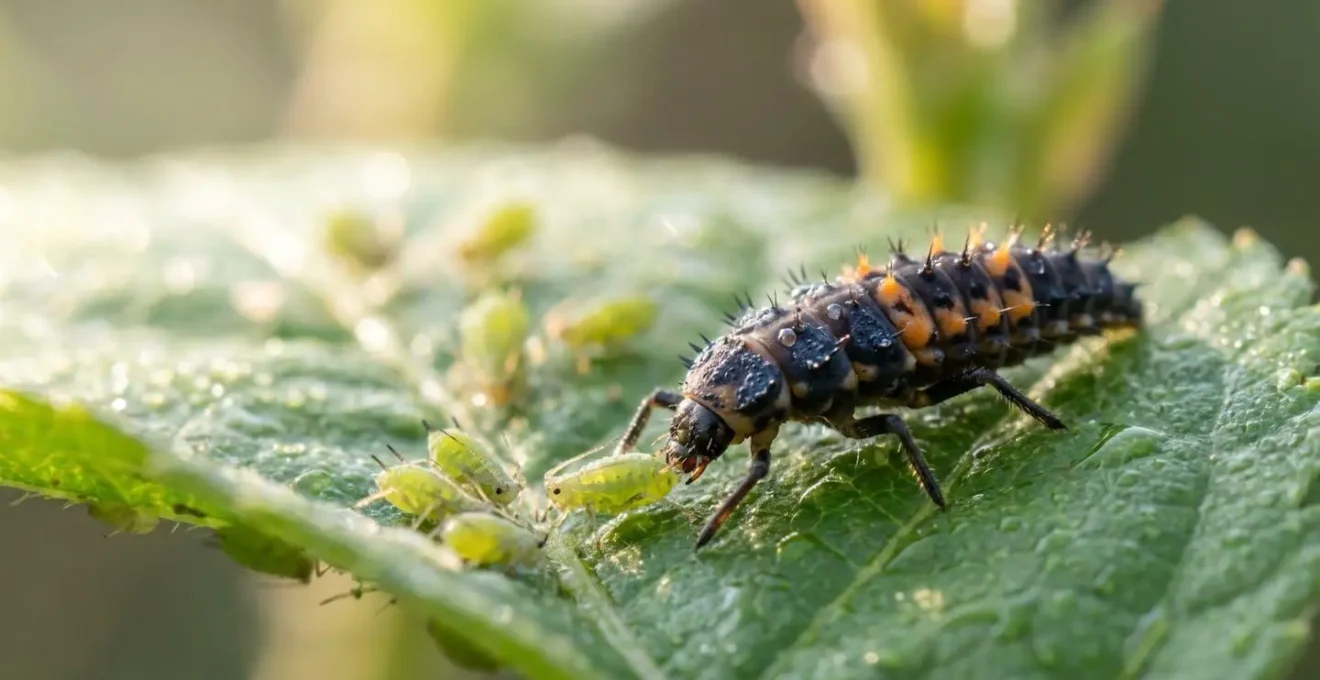
The first principle of ecosystem management is knowing your allies, and many gardeners unknowingly eliminate their most powerful ones. We celebrate the sight of an adult ladybird, but the real heroes of aphid control are their larvae. These prehistoric-looking creatures are often mistaken for pests and squished. A ladybird larva, often described as resembling a tiny, six-legged alligator with a dark body and orange or yellow spots, is an eating machine.
While an adult ladybird eats aphids, its primary focus is mating and laying eggs. The larval stage, however, is all about consumption and growth. During its two-to-three-week development period, research shows that a single larva can consume up to 400 aphids. Their appetite is so voracious that they are significantly more effective at controlling a localized aphid outbreak than the more mobile adults.
Learning to recognize and protect these larvae is a critical strategic advantage. Before you crush any unfamiliar insect on an aphid-infested plant, take a closer look. If you see these tiny “alligators” patrolling the stems, you are witnessing your garden’s natural defense system in action. Protecting them is the first and most crucial step in predator lifecycle management, ensuring a new generation of aphid-eaters is being raised right where you need them most.
Log Piles or Bug Hotels: Which Actually Works for Lacewings?
Once you have predators, you need to give them a place to live. The “bug hotel” has become a popular garden feature, a tidy, human-made structure promising to house beneficial insects. While they can be helpful, their effectiveness is often misunderstood. For instance, The Big Bee Hotel Experiment confirms that bee hotels are effective for certain cavity-nesting bees. However, many of our key aphid predators, like ladybirds and lacewings, have different needs.
This is where the ecosystem architect must think beyond a single, tidy solution and embrace the concept of habitat mosaics. Instead of one consolidated hotel, a truly resilient garden offers a variety of shelters. For lacewings, ground beetles, and overwintering ladybirds, nothing beats the messy, complex environment of a log pile or a deep layer of leaf litter. These natural structures provide the insulated, humid, and protected crevices these insects need to survive the winter and shelter during the day.
This doesn’t mean your garden must look neglected. A strategically placed, partially shaded log pile can become a beautiful sculptural element, celebrating the process of decay and renewal. It provides far more diverse and effective habitat than a commercial bug hotel ever could for the specific predators that control aphids. The key is to provide a diversity of shelter options to support a diversity of allies.
As the image shows, a simple stack of logs creates innumerable micro-habitats. The peeling bark, mossy surfaces, and gaps between logs offer far more opportunities for a wide range of beneficials than the uniform holes of a typical bug hotel. This is the difference between offering generic housing and building a true community.
The Nectar Gap: Why Double Flowers Starve Beneficial Insects?
Even the most ferocious predators need more than just prey. Adult beneficial insects like hoverflies, lacewings, and ladybirds require pollen and nectar as a primary food source, especially for energy and reproduction. Providing this food is a core part of “resource scaffolding”—ensuring the right resources are available at the right time. However, a common garden choice actively sabotages this effort: the double flower.
Lush, petal-packed flowers like many modern rose and peony varieties are often sterile environments for insects. They look beautiful to us, but for a hoverfly, they are a desert. The structures that should produce pollen and nectar have been genetically mutated into extra petals, blocking access or eliminating the food source entirely. As the Southwick Country Park Nature Reserve explains, this is a fundamental biological trade-off.
Double flowers are mutations, coding errors, in which the cells that are supposed to become stamens are mistakenly instructed to develop into extra petals. This means fewer or no stamens at all and little or no pollen.
– Southwick Country Park Nature Reserve, Educational article on double flowers and pollinator access
An ecosystem architect prioritizes function over pure form. This means choosing single-petal, open-faced flowers where pollen and nectar are easily accessible. Think of flowers in the carrot family (dill, fennel, cilantro), daisy family (cosmos, asters), and alliums. These simple, “wilder” looking blooms are packed with the high-energy food that fuels your adult predator population, encouraging them to stay, mate, and lay eggs near your aphid buffet.
Sacrificial Plants: Growing Nasturtiums to Lure Aphids Away?
Intelligent habitat design also involves strategic diversion. Rather than trying to eliminate every aphid from every plant, an experienced ecosystem manager uses “trap crops” to concentrate pests in a single, manageable location. This protects valuable plants and creates a concentrated buffet for predators. The classic and most effective trap crop for aphids is the nasturtium.
Field observations consistently show that aphids are powerfully drawn to nasturtiums, especially yellow-flowered varieties. Planted strategically, they act like magnets, pulling aphids away from your prized vegetables or roses. This strategy is a brilliant example of a dual-function system. The nasturtiums not only concentrate the aphids, making them easy to monitor and manage, but they also attract predators like hoverflies to the same location, creating a self-service feast.
However, placement is everything. Mixing trap crops within your main plantings can backfire by bringing pests closer. The goal is to create a perimeter defense. By planting nasturtiums at the edges of garden beds, you lure pests outwards, away from the plants you want to protect. This requires a proactive plan to be truly effective.
Your Action Plan: Strategic Nasturtium Placement
- Plant nasturtiums at bed edges rather than mixed within crops to create a perimeter barrier that draws pests outward.
- Space one nasturtium plant every 45-60 cm along bed edges for optimal coverage.
- Position trap crops at bed corners where airflow and light are high, making pest monitoring easier.
- Inspect weekly and remove heavily infested plants before pests spread to main crops.
- Keep spare seeds ready to quickly replace pulled trap plants and maintain continuous protection.
February to November: Keeping Predators Fed in the Shoulder Seasons?
A resident army of predators is only effective if it’s actually resident. For beneficial insects to establish a permanent population in your garden, they need a continuous food supply, not just during the peak of summer. This is where “resource scaffolding” becomes a year-long strategy, with a focus on the critical “shoulder seasons” of early spring and late autumn.
In late February and March, when queen bumblebees and other early insects emerge from hibernation, they are desperate for nectar. A garden that offers nothing until May will not hold them. Planting early-blooming, pollen-rich flowers is essential. Species like crocuses, pussy willows, and winter aconite provide a crucial lifeline that can determine whether beneficial insects stay and build their populations in your garden or move on elsewhere.
The same principle applies in autumn. As summer blooms fade, late-flowering species like asters, sedums (Hylotelephium), and goldenrods provide the final energy boost insects need to survive the winter. By thoughtfully planning your garden to have something in bloom from the first thaws to the first frosts, you are not just planting flowers; you are managing a year-round food supply chain for your predator workforce. This ensures they are present and ready to go the moment the first aphids appear.
The 2-Week Rule: When to Wait for Ladybirds Instead of Spraying?
Perhaps the most difficult skill for a gardener to learn is strategic inaction. When you see a burgeoning aphid population, the instinct is to do *something* immediately. But the ecosystem architect understands the “Patience Threshold”—the critical waiting period required for the system to respond. Spraying, even with organic soap, can wipe out the very predators that are on their way to solve the problem for you.
This is where the “2-Week Rule” comes into play. When you spot an aphid outbreak, check for the presence of predator eggs (tiny orange ladybird eggs) or larvae. If you see them, or if you know you have an established predator habitat, wait. It can take up to two weeks for ladybird eggs to hatch and for the larvae to grow large enough to make a visible impact on the aphid population. This waiting period is a test of faith in the ecosystem you’ve built. As one long-time organic gardener notes, this patience is what builds a resilient system over time.
I have not always had these beneficial insects present in my garden in the numbers they are today. It has definitely been a process, seasons in the making. By limiting my overall pest intervention, my garden teems with beneficial insects and the aphids that do arrive have never gained control over my plants. In fact, I believe they have attracted good insects to my garden, creating a well-rounded, natural, beneficial ecosystem.
– Journey with Jill
This hands-off approach is backed by science. While releasing store-bought ladybugs has mixed results, studies on ladybird releases found that aphid reduction exceeded 50% in many controlled environments. By creating the right conditions for your *native* predators to reproduce, you harness this power naturally. Resisting the urge to spray for those crucial two weeks gives your beneficial army the time it needs to mobilize and deal with the problem sustainably.
Which Seed Heads Provide the Most Calories for Winter Birds?
The work of an ecosystem architect doesn’t end when the first frost arrives. Winter is a critical time for supporting another key group of insect predators: birds. Many resident birds that help control pests in the spring, like chickadees and nuthatches, rely on seeds to survive the winter. By leaving seed heads standing in your garden, you provide a natural, high-calorie bird feeder that keeps these allies close.
Not all seed heads are created equal. For maximum caloric impact, prioritize plants with large, oil-rich seeds. The undisputed champions are sunflowers, whose seeds are packed with the fats birds need to stay warm. Other top contenders include plants from the daisy family, such as coneflowers (Echinacea) and black-eyed Susans (Rudbeckia). Their sturdy cones hold seeds well into winter, providing easy access for finches, chickadees, and other small birds.
Letting your garden go to seed is a strategic choice. The skeletal architecture of these standing stems and seed heads provides not only food but also crucial winter shelter for insects. When spring arrives, the birds that have been overwintering in your yard will be on-site and ready to forage for the first emerging pests, completing the year-round cycle of predator support. This “messy” winter garden is, in fact, a highly functional and managed habitat.
Key takeaways
- Shift your mindset from pest-fighter to ecosystem architect; your goal is to manage a habitat, not kill bugs.
- Support all predator life stages, especially the voracious larvae, by learning to identify them and protecting their habitat.
- Create a continuous bloom sequence from early spring to late fall to provide a non-stop food supply for your beneficial allies.
Controlling Aphid Infestations: Water Jets vs Soap Sprays?
Even in the most well-designed ecosystem, there may be times when an aphid population on a specific plant gets out of hand before predators arrive. This is when the IPM specialist must intervene, but the goal is always to use the least disruptive method possible. The first tool should never be a spray bottle; it should be a water hose.
A strong jet of water is remarkably effective at dislodging aphids from plants. Since aphids are soft-bodied and relatively immobile, knocking them to the ground is often a death sentence. They cannot easily get back onto the plant and become easy prey for ground-dwelling predators like beetles. This method is purely mechanical, has zero non-target effects, and leaves the predator population on the plant completely unharmed. In contrast, even organic insecticidal soaps can kill beneficial larvae and adult predators on contact.
The University of California’s Statewide IPM Program emphasizes that intervention should be targeted and minimal, as most plants are more resilient than we think. As they state, “Most established plants can tolerate aphid feeding and will outgrow any damage.” When intervention is truly necessary, a clear, logical progression of tactics ensures you do more good than harm.
Checklist: A Strategic Intervention Audit
- Check plants at least twice weekly during rapid growth periods to catch infestations early before leaves curl.
- Knock aphid populations off plants by shaking or spraying with a strong stream of water as the first intervention.
- Target the undersides of leaves where aphids congregate and hide from natural enemies.
- Prune out heavily infested leaves and stems when aphids are concentrated in specific areas.
- Manage ant populations to help beneficial insects access aphid colonies, as ants protect aphids from predators.
By adopting the mindset of an ecosystem architect, you can transform your garden from a battleground into a balanced, self-regulating community. Start by choosing one of these strategies—whether it’s building a log pile, planting some crocuses, or simply practicing the 2-week rule—and begin the process of building a more resilient garden today.