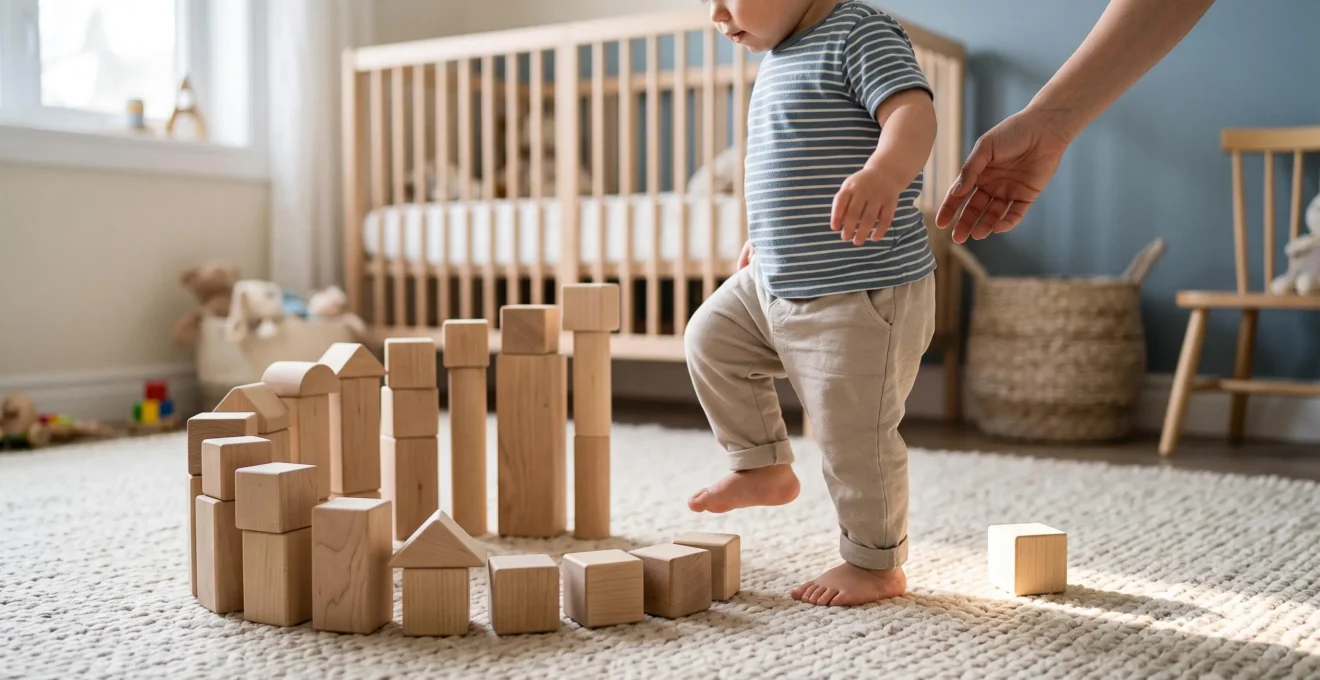
Contrary to common belief, a baby walking “late” is rarely a cause for concern on its own; the real indicators of healthy development lie in the quality and sequence of their movements.
- Most developmental “red flags” parents worry about, like W-sitting, are often normal, temporary phases that don’t harm a child’s joints.
- The journey to walking—including tummy time, rolling, and crawling—is more important than the final destination, as it builds essential foundational skills.
Recommendation: Instead of focusing on rigid age-based charts, learn to observe your child’s unique developmental pathway. Support them with free floor play and understand the few specific signs that genuinely warrant a conversation with your Health Visitor or GP.
As a new parent, it’s impossible not to notice when other babies in your circle start pulling up, cruising along furniture, and taking those first wobbly steps. If your little one seems content to crawl, bottom-shuffle, or simply observe from the floor, a seed of worry can easily be planted. You consult your Personal Child Health Record—the “Red Book”—and see timelines that can feel more like deadlines. Friends and family offer well-meaning but often contradictory advice, and suddenly you’re asking the question that brings so many parents to my clinic: “Is my baby behind?”
The internet is filled with generic advice, often repeating the unhelpful platitude that “every baby develops at their own pace.” While true, this doesn’t soothe the anxiety of a concerned parent. You might be told to simply do more tummy time or be warned about the dangers of baby walkers, but without the proper context, this information can create more confusion than clarity. The constant comparison and pressure can overshadow the joy of watching your child’s unique journey unfold.
But what if the key isn’t to focus on *when* your baby hits a milestone, but *how* they get there? The true measure of healthy motor development isn’t about a race to walk. It’s about the beautiful, logical progression of building strength, coordination, and confidence. It’s about understanding the developmental pathway that allows a baby to lift their head, then roll, sit, crawl, and eventually, stand on their own two feet. This is the essence of building a confident mover.
This guide, written from the perspective of an experienced Health Visitor, will help you shift your focus from the clock to the process. We will explore why foundational skills matter more than dates on a chart, debunk common myths about walkers and sitting positions, and provide a clear, calm framework to help you support your child’s development. Most importantly, we will outline the specific, evidence-based signs that indicate when it is genuinely time to seek professional advice from your Health Visitor or GP.
To help you navigate this important topic, this article will cover the essential building blocks of motor development, from the importance of early floor time to the long-term benefits of physical confidence. Explore the sections below to gain a deeper, more reassuring understanding of your child’s journey to mobility.
Summary: A Health Visitor’s Guide to Your Baby’s Motor Development
- Why Is Tummy Time Essential for Crawling and Walking Later?
- How to Encourage Walking Without Buying Expensive Baby Walkers?
- Baby Walkers or Free Movement: Which Is Safer for Hip Development?
- The W-Sitting Mistake That Can Damage Your Child’s Joints
- When to Expect Rolling, Crawling, and Walking: A Realistic Timeline
- Why Does Being Physically Competent Boost Academic Confidence?
- Why Does Gut Health Influence Your Child’s Mood and Focus?
- Physical Literacy: Why Fundamental Movement Matters More Than Sport?
Why Is Tummy Time Essential for Crawling and Walking Later?
Tummy time is one of the very first forms of “exercise” for your baby, and its importance cannot be overstated. It’s the foundational work that prepares their entire body for the complex movements of crawling and walking. When a baby is on their tummy, they are actively working against gravity. This effort strengthens their neck, shoulder, back, and core muscles. These are the exact muscle groups needed to push up, roll over, sit with stability, and eventually pull themselves up to stand. Without this foundational strength, later milestones can be delayed.
Beyond muscle development, tummy time provides crucial sensory experiences. The feeling of different textures on their hands and face, the change in visual perspective, and the need to shift their weight to see or reach for a toy all contribute to their brain’s understanding of their body in space. This proprioceptive feedback is a cornerstone of coordination and balance. A systematic review of infant movement found that more time spent in this position was consistently linked to the earlier achievement of several gross motor milestones.
Think of it as building a house; you must have a solid foundation before you can put up the walls and roof. Tummy time is that foundation. It’s not just about preventing a flat head (plagiocephaly), but about kick-starting the entire developmental pathway towards independent movement. Even a few minutes at a time, several times a day, can make a significant difference. It’s a simple, free, and essential activity that lays the groundwork for every physical skill your child will learn in their first years.
How to Encourage Walking Without Buying Expensive Baby Walkers?
One of the most common questions I receive from parents is how to help their child learn to walk. The instinct is often to look for equipment, but the truth is that the best tools are already in your home: a safe floor space and stable furniture. The most effective way to encourage walking is to create an environment that promotes unrestricted floor time. This allows your baby the freedom to practice the complex transitions of moving from lying to sitting, from sitting to all fours, and from crawling to pulling up to stand. Each of these movements strengthens different muscles and builds coordination.
Once your baby is confidently pulling themselves up, “cruising” becomes their next big adventure. This is when they hold onto furniture and take sideways steps. You can encourage this by placing a favourite toy on the sofa, just out of their immediate reach, motivating them to move along the edge to get it. This practice is vital for developing balance and strengthening their legs and hips while they are still supported. It is a far more natural and beneficial process than being placed in a device.
While traditional sit-in baby walkers are not recommended, there is a place for certain types of aids once a child is already standing independently. As the NHS Paediatric Physiotherapy Team for Cambridgeshire & Peterborough notes:
Push-along-style walkers are ok and can be a useful tool in improving your child’s confidence and strength on their feet.
– Cambridgeshire & Peterborough NHS Foundation Trust, Paediatric Physiotherapy Team, CPFT NHS Trust – Supporting your child’s development
A sturdy push toy—like a small trolley or a specific push-along walker—gives them a sense of stability as they venture into forward motion. Crucially, the child is in control of the movement and is bearing their own weight, unlike in a sit-in walker. This helps them build confidence and refine their balance, bridging the gap between cruising and taking those first independent steps.
Baby Walkers or Free Movement: Which Is Safer for Hip Development?
The professional consensus on traditional, sit-in baby walkers is clear and unambiguous. Health professionals, particularly physiotherapists, strongly advise against their use. The Association of Paediatric Chartered Physiotherapists (APCP), as cited by NHS Greater Glasgow & Clyde, puts it in no uncertain terms:
Physiotherapists and other Health Professionals DO NOT recommend the use of babywalkers.
– Association of Paediatric Chartered Physiotherapists (APCP), NHS Greater Glasgow & Clyde, Royal Hospital for Children
This strong stance is based on two major concerns: safety and developmental interference. From a safety perspective, walkers grant babies a level of mobility and height they are not ready for, leading to a significant risk of injury. Historical data from countries where they were once common, like Canada, documented thousands of injuries from falls down stairs or babies reaching dangerous items. But beyond acute injuries, the developmental concerns are paramount.
When a baby is in a sit-in walker, the fabric seat supports most of their weight. This prevents them from learning to balance and bear weight through their own legs and feet. It often encourages them to push off with their toes, which can contribute to tight calf muscles and an unusual gait pattern. Most importantly, it completely bypasses the crucial developmental stages of crawling, pulling to stand, and cruising, all of which are essential for building the core and hip strength necessary for a stable, healthy walking pattern. Free movement on the floor allows a baby’s hips to develop naturally through a wide range of motions, something a walker actively restricts.
It’s important to distinguish sit-in walkers from stationary activity centres. While these centres also limit free movement, they are considered a safer, occasional alternative. If you do use one, ensure your baby can sit unaided, their feet are flat on the floor, and time is limited to a maximum of 20 minutes. However, it should always be treated as a brief diversion, not a substitute for the rich developmental benefits of unrestricted floor play.
The W-Sitting Mistake That Can Damage Your Child’s Joints
The term “W-sitting” often sends a shiver of panic through parents. It describes the position where a child sits on their bottom with their knees bent and feet splayed out to the sides, forming a ‘W’ shape with their legs. For years, it has been flagged as a developmental “mistake” that could lead to hip problems, poor core strength, and delayed motor skills. Seeing your child adopt this position, especially after reading dire warnings online, can be alarming. The position is indeed common; one US hospital survey found it was a prevalent posture in children being evaluated.
However, the narrative around W-sitting is a perfect example of how parental anxiety can be amplified by outdated or misinterpreted information. For the vast majority of children, W-sitting is simply a comfortable and stable position. It provides a wide base of support, freeing up their hands and trunk for play. It’s often a transitional phase that children move in and out of. The long-held belief that it actively harms hip development has been challenged by more recent and thorough research.
In fact, a systematic review published in 2024 looked at all the available evidence and came to a reassuring conclusion. The authors found that for typically developing children, W-sitting does not cause harm to their hips or negatively impact their overall development. They noted that the position often stems from the natural inward twist of the femur bone (femoral anteversion) that is normal in young children and resolves on its own with growth. As children get older, the position becomes physically uncomfortable and they naturally stop using it.
So, should you panic and constantly correct your child? The evidence says no. While it’s always good practice to encourage a variety of sitting positions (like cross-legged or side-sitting) to promote core muscle engagement and body awareness, W-sitting is not the developmental red flag it was once thought to be. As with many aspects of development, the key is observing the bigger picture. If your child *only* sits in this position, seems stiff, or shows other signs of motor difficulty, it’s worth a conversation with a professional. But for the child who simply uses it as one of many positions in their play repertoire, you can take a deep, reassuring breath.
When to Expect Rolling, Crawling, and Walking: A Realistic Timeline
The “Red Book” provides average age ranges for milestones, but these are statistical guides, not deadlines. The reality is that there is a huge window for what is considered normal development. One of the biggest sources of parental anxiety is seeing these averages and worrying when their child is on the later side of the curve. It is crucial to understand that the quality of movement and the progression through stages are far more important than the exact age a milestone is reached.
A baby might roll from front-to-back around 4-6 months, but some skip it. Crawling can start anywhere from 7 to 10 months, but some babies never crawl in the traditional sense; they might bottom-shuffle, commando-crawl, or roll to get where they want to go. These alternative methods are not “wrong,” they are just your child’s unique solution to the problem of mobility. Similarly, while the “average” baby walks around 12-15 months, the normal range is vast. NHS physiotherapists are very clear that it is common to see children who are not yet walking at 18 months, and that most children will be walking by the time they are two years old.
So, when should you actually be concerned? The key is to look for a collection of signs, not just a single “late” milestone. A true developmental red flag is rarely isolated. It is usually a pattern of issues across different areas. If your child is not yet walking at 18 months but is crawling, pulling up, cruising, babbling, and interacting with you, this is highly reassuring. They are simply taking their time on their own developmental pathway. The concern arises when a motor delay is accompanied by other issues. For example, if a child is not sitting by 9 months, or if there is a noticeable asymmetry in their movements (e.g., they only use one side of their body), or if a motor delay is paired with a lack of interest in play or social interaction, then it is time to seek advice.
Your checklist: When to contact a Health Visitor or GP
- Assess the Whole Picture: Is the motor delay isolated, or are there also concerns about your child’s play, social interaction, feeding, or communication skills? Note down specific examples.
- Check for Symmetry: Observe how your child moves. Do they use both hands and both legs equally? Is their body stiff or unusually floppy? Make a note of any consistent preference for one side.
- Review Milestone Progression: Has your child stopped gaining new skills, or have they lost skills they once had (regression)? This is a more significant concern than simply being slow to start.
- Consider a Hearing/Vision Check: Sometimes, underlying sensory issues can impact balance and movement. If you have any concerns about your child’s response to sounds or visual cues, this should be discussed.
- Trust Your Instinct: You know your child best. If, after considering all of the above, you still feel that something is not right, that is a valid reason to seek a professional opinion for reassurance and guidance.
Why Does Being Physically Competent Boost Academic Confidence?
It may seem like a leap to connect a toddler’s ability to climb a frame with a schoolchild’s confidence in the classroom, but the link is direct and profound. The skills a child learns through physical play—balance, coordination, spatial awareness, and problem-solving—form the bedrock not just for future athletic activity, but for their overall sense of self-efficacy. This feeling of “I can do it” is transferable to all areas of learning. When a child masters a physical challenge, like learning to ride a scooter or hang from monkey bars, they are not just training their body; they are training their brain to embrace challenges, persist through failure, and experience the pride of mastery.
This concept is at the heart of physical literacy. It’s not about being the best at a specific sport. It’s about developing a fundamental toolkit of movement skills—like running, jumping, throwing, and catching—that gives a child the confidence to participate in a wide variety of activities. As child development expert Gill Connell states, these fundamental movement skills are the “bedrock of athletic development.” When children feel competent in their physical abilities, they are more likely to participate in playground games, join in with PE lessons, and try new things without fear of embarrassment. This social engagement is a critical part of the school experience and directly impacts their happiness and sense of belonging.
This confidence has a ripple effect. The focus, discipline, and resilience learned on the playground are the same attributes needed to tackle a tricky maths problem or a challenging book. The brain doesn’t neatly separate “physical learning” from “academic learning.” The neural pathways built through complex movement contribute to overall cognitive function, including memory, focus, and problem-solving. A child who feels physically capable and confident in their body moves through the world, including the classroom, with a greater sense of security and readiness to learn. They are less likely to be hesitant and more likely to raise their hand, engage with peers, and see learning as an exciting challenge rather than a daunting task.
Why Does Gut Health Influence Your Child’s Mood and Focus?
While we often focus on the visible aspects of development, like movement and language, it’s important to remember the powerful internal systems that support them. One of the most fascinating areas of recent research is the connection between the gut and the brain, often called the “gut-brain axis.” This isn’t a niche concern; it’s a fundamental part of our biology that can have a noticeable impact on a child’s overall well-being, including their mood and ability to concentrate.
In simple terms, the gut is lined with millions of nerve cells and is home to trillions of bacteria, collectively known as the gut microbiome. This “second brain” communicates constantly with the brain in our head. The gut microbiome plays a crucial role in this communication, helping to produce vitamins, digest food, and even synthesise neurotransmitters—the very chemical messengers that regulate mood, like serotonin. A healthy, diverse microbiome supports this process, while an imbalance can potentially disrupt it.
For children, this connection can manifest in various ways. You may have noticed that when your child is feeling anxious or upset, it can affect their tummy. The reverse can also be true. While it is not a direct cause-and-effect for every child, there is growing understanding that a healthy gut can contribute to a more stable mood and better focus. A diet rich in a variety of foods—including fruits, vegetables, and whole grains—feeds a diverse range of good gut bacteria. This variety provides the foundational building blocks for both a healthy body and a well-regulated brain.
As a parent, you don’t need to become a microbiome expert. The key takeaway is practical and reassuring: offering a wide and varied diet is one of the best things you can do for your child’s long-term physical and mental health. Encouraging them to “eat the rainbow” isn’t just a fun phrase; it’s a simple strategy to support the complex, invisible world inside them that contributes to their ability to learn, play, and grow with resilience and focus. This holistic view reminds us that physical development is about more than just muscles and bones.
Key takeaways
- Focus on the quality and variety of your child’s movements, not just rigid timelines. The journey is more important than the exact date a milestone is hit.
- Unrestricted, safe floor play is the single most effective tool for developing the strength, balance, and coordination needed for walking. It is superior to any gadget.
- True developmental red flags are rarely isolated. They typically involve a pattern of concerns, such as asymmetry, loss of skills, or delays across multiple areas (e.g., motor and social).
Physical Literacy: Why Fundamental Movement Matters More Than Sport?
In our eagerness for our children to succeed, it’s easy to focus on specific sports or activities. However, a much more crucial concept for long-term health and happiness is “physical literacy.” It’s a term that is gaining significant traction in public health, and for good reason. As Sport England defines it, “Physical literacy is our relationship with movement and physical activity throughout life.” It’s not about being a star athlete; it’s about having the fundamental skills, confidence, and motivation to be physically active in ways that are personally enjoyable and meaningful.
The core of physical literacy is mastering fundamental movement skills (FMS) in childhood. These are the basic building blocks of all complex movements: running, jumping, hopping, throwing, catching, and balancing. When a child is proficient in these skills, they have the confidence to say “yes” to new activities. They can join a game of tag on the playground, try a dance class, or learn to ride a bike without the fear of being “bad” at it. This confidence is critical. Unfortunately, research in the UK suggests we have a long way to go. A study found that fewer than one in five English children aged 6 to 9 were competent in these fundamental skills.
This is why focusing on broad movement experiences matters more than early specialisation in a single sport. A homemade obstacle course in the garden, a game of throwing and catching, or simply dancing to music can be more beneficial for a young child than structured coaching. These activities build the broad vocabulary of movement that forms the basis of physical literacy. The goal is to foster a love of movement and a body that is ready for anything. The child who is physically literate is more likely to be active for life, reaping the lifelong physical and mental health benefits that come with it. Research cited by Sport England shows children with high physical literacy are twice as likely to be active in later life.
As parents, our role isn’t to be a coach, but a facilitator of play. By providing opportunities for varied, fun, and challenging movement, we are giving our children a gift that will last a lifetime. We are helping them build a positive relationship with their own bodies and with the joy of movement, setting them on a path to a healthier, more confident life.
If you have any concerns about your child’s development after reading this guide, the next logical step is to trust your instincts. Book an appointment with your Health Visitor or GP for a professional assessment and personalised advice. They are your partners in ensuring your child’s healthy and happy development.
Frequently asked questions on Gross Motor Milestones: Which Red Flags Warrant an NHS GP Visit?
Is it normal for a baby not to be walking before 18 months?
Yes, it is very normal. NHS physiotherapy teams note that they routinely see babies who are not yet walking before 18 months. Children reach this milestone at very different rates for a variety of reasons, and this wide variation is completely typical.
Does bottom-shuffling mean something is wrong?
No, bottom-shuffling is a recognised and effective alternative way for babies to move around. While it can sometimes mean that walking starts a little later, it is not a sign that something is wrong. It is still helpful to encourage crawling activities to help build strength in the shoulders and hips.
When should I speak to a health visitor or GP about movement delays?
It is recommended to contact a health visitor or GP if a delay in movement is accompanied by other concerns. If you also have worries about your child’s progress in other areas, such as their play, their language and communication, or their fine motor skills (like picking up small objects), it is a good idea to seek a professional opinion.