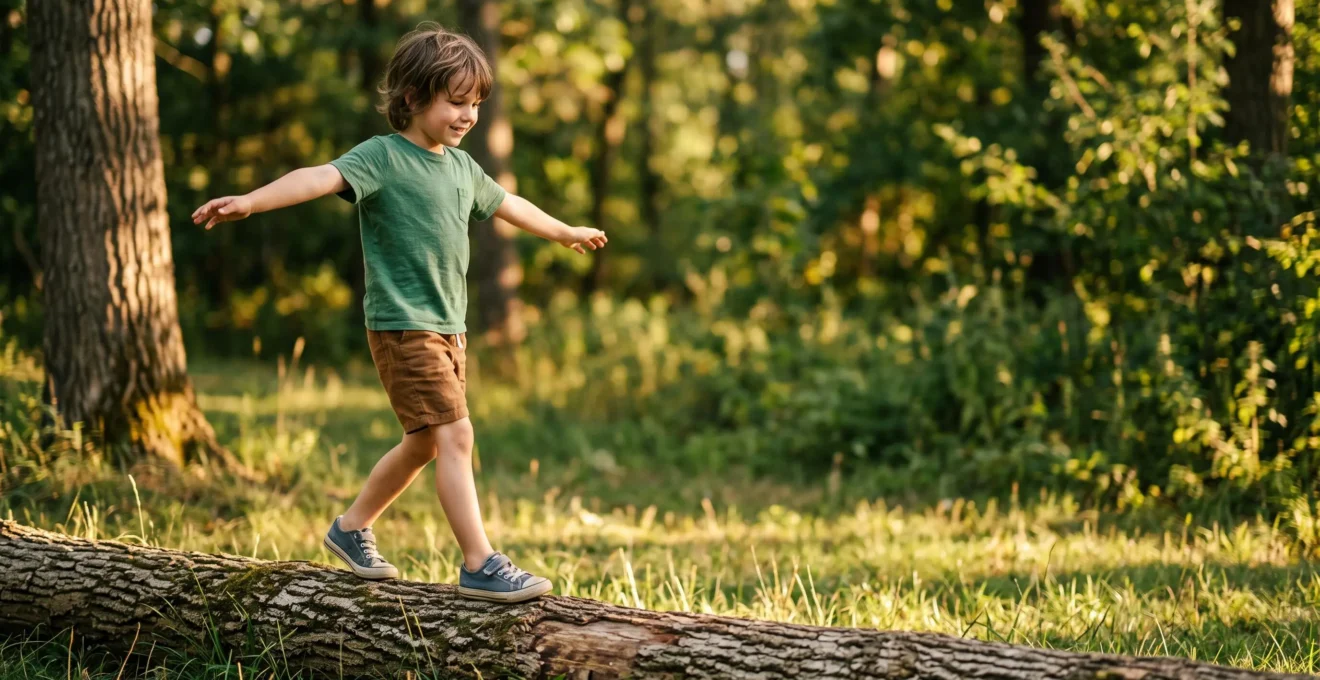
Pushing your child into one sport early is not the path to success; it’s a recipe for injury and burnout.
- True physical competence comes from a wide “movement vocabulary,” not narrow, repetitive specialization.
- Developing fundamental movement skills directly wires the brain’s centers for academic learning and emotional regulation.
Recommendation: Focus on building a foundation of play, variety, and holistic wellness before chasing sport-specific performance.
You’ve signed your child up for soccer, beaming with pride as they pull on their first jersey. But as you watch from the sidelines, you notice something is off. Their run is a little awkward, they seem hesitant to jump for the ball, and their balance is shaky. The common advice is more practice, more drills, maybe a specialized camp. We are conditioned to think that getting good at a sport means doing more of that sport.
But what if the problem isn’t the sport, but the foundation? What if, before learning the specific rules of soccer, a child needs to master the universal grammar of movement itself? This is the core of physical literacy. It’s not about being a star athlete. It’s about developing the fundamental motivation, confidence, and physical competence to move through the world with ease and assurance. It is about building the body’s ‘movement brain,’ a resilient and adaptable operating system that fuels not just athletic pursuits, but academic success and emotional well-being.
This guide will shift your perspective from sport-specific training to foundational movement. We’ll explore why a physically competent child is often a more confident student, how to build these skills in your own living room, and why a variety of movements is the single best way to prevent injuries and foster a lifelong love of activity. It’s time to stop training for the game and start preparing for life.
In this article, we will deconstruct the building blocks of true physical ability. You will find a structured overview of the key concepts that empower you to foster a healthy, holistic development for your child, far beyond the confines of a single sports field.
Summary: Physical Literacy: Building a Foundation for Life, Not Just for Sport
- Why Does Being Physically Competent Boost Academic Confidence?
- How to Build an Obstacle Course in a Small Living Room?
- The Early Specialization Risk: Why Variety Prevent Injuries?
- Skill Acquisition or Fitness: What Is the Goal of Physical Literacy?
- How to Turn the Walk to School into a Balance Lesson?
- Why Is Tummy Time Essential for Crawling and Walking Later?
- Wellness or Absence of Disease: Changing Your Family’s Mindset
- Holistic Wellness for Kids: Focusing on Gut Health and Mental Balance?
Why Does Being Physically Competent Boost Academic Confidence?
The link between moving the body and training the brain isn’t metaphorical; it’s neurological. When a child learns to balance, jump, or coordinate a complex sequence of movements, they are doing far more than strengthening muscles. They are giving their cerebellum a rigorous workout. Often called the “little brain,” the cerebellum is the command center for motor control, coordination, and balance. A striking anatomical fact reveals that while making up only about 10% of the brain’s weight, the cerebellum contains roughly four times more neurons than the rest of the brain.
This dense neural network isn’t just for sport. Growing evidence shows this ‘movement brain’ is deeply involved in higher-level cognitive processes. A review of pediatric neuroscience studies highlights that the cerebellum is crucial for fine-tuning not only motor actions but also cognitive functions like attention, language, and problem-solving. When your child navigates an obstacle course, their brain is actively practicing sequencing, spatial awareness, and rapid decision-making—skills that are directly transferable to organizing a story for a school report or solving a multi-step math problem.
This is why a child who is physically competent—who trusts their body to run, climb, and react—often carries that confidence into the classroom. The self-assurance gained from mastering a physical challenge becomes a belief in their ability to master intellectual challenges. They learn that with practice, they can improve. They internalize the process of trial, error, and eventual success. This creates a positive feedback loop: physical mastery builds mental confidence, which in turn encourages them to take on new challenges, both physically and academically.
Ultimately, building physical competence isn’t about creating an athlete; it’s about building a more capable and resilient learner.
How to Build an Obstacle Course in a Small Living Room?
Fostering fundamental movement skills doesn’t require a gymnasium or expensive equipment. Your living room, no matter its size, is a perfect laboratory for building a rich “movement vocabulary.” The key is to see your everyday environment through the eyes of a movement educator: a chair is not just for sitting, it’s a tunnel to crawl under; a cushion is not just for comfort, it’s a rock to jump over.
Creating an indoor obstacle course is a powerful way to work on agility, balance, and coordination in a playful, low-stakes environment. Start with simple “stations” using items you already own. A line of masking tape on the floor becomes a balance beam. A series of pillows requires careful, deliberate jumps from one to the next. A blanket draped over two chairs creates a tunnel for crawling, which develops core strength and spatial awareness. The goal is not speed, but control and exploration.
As the image above demonstrates, a compelling course can be built with minimal items. Encourage your child to move through the course in different ways: walking backward on the tape, hopping on one foot between cushions, or carrying a stuffed animal through the tunnel. These variations challenge the brain to adapt and create new motor patterns. This isn’t just “burning off energy”; it’s a focused session of skill acquisition disguised as fun. It teaches problem-solving as your child figures out how to navigate each new challenge you create.
Your 5-Point Living Room Movement Audit
- Surfaces & Levels: Identify different surfaces. Can we jump from the rug (soft) to the wood floor (hard)? Can we crawl under the coffee table and step over a shoebox?
- Pathways & Lines: Use tape, a row of socks, or a vacuum cleaner cord to create paths. Can you walk on the line? Can you hop along it? Can you slither beside it like a snake?
- Objects for Balance & Agility: Gather pillows, cushions, and sturdy books. Arrange them as stepping stones. How far apart can they be? Can you balance on one for three seconds?
- Tunnels & Crawl Spaces: Use chairs, blankets, and large cardboard boxes to create spaces to crawl through. This builds core and upper body strength.
- Goals & Targets: Place a laundry basket at the end of the course. Can you throw a pair of rolled-up socks into it? This integrates hand-eye coordination with the gross motor skills of the course.
By regularly changing the layout, you keep the challenge fresh and continuously expand your child’s movement toolkit.
The Early Specialization Risk: Why Variety Prevent Injuries?
The pressure on parents to choose one sport and pursue it intensely from a young age is immense. We are sold the idea that an early start is the only path to excellence. However, a growing body of evidence shows that this approach—known as early sport specialization—can be detrimental. It builds a fragile athlete, like a chain that is only as strong as its most overused link. In contrast, a childhood filled with a variety of movements builds a resilient athlete, like a complex, interconnected web.
Repetitively practicing the same limited set of movements, as is common in a single sport, leads to overuse injuries. The developing bodies of children are not designed for the high-volume, low-variety training regimens of professional adults. This is not just theory; the data is stark. A massive review analyzing 93 studies and over 62,000 athletes found that early sport specialization was associated with an increased risk of injury, worse physical performance, and poor psychological outcomes. It can lead to burnout and cause children to abandon physical activity altogether.
The alternative is to build a broad “movement vocabulary.” Think of it this way: specializing in one sport is like learning to speak only one dialect, and only about one topic. A childhood of varied play—climbing trees, dancing, swimming, and informal games—is like becoming fluent in multiple languages. This approach builds neuromuscular resilience. When a child has a deep well of movement patterns to draw from, their body is better able to adapt to unexpected physical stresses, distributing force across a well-developed system rather than concentrating it on a few over-taxed joints and muscles.
Before encouraging your child to be a great soccer player, encourage them to be a great mover. The sport-specific skills will come more easily, and more safely, on top of that strong, varied foundation.
Skill Acquisition or Fitness: What Is the Goal of Physical Literacy?
A common misconception is that physical literacy is just another term for “fitness.” A child who can run a lap the fastest or do the most push-ups is seen as physically literate. But this misses the point entirely. While fitness is a component, the true goal of physical literacy is far broader and more profound. It is about skill acquisition and the confidence that comes with it, not just raw physical output.
The focus is on developing the competence and understanding to move through different environments and situations effectively. As defined by leading organizations in the field, physical literacy is a holistic concept. For instance, ParticipACTION, a key Canadian authority, provides a comprehensive definition:
The motivation, confidence, physical competence, knowledge and understanding to value and take responsibility for engagement in physical activities for life.
– ParticipACTION, ParticipACTION Glossary — Physical Literacy
This definition highlights the key pillars: it’s not just having the physical ability (competence), but also the desire (motivation) and self-belief (confidence) to use it. A child can be very “fit” but lack the confidence to try a new sport for fear of looking foolish. That child is not physically literate. Conversely, a child who is not the fastest or strongest but is eager to try climbing, willing to learn to skate, and happy to join in a dance class, is well on their way.
The primary goal, therefore, is to build a library of fundamental movement skills—running, jumping, throwing, catching, balancing—and the confidence to combine them in new ways. It’s about arming a child with a versatile movement toolkit and the self-assurance to open that toolbox in any situation. Fitness often becomes a happy byproduct of this process, but it is not the driving purpose.
When you focus on skill and confidence, you are giving your child the internal resources to stay active and engaged for their entire life, not just for a single season.
How to Turn the Walk to School into a Balance Lesson?
The daily walk to school is one of the most underutilized opportunities for developing physical literacy. We often rush, focused only on the destination. But this short journey is a natural obstacle course, rich with chances to practice fundamental movement skills. By shifting your mindset from “getting there” to “moving there,” you can transform a mundane routine into a powerful, playful training session. Unfortunately, this opportunity is often missed; national physical activity report cards indicate that Active Transportation to school is a weak point, often graded as low as C- in many areas.
The key is to turn the environment into your equipment. A curb is not just a curb; it’s a balance beam. Challenge your child to walk its length without stepping off. A crack in the pavement becomes a line to hop over. A series of sewer covers are stepping stones to jump between. These simple games are incredibly effective at developing dynamic balance—the ability to maintain control while in motion—which is a cornerstone of almost every sport and physical activity.
You can also incorporate challenges that build agility and spatial awareness. Weave around a row of lampposts like a skier. Try to walk without stepping on any cracks. Change your pace: walk like a giant with long, slow strides, then scurry like a mouse with quick, tiny steps. These “movement games” cost nothing and require no planning, yet they contribute significantly to your child’s movement vocabulary. They teach the brain and body to work together, to adapt to changing terrain, and to navigate the world with more control and confidence.
The walk to school stops being a chore and becomes an adventure, laying the groundwork for a more competent and confident mover.
Why Is Tummy Time Essential for Crawling and Walking Later?
For the youngest members of the family, the journey of physical literacy begins on the floor. “Tummy time”—placing a baby on their stomach while awake and supervised—is often presented as a simple activity to prevent a flat head, but its role in motor development is far more fundamental. It is, in effect, a baby’s first resistance training. It is the first word in their burgeoning movement vocabulary.
When a baby is on their tummy, they are working against gravity to lift their head, push up with their arms, and look around. This simple act builds crucial strength in the neck, shoulders, back, and core muscles. These are the very same muscle groups that will later be required for rolling over, sitting up, crawling, and eventually, pulling up to stand and walk. Without a strong foundation built during tummy time, these later developmental milestones can be delayed.
Tummy time is also a baby’s first lesson in proprioception—the body’s sense of its own position in space. Pressing their hands and tummy against the floor sends a flood of sensory information to the brain, helping them build a mental map of their own body. They learn cause and effect: “When I push with my arms, my chest lifts.” This cognitive link between action and outcome is the building block of intentional movement.
Think of it as laying the foundation of a house. You cannot build the walls and roof without first pouring a solid concrete slab. Tummy time is that slab. It prepares and strengthens the entire system for the complex structures—like crawling and walking—that will be built on top of it. It’s a simple, non-negotiable step in building a body that is ready to move and explore the world.
It may seem like simple play, but it is the essential first chapter in your child’s story of physical competence.
Wellness or Absence of Disease: Changing Your Family’s Mindset
In many families, health is viewed through a reactive lens. We think about it when someone gets sick. The goal becomes the “absence of disease”—no colds, no fevers, no trips to the doctor. While this is understandable, it sets a very low bar for what it means to be healthy. True wellness is not merely the absence of illness; it is the presence of vitality, resilience, and energy. Shifting your family’s mindset from a reactive “not sick” model to a proactive “thriving” model is a cornerstone of holistic health.
This mindset shift changes your daily decisions. Instead of asking, “What can we do to avoid getting sick?” you start asking, “What can we do to build a stronger, more resilient system?” The focus moves from avoiding negatives to building positives. A walk in the park is no longer just a way to kill time; it’s an investment in cardiovascular health and mental well-being. Choosing whole foods over processed snacks isn’t about deprivation; it’s about providing the high-quality fuel your family’s bodies and brains need to perform at their best.
Adopting a wellness mindset positions you, the parent, not as the family’s nurse-on-call, but as its Director of Well-Being. Your role expands to creating an environment that promotes strength, energy, and joy. This means modeling a positive attitude towards physical activity, making nutritious food appealing and accessible, and prioritizing restorative sleep. It means talking about exercise as something we get to do for our bodies, not something we have to do. This reframing is incredibly powerful for children, as it shapes their lifelong relationship with their own health.
When wellness becomes the goal, healthy habits stop being chores and become empowering choices that build a foundation for a vibrant life.
Key Takeaways
- Physical literacy is the foundational alphabet of movement that must be learned before a child can become fluent in any single sport.
- Movement variety is not optional; it is the key to building physical and mental resilience, preventing injuries caused by early specialization.
- Competence in fundamental movements like balancing and coordinating directly fuels confidence in academic and social settings by strengthening the brain’s core processing centers.
Holistic Wellness for Kids: Focusing on Gut Health and Mental Balance?
The modern understanding of wellness has moved far beyond a simple focus on muscles and bones. We now know that a child’s ability to move, think, and feel is part of a deeply interconnected system. The concept of a “gut-brain axis” has emerged from the lab and into practical parenting, revealing that the health of a child’s digestive system has a direct and profound impact on their mental balance and cognitive function. A holistic approach to physical literacy must therefore include a focus on what’s happening inside.
The gut is home to trillions of microorganisms, collectively known as the microbiome. This internal ecosystem is not a passive bystander; it actively participates in our health. For instance, researchers explain that specific byproducts from a healthy gut, like short-chain fatty acids, can reach the brain and modulate the production of key neurotransmitters like serotonin and dopamine, which regulate mood and focus. A 2024 study on young children specifically found that alterations in their gut microbiome could induce changes in behavior and emotional regulation.
This means that nutrition plays a central role in your child’s readiness to learn and move. A diet rich in fiber from fruits, vegetables, and whole grains feeds the beneficial gut bacteria, promoting a healthy microbiome. In contrast, a diet high in sugar and processed foods can disrupt this delicate balance, potentially impacting everything from mood to attention span. This isn’t about a perfect diet, but about recognizing that food is functional. It’s the raw material for building a healthy brain, a stable mood, and an energetic body.
This holistic view connects the dots for parents. The fussy eating, the struggles with focus, and the reluctance to be active may not be separate issues. They can be interconnected parts of a single system. By supporting gut health through nutrition, ensuring adequate sleep for mental recovery, and providing opportunities for joyful movement, you are nurturing the entire ecosystem of your child’s well-being.
The journey to physical literacy starts not on a manicured field, but in your kitchen, at the dinner table, and in the quiet moments of rest. Start building your child’s complete foundation today, and you’ll be giving them a gift of holistic health that will last a lifetime.