In summary:
- Bedtime resistance often stems from a child’s unmet need for connection and a dysregulated nervous system, not defiance.
- Focus the 20 minutes before bed on “connection before direction,” using sensory activities to calm their body and mind.
- Activities like gentle roughhousing can surprisingly activate the “rest-and-digest” state, preparing the brain for sleep.
- Mastering the timing by catching your child’s natural “sleep wave” is more effective than sticking to a rigid clock time.
The clock ticks past bedtime, and the familiar tension begins to build. You’ve tried everything: the consistent schedule, the warm bath, the soft lullabies. Yet, every evening dissolves into a battle of wills, with stalling tactics, sudden bursts of energy, and tearful protests. For many parents, this nightly struggle feels like a personal failure, a sign that they’re doing something wrong. It’s a draining cycle that leaves both parent and child feeling disconnected and exhausted.
Conventional advice often centers on creating the perfect routine, treating it like a checklist to be completed. While structure is important, this approach misses a fundamental piece of the puzzle: the child’s internal state. The resistance you face isn’t necessarily defiance; it’s often a distress signal from a nervous system that isn’t ready for the separation of sleep. They don’t need more instructions; they need more connection.
But what if the key wasn’t in a more rigid routine, but in a more intentional one? What if, instead of just directing your child through a series of tasks, you spent 20 minutes actively regulating their nervous system through sensory connection? This approach shifts the focus from managing behavior to meeting an underlying emotional and biological need. It’s about creating a feeling of safety and calm that allows sleep to come naturally, rather than forcing it.
This guide will walk you through the science and strategy behind this connection-focused approach. We will explore how to build a bridge from the chaos of the day to the calm of the night, transforming your evening routine from a battlefield into a sanctuary for bonding and rest.
Summary: The 20-Minute Routine to Stop Bedtime Resistance
- How to Connect Before You Direct to Reduce Evening Defiance?
- Reading or Massage: Which Activity Best Prepares the Brain for Sleep?
- Why Does Roughhousing Before Bed Sometimes Help Sleep?
- The Blue Light Mistake: Why TV Before Bed Delays Melatonin?
- When to Start the Routine: Catching the Sleep Wave Before the Crash
- How to Set Up a Bedroom for Sleep Success: Light and Temp?
- When to Apply Co-Regulation: The Critical Bedtime Window
- Sleep Hygiene for Kids: Creating the Perfect Biological Environment?
How to Connect Before You Direct to Reduce Evening Defiance?
The foundation of a peaceful bedtime is built not on commands, but on connection. Before you ask your child to brush their teeth or put on their pajamas, you must first fill their emotional cup. This principle, often called “connection before direction,” is about shifting from a taskmaster to a partner. When a child feels seen, heard, and emotionally connected to their caregiver, their brain and body feel safe. This sense of safety is a prerequisite for cooperation.
This isn’t just a feel-good theory; it’s rooted in biology. Bedtime resistance is a common struggle; one recent study found that over 61.3% of toddlers exhibited resistance or stalling at bedtime on multiple nights per week. This behavior is often a final, desperate bid for connection before the long separation of sleep. By proactively offering that connection, you preempt the need for resistance. Get down on their level, make eye contact, and spend five minutes fully present with them, sharing a quiet moment without any agenda.
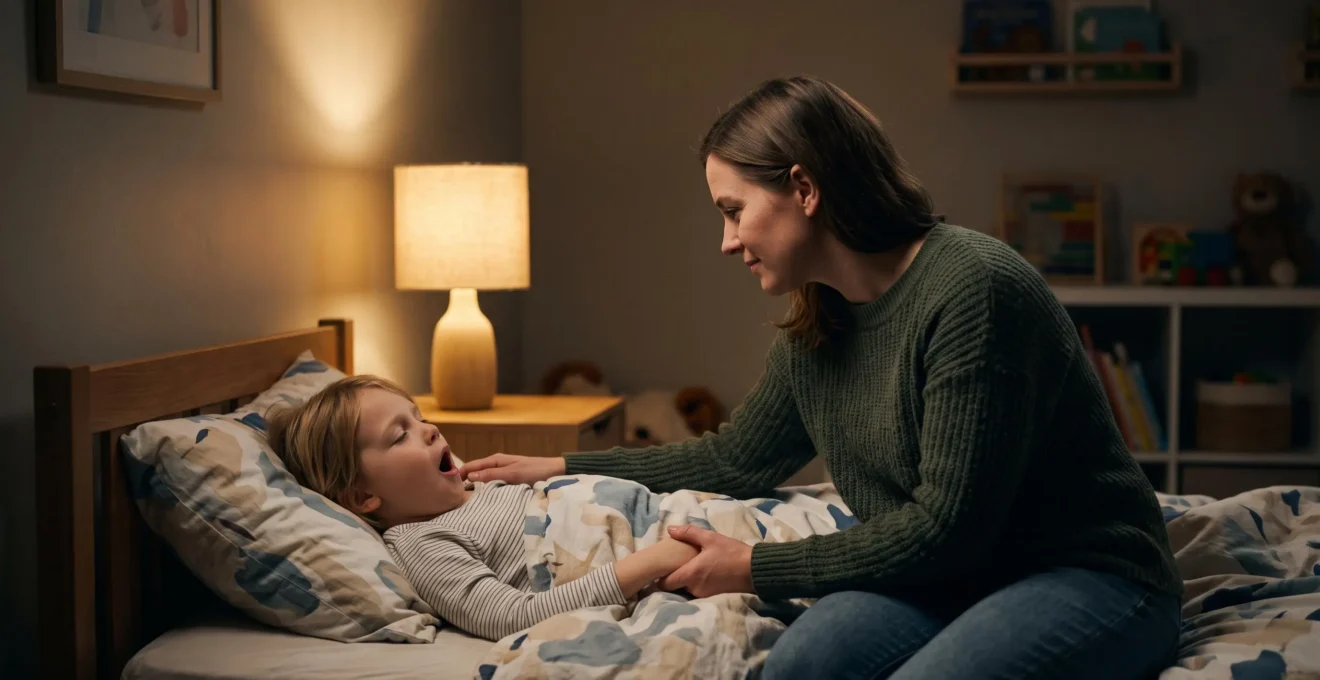
As the visual suggests, this moment of pure attention creates a bridge of trust. It tells your child, “I am here with you.” Once that bridge is established, the subsequent directions—”time to brush teeth”—are received not as demands, but as the next steps in a shared journey. As clinical psychologist Dr. Kristin Carothers explains, routines are a powerful tool for setting expectations. In her work with the Child Mind Institute, she notes:
One of the most naturalistic ways to create boundaries is around having set routines for your kids
– Dr. Kristin Carothers, Child Mind Institute
By embedding connection at the start of this routine, you create boundaries that feel supportive rather than restrictive, transforming defiance into willing participation.
Reading or Massage: Which Activity Best Prepares the Brain for Sleep?
Once connection is established, the routine needs calming activities that actively prepare the brain for sleep. The two most common choices are reading a story and giving a gentle massage. While both are beneficial, they work on the nervous system in fundamentally different ways. The best choice for your child depends on their unique sensory needs at that moment. Understanding their differences allows you to create a more responsive and effective routine.
Reading a story serves as a cognitive downshift. It pulls a child’s focus away from the stimulating thoughts and events of the day and anchors them in a simple, linear narrative. The rhythmic sound of your voice, the predictable turning of pages, and the low-stimulation visuals all work together to signal to the brain that it’s time to transition from an active to a restful state. It’s an excellent tool for a child who is mentally “busy” and needs a gentle off-ramp for their racing thoughts.
A massage, on the other hand, provides a powerful sensory downshift. It works directly on the physical body to release tension. The firm, gentle pressure on the back, arms, and legs provides proprioceptive input—the sense of one’s own body in space. This type of input is deeply calming to the nervous system. It helps decrease the production of the stress hormone, cortisol, while boosting feel-good neurochemicals like serotonin and oxytocin. For a child who is physically restless, fidgety, or seems to have pent-up energy, a massage can be far more effective than a story at settling their body for sleep.
The optimal routine might even include both. You could start with a short, five-minute massage to calm the body, followed by a quiet story to calm the mind. The key is to observe your child: Are they wrestling with big feelings and a wiggly body, or are they buzzing with ideas and questions? Let their state guide your choice, tailoring the routine to what their nervous system needs most.
Why Does Roughhousing Before Bed Sometimes Help Sleep?
The idea of engaging in rough, physical play right before bed seems completely counter-intuitive. Common wisdom dictates that we should be winding down, not ramping up. However, for many children, a short burst of a specific *type* of roughhousing can be one of the most effective ways to release physical tension and prepare their body for deep, restorative sleep. The key lies in understanding the sensory input it provides and how it regulates the nervous system.
This isn’t about wild, chaotic wrestling. It’s about structured, heavy-work activities that provide strong proprioceptive and vestibular input. Think of it as feeding your child’s “sensory diet.” Activities like being swung in a blanket, jumping into a pile of pillows, or “steamrolling” them with a yoga ball apply deep pressure to their muscles and joints. This input has a powerful organizing effect on the brain. As clinical psychologist Dr. Sarah Bren explains, these movements can directly trigger the body’s relaxation response.
One of the most productive pre-nighttime activities for children is when they invert their bodies—hanging upside-down, jumping into a stack of pillows or being swung by a parent… it activates their parasympathetic nervous system, aka their rest-and-digest state
– Dr. Sarah Bren, The Bump
This activation of the parasympathetic nervous system is precisely what’s needed to counteract the “fight or flight” state that can fuel bedtime resistance. It helps burn off residual cortisol and physical energy in a contained, connected way, leaving the child feeling calm, grounded, and ready for a quiet transition. It’s crucial, however, to always end this physical play with a distinct calming activity, like a story or a massage, to signal the final shift toward sleep.
Your Action Plan for Safe Pre-Bed Roughhousing
- Gauge the need: Use rough play before bedtime primarily to release physical tension or pent-up emotions that might interfere with sleep.
- Blanket drag: Gently pull your child along a soft floor using a blanket to provide calming proprioceptive input.
- Blanket swing: With another adult, hold your child in a blanket and swing them gently back and forth like a hammock.
- Pillow crash pad: Let your child jump from a low, safe surface (like a mini trampoline or the sofa) into a large pile of pillows and cushions.
- Calm transition: Always end the session with a calm, quiet transition activity to signal the shift toward sleep.
The Blue Light Mistake: Why TV Before Bed Delays Melatonin?
One of the most common pieces of sleep advice is to avoid screens before bed, but it’s often dismissed as an old-fashioned rule. The reality is that the negative impact of screen time, particularly in the hour before sleep, is a matter of hard science. The issue isn’t the content of the show or the act of watching itself, but the specific type of light emitted by tablets, phones, and televisions.
Our bodies operate on a 24-hour internal clock, or circadian rhythm, which is largely regulated by light exposure. When it gets dark, the brain’s pineal gland begins to produce melatonin, the hormone that makes us feel sleepy. However, the blue-wavelength light that radiates from electronic screens is particularly effective at tricking the brain into thinking it’s still daytime. This exposure actively suppresses the production of melatonin, essentially hitting the pause button on the body’s natural sleep-inducing process.
This effect is not just a minor disruption; it’s significantly more pronounced in children. Their eyes are still developing, and their pupils are larger, allowing more light to enter and reach the retina. A physiological study on light exposure confirmed this, finding that melatonin suppression in children was greater than in adults when exposed to blue-enriched light. This means that the same 30 minutes of screen time that might only slightly affect an adult can substantially delay sleepiness in a child, leading to that frustrating “second wind” just when they should be winding down.
To protect your child’s natural sleep rhythm, it’s crucial to establish a screen-free buffer of at least 60-90 minutes before bedtime. Replace the TV with the activities discussed previously—reading, massage, or connection-based play. This isn’t about deprivation; it’s about creating the optimal biological conditions for sleep to occur effortlessly. Dim the lights in your home, switch to warm-toned lamps, and allow your child’s brain to do what it’s designed to do: prepare for rest as darkness falls.
When to Start the Routine: Catching the Sleep Wave Before the Crash
You can have the most perfect, connection-rich bedtime routine in the world, but if you start it at the wrong time, you’ll still face a struggle. Timing is everything. Many parents either start the routine too early, when the child has no biological sleep pressure, or too late, when the child is already overtired and wired. The key is to learn your child’s unique sleep cues and catch the natural “sleep wave” before it crashes.
This “sleep wave” is the ideal window when your child’s body is physiologically primed for sleep. Sleep pressure (adenosine) has built up throughout the day, and melatonin is beginning to rise. During this window, a child will seem calm, a little zoned-out, and may show signs like yawning, rubbing their eyes, or losing interest in play. This is the moment to act. If you initiate the bedtime routine during this wave, you are working *with* their biology, not against it. Sleep will come much more easily.
If you miss this window, the body’s emergency backup system kicks in. The adrenal glands release cortisol, a stimulating “wake-up” hormone, to fight the fatigue. This is the dreaded “second wind.” The child who was drowsy just 20 minutes ago is now hyper, silly, and running in circles. Trying to get an overtired, cortisol-fueled child to bed is an uphill battle that often ends in meltdowns. Given that a cross-sectional study found bedtime resistance was the most prevalent sleep problem, reported in 70.3% of cases, learning to avoid this overtired state is one of the most powerful tools a parent has.
The Power of a Consistent Routine
The importance of a consistent bedtime routine has been validated by numerous studies. Sleep scientists Jodi Mindell and Ariel Williamson concluded that a nightly bedtime routine supports not only healthy sleep but also a wider set of positive outcomes, including language development, emotional regulation, and a stronger parent-child bond. A more recent pilot trial reinforced this, finding that families who started a simple bedtime routine during their toddlers’ 12-month checkups saw their children sleep more soundly, with fewer and shorter night wakings. This reinforces the value of anchoring the routine to the child’s sleep cues rather than a rigid clock time.
Instead of watching the clock, watch your child. Keep a log of when they show their sleepy cues for a few days. You’ll likely see a pattern emerge. Start your 20-minute routine at the very beginning of that pattern, and you’ll find yourself guiding a calm child to bed, not wrestling a wired one.
How to Set Up a Bedroom for Sleep Success: Light and Temp?
The final piece of the puzzle is the sleep environment itself. The bedroom should be a sanctuary for sleep—a “cozy cave” that sends a clear, consistent message to your child’s brain: this is a place for rest. Two of the most powerful environmental factors you can control are light and temperature. Optimizing these elements supports the biological processes of sleep that you’ve been nurturing throughout the routine.
Light, as we’ve discussed, is the primary regulator of the circadian rhythm. The bedroom should be as dark as possible. Even small amounts of light from streetlamps, hallways, or electronics can filter through the eyelids and disrupt melatonin production. Invest in high-quality blackout curtains or blinds to block all external light. Cover the small LED lights on baby monitors or sound machines with a piece of electrical tape. If your child needs a night light for comfort, choose one that emits a dim, warm, red- or amber-toned light, as these wavelengths are the least disruptive to melatonin.
Temperature is the second critical factor. Our core body temperature naturally needs to drop slightly to initiate and maintain sleep. A room that is too warm can interfere with this process, leading to restlessness and night wakings. While it may feel counter-intuitive, a cool room is better for sleep than a warm one. In fact, for babies and young children, sleep experts generally recommend that the best temperature for sleep is somewhere between 68°F and 72°F (20-22°C). Place a thermometer in the room to get an accurate reading and use a fan to circulate air if needed. Dress your child in breathable, natural-fiber pajamas and adjust bedding layers to achieve comfort without overheating.
By creating a dark, cool, and quiet environment, you remove the final obstacles to sleep. You’ve connected with your child, calmed their nervous system, and timed the routine to their biological rhythm. Now, their bedroom environment provides the final, unambiguous cue that it is time for their body and mind to rest deeply.
When to Apply Co-Regulation: The Critical Bedtime Window
Even with the perfect routine and environment, there will be nights when your child is unsettled. They might be anxious about a change at school, teething, or simply having an “off” day. This is when your most powerful tool comes into play: co-regulation. Co-regulation is the process by which you lend your calm, regulated nervous system to your child to help them manage their big emotions and return to a state of balance. It’s the active ingredient in your connection.
The critical window to apply co-regulation is during the final transition into bed. This is often the moment when a child’s last-minute fears or separation anxiety surface. They may suddenly become tearful, clingy, or start making new demands. Your instinct might be to get frustrated or to try and reason with them, but what their nervous system truly needs is your steady presence. This is not the time for discipline or logic; it’s the time for empathy and physical calm.
So, what does this look like in practice? It means staying physically close. It might be sitting on the edge of their bed, holding their hand, or rubbing their back. It means modeling calm breathing—taking slow, deep breaths and exhaling with a gentle “shhh” sound. Your child’s nervous system will subconsciously mirror yours. If you are calm and grounded, you become an anchor for them in their emotional storm. You can also use your voice as a regulating tool. Speak in a low, slow, rhythmic tone, validating their feelings without amplifying them: “I hear you. It feels hard to say goodnight. I am right here with you. You are safe.”
This act of co-regulation isn’t “giving in” or creating a bad habit. It is actively teaching your child the foundational life skill of emotional regulation. By providing this external support when they are overwhelmed, you are wiring their brain for resilience. You are showing them that even when feelings are big and scary, they are manageable. This profound sense of safety and trust is what ultimately allows a child to let go and surrender to sleep.
Key takeaways
- Prioritize a 5-minute “connection before direction” moment at the start of the routine to fill your child’s emotional cup.
- Use physical activities like gentle roughhousing or massage to regulate the nervous system, not just stories to distract the mind.
- Watch your child for their unique sleepy cues (the “sleep wave”) and start the routine then, rather than being a slave to the clock.
Sleep Hygiene for Kids: Creating the Perfect Biological Environment?
We’ve journeyed through the individual components of a successful evening routine: the emotional connection, the sensory activities, the precise timing, and the physical environment. Now it’s time to weave these threads together. True sleep hygiene for children isn’t a rigid checklist of dos and don’ts; it’s about holistically creating the perfect biological environment where sleep can unfold naturally. It’s an ecosystem where your child’s internal state is in harmony with their external surroundings.
Think of yourself not as a sleep enforcer, but as a sleep architect. Your role is to design an evening that systematically removes the barriers to rest. You start by building a foundation of emotional safety through connection and co-regulation. This lowers the stress hormone, cortisol, which is a powerful sleep inhibitor. You then provide the right sensory input—be it the cognitive calm of a story or the physical release of rough play—to satisfy what their nervous system is craving.
Next, you become a master of timing, observing your child’s innate rhythms to catch that perfect wave of sleepiness. You work with their body, not against it. Finally, you curate their physical space, making it a dark, cool cave that signals to every cell in their body that it is time for restorative rest. Each element supports the others, creating a powerful, cumulative effect that makes sleep feel inevitable and peaceful, rather than like a conflict to be won.
This approach moves beyond the surface-level advice. It empowers you to become a detective of your own child’s needs, responding with intention and empathy. It acknowledges that your child is not a machine to be programmed for sleep, but a developing human whose feelings and biology are deeply intertwined. By honoring both, you not only solve the “problem” of bedtime resistance but also strengthen the most important connection of all: the one you share with your child.
Start tonight by carving out just 20 minutes for this connection-focused routine. Observe the small shifts, celebrate the quiet moments, and begin the journey toward a more peaceful and connected bedtime.