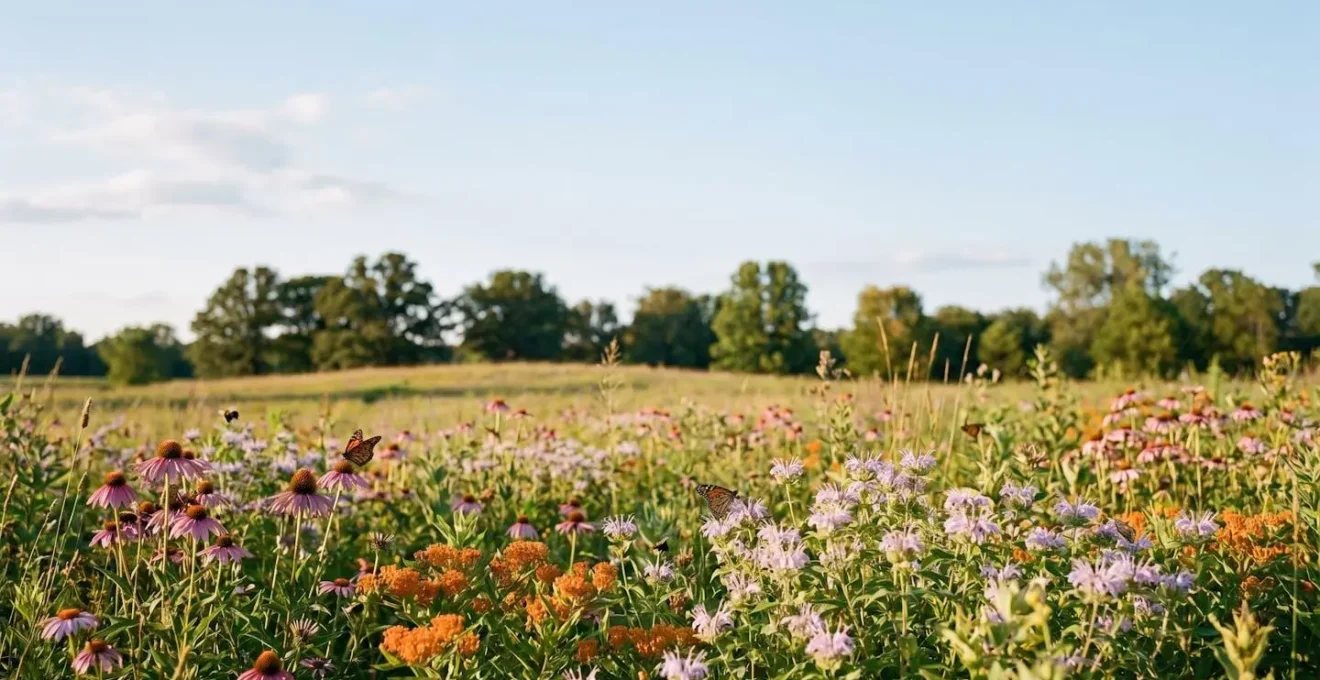
The key to a vibrant wildlife garden is not just planting natives, but recreating the specific, data-backed ecological mechanisms that underpin a functioning ecosystem.
- Specialist insects, like most caterpillars, have co-evolved to feed only on specific native plants, forming the foundational food source for birds.
- Even “weeds” like nettles and functional parasites like Yellow Rattle play critical engineering roles that drastically increase biodiversity.
Recommendation: Shift your mindset from ‘gardener’ to ‘ecosystem manager’ by leaving autumn structures intact and selecting plants based on their specific ecological function, not just their appearance.
For the wildlife gardener wanting to make a real difference, the advice is ubiquitous: plant natives. We’re told they provide food, require less water, and are simply ‘better’ for local fauna. While true, this often feels like an incomplete answer. Many gardeners dutifully install native flowers only to wonder why their garden doesn’t teem with the life seen in nature documentaries. The common wisdom gets us started, but it rarely explains the profound, interconnected systems at play or how to leverage them for maximum impact.
The truth is that a thriving wildlife garden operates on principles far deeper than a simple plant list. It’s a complex web of co-evolutionary relationships, biochemical warfare, beneficial parasitism, and even strategic decay. The gap between a pretty native garden and a functioning ecosystem lies in understanding these invisible mechanisms. It’s not just about what you plant, but about replicating the processes that nature has perfected over millennia.
This guide moves beyond the platitudes. We will not just list plants; we will audit the ecological functions they perform. By adopting the data-driven, persuasive mindset of a rewilding consultant, you will learn to see your garden not as a collection of objects, but as a dynamic system. We will explore the science behind why a specific native leaf is a five-star restaurant for one caterpillar and poison for another, why ‘weeds’ can be ecological powerhouses, and why the most important action you can take is sometimes to do nothing at all. Prepare to transition from being a gardener to becoming an ecosystem architect.
Summary: A Consultant’s Guide to Rewilding Your Garden
- The Co-evolution Factor: Why Caterpillars Only Eat Specific Native Leaves?
- Nettle and Dock: Can You Incorporate Them Without It Looking Messy?
- Native vs Native Origin: Why Local Provenance Seeds Matter?
- Yellow Rattle: The Parasite You Need to Start a Wildflower Meadow?
- Container Pond Natives: Bringing Wildlife to a Balcony?
- Why Native Hedges Outperform Conifers in Drought Conditions?
- Which Seed Heads Provide the Most Calories for Winter Birds?
- Why Cutting Back Autumnal Dormancy Structure Harms Hibernating Insects?
The Co-evolution Factor: Why Caterpillars Only Eat Specific Native Leaves?
The single most important function of a wildlife garden is not to feed adult butterflies with nectar, but to feed birds with caterpillars. This is the foundation of the terrestrial food web. However, to produce this vital resource, you must understand the principle of biochemical specialization. Over millennia, native plants have developed chemical defenses—toxins and unpalatable compounds—to deter herbivores. In response, specialist insects have evolved the unique ability to digest the specific chemical arsenal of their one or two host plants. This evolutionary arms race is why 90% of herbivorous insects are specialists.
An exotic plant from another continent, like a Ginkgo tree, is a “food desert” to local insects. They lack the evolutionary history to overcome its chemical defenses. This is not a trivial difference; research by Doug Tallamy demonstrates that native plants support vastly more insect life. In one study, native plant communities hosted 15 times as many caterpillar species as non-native plantings. Without caterpillars, you break the food chain at its base.
Case Study: The Monarch and Milkweed Chemical Arms Race
The relationship between the monarch butterfly and milkweed is a classic example of co-evolution. Monarch caterpillars evolved a unique resistance to the toxic cardiac glycosides in milkweed sap, which are poisonous to most other herbivores. They don’t just tolerate this poison; they sequester it in their bodies, becoming toxic to predators like birds. The plant’s weapon becomes the caterpillar’s superpower. In this intricate dance, the milkweed plant, in turn, has evolved to favour rapid regrowth after being eaten rather than developing ever-stronger toxins, creating a sustainable, specialized relationship.
The visual evidence of this specialized feeding is a sign of a healthy ecosystem. Seeing a caterpillar chew on a leaf is not a sign of damage; it’s a sign of energy being transferred up the food web.
This extreme close-up reveals the intimate connection between an insect and its host. For a wildlife gardener, this is the ultimate measure of success: your plants are not just decorations, they are actively participating in the local ecosystem by providing the foundational trophic-level energy required to support other life forms.
Therefore, when selecting plants, the primary question must be: “What eats this?” If the answer for local insects is “nothing,” then that plant is failing its most critical ecological role.
Nettle and Dock: Can You Incorporate Them Without It Looking Messy?
In a conventional garden, stinging nettles (Urtica dioica) and broad-leaved dock (Rumex obtusifolius) are treated as enemies to be eradicated. For a rewilding consultant, they are ecological powerhouses that offer incredible functional redundancy. These plants are native generalists that thrive on disturbed, nutrient-rich soil—the exact conditions of many gardens. While a single species of nettle might seem insignificant, the data reveals its systemic importance.
For instance, wildlife ecologists have documented that nettles support over 100 species of invertebrates in some regions. This includes being the exclusive host plant for the caterpillars of beautiful butterflies like the Peacock, Comma, and Red Admiral. Without a patch of nettles, these species simply cannot reproduce in your garden. The key is not to let them take over, but to manage them with strategic intent. A designated “wild patch” at the back of a border, in a sunny corner, or behind a shed can be an engine of biodiversity without looking unkempt.
The strategy is one of “managed mess.” You can control the spread of nettles by planting them in a large, buried container or by regularly cutting back the runners. By treating a nettle patch like any other perennial clump—giving it a designated space and managing its boundaries—you can integrate this top-tier wildlife plant into a garden design. It’s about shifting the aesthetic from sterile tidiness to purposeful, productive wildness. This patch becomes a nursery, producing the next generation of butterflies and a food source for birds, proving that even the most maligned natives are critical components of a resilient garden ecosystem.
The presence of these plants signals a deeper understanding of ecology, where a plant’s value is measured not by its floral beauty, but by the number of ecological niches it supports.
Native vs Native Origin: Why Local Provenance Seeds Matter?
Once we accept the need for native plants, the next layer of ecological precision is understanding local provenance. A plant can be native to a country or even a state, but still be poorly adapted to your specific local conditions. A Red Maple (Acer rubrum) from a seed source in Georgia will have evolved to handle mild winters, whereas one from a seed source in Quebec will be adapted to deep freezes. Planting the Georgian tree in Quebec may lead to it leafing out too early, only to be killed by a late frost. The National Audubon Society provides a clear, authoritative definition:
Native plants are those that occur naturally in a region in which they evolved. They are the ecological basis upon which life depends, including birds and people. Without them and the insects that co-evolved with them, local birds cannot survive.
– National Audubon Society, Why Native Plants Matter – Audubon Conservation Guide
This concept of “in which they evolved” is key. Plants from a local seed source—often defined as a radius of 50-100 miles—are genetically attuned to your area’s specific rainfall patterns, soil types, and the timing of seasonal changes. They will also be synchronized with the life cycles of local insects that depend on them. A fun and educational way to observe this principle in action is to conduct a simple family experiment. Collect an acorn from a local oak tree and purchase one from a distant nursery. Plant them side-by-side and observe over several years. You’ll likely notice differences in germination time, budding, and resilience to local weather events like a late frost or summer drought. This simple test powerfully demonstrates that “native” is not enough; “locally native” is the gold standard for creating a resilient and effective wildlife habitat.
By prioritizing plants grown from local provenance seeds, you are ensuring a perfect ecological match, maximizing your garden’s resilience and its value to local wildlife.
Yellow Rattle: The Parasite You Need to Start a Wildflower Meadow?
One of the biggest challenges in establishing a wildflower meadow is the overwhelming competition from vigorous grasses. They form a dense thatch that outcompetes delicate wildflower seedlings for light, water, and nutrients. The conventional approach involves back-breaking work: stripping turf or repeated, difficult mowing. However, the rewilding consultant’s toolkit includes a secret weapon: an ecological mechanism known as beneficial parasitism. Meet Yellow Rattle (Rhinanthus minor), a native annual also known as the “meadow maker.”
Yellow Rattle is a hemiparasite, meaning it photosynthesizes for itself but also attaches its roots to the roots of nearby grasses, drawing water and nutrients from them. This process significantly weakens the grass, reducing its vigor by up to 60%. This opens up gaps in the sward, creating the perfect bare-soil niches for wildflower seeds to germinate and establish. Instead of fighting against the grass, you are using a natural ecological process to do the work for you. It’s a brilliant example of using one native plant’s life strategy to engineer a more diverse and beautiful plant community.
Successfully introducing this ecosystem engineer requires following its specific life cycle. It’s an annual that needs a period of cold, damp conditions to germinate (cold stratification), so its seeds must be sown in the autumn. By following a simple, targeted plan, you can turn a patch of lawn into a thriving meadow.
Action Plan: Operation Lawn Takeover
- Prep (Late Summer): Mow a selected patch of lawn as short as possible and scarify the surface with a rake to expose some soil and weaken the grass.
- Seed (Autumn): Scatter fresh Yellow Rattle seeds directly onto the prepared patch. Ensure they make good contact with the soil.
- Stratify (Winter): Do nothing. Let the winter cold and wet work its magic on the seeds, breaking their dormancy naturally.
- Germinate (Spring): Look for the first seedlings in early spring. The plant will grow and flower through early summer.
- Observe & Collect (Late Summer): As the plants die back, their seed pods will dry and rattle. This is your cue that the grass has been weakened and it’s time to collect seed for next year’s expansion.
By introducing Yellow Rattle, you are not just planting a flower; you are initiating a cascade of ecological change that will transform a monoculture lawn into a biodiverse habitat.
Container Pond Natives: Bringing Wildlife to a Balcony?
The principles of systemic rewilding are not limited to those with large gardens. Even the smallest of spaces, like a balcony or patio, can be transformed into a critical wildlife hub by creating a micro-habitat. A container pond—simply a large watertight pot or barrel—is one of the most effective ways to do this, providing a vital source of water for birds and insects and creating a complete, albeit tiny, aquatic ecosystem.
The key to success is selecting the right native aquatic plants. A non-native water lily may look pretty, but it offers little ecological function. Instead, choose a small selection of native species that perform specific roles. Include an oxygenator like Hornwort (Ceratophyllum demersum) to keep the water clear, an emergent plant like a dwarf reedmace for dragonfly nymphs to climb out on, and a floating plant like Frogbit (Hydrocharis morsus-ranae) for cover. Add a “beach” of pebbles or marbles sloping into the water to allow bees and other insects to drink safely without drowning. Within weeks, your mini-pond will be colonized by a surprising diversity of life.
This scene, a dragonfly nymph emerging to begin its adult life, can unfold in a container just a few feet across. Observing this miniature drama is a powerful reminder that providing the right native-plant-based structure is all that’s required to invite wildlife in. Your balcony becomes a vital stepping-stone habitat, connecting larger green spaces and offering refuge in a dense urban environment. This is not just a water feature; it’s a functioning aquatic ecosystem in a pot, proving that ecological impact is a matter of strategic design, not sheer scale.
A container pond is a declaration that anyone, anywhere, can participate in meaningful conservation by creating a targeted, high-value habitat.
Why Native Hedges Outperform Conifers in Drought Conditions?
A hedge is often seen as a simple boundary marker, but from an ecological perspective, it’s a linear ecosystem. The choice of plants for this structure has profound consequences for both wildlife support and climate resilience. Many modern developments favour fast-growing conifer hedges, like Leylandii. While they provide a quick screen, they are an ecological disaster: a monoculture that supports almost no native wildlife and is surprisingly fragile in the face of climate stress like drought.
A mixed native hedge, composed of species like Hawthorn, Hazel, Blackthorn, and Dog Rose, is vastly superior. The wildlife value is staggering; a native Oak tree, often used as a hedgerow tree, can support over 500 species of caterpillars, whereas an exotic Ginkgo supports a mere handful. But the true genius of a native hedge lies beneath the ground. Its diverse root systems and long-term association with local soil life create something a conifer hedge can never achieve: a resilient, water-sharing network.
Case Study: The Mycorrhizal Network, a Hedge’s Underground Internet
The diverse root systems of a native hedgerow are interconnected by vast networks of mycorrhizal fungi, often called the ‘wood-wide web.’ These fungi act as an extension of the plants’ roots, dramatically increasing their access to water and nutrients. More importantly, this network allows plants to share resources. A deep-rooted tree can pull up water from deep reserves and share it via the fungal network with shallower-rooted shrubs during a drought. This cooperative system, evolved over millennia, creates incredible drought resilience that a monoculture of shallow-rooted, non-native conifers simply cannot match. Conifer hedges often rely on consistent irrigation and fail catastrophically during prolonged dry spells, while native hedges tap into their ancient, underground support system.
By choosing a mixed native hedge, you are not just planting a boundary; you are installing a complex, self-sustaining piece of ecological infrastructure. It provides food, shelter, and a safe corridor for wildlife, while its hidden fungal network makes it far more resilient to the challenges of a changing climate.
This makes the native hedge one of the most powerful and intelligent choices a wildlife gardener can make, delivering benefits both above and below the ground.
Which Seed Heads Provide the Most Calories for Winter Birds?
As autumn turns to winter, the role of the wildlife garden shifts from a nursery to a larder. For birds, surviving the cold months is a battle for calories, and the seed heads you leave standing are their lifeline. However, not all seeds are created equal. A data-driven approach means understanding the nutritional value of what you offer. Think of your garden as a restaurant for birds; your job is to provide a menu rich in high-fat and high-protein options.
Plants like sunflowers and teasels are the caloric main courses, packed with the high-energy oils and fats that small birds need to maintain their body temperature through freezing nights. Others, like coneflowers and asters, are the lighter fare, but their persistent structure makes them a reliable snack bar throughout the winter. Goldenrod plays a unique role, acting as a ‘special menu’ where the main value is not the seeds themselves, but the overwintering insect larvae hidden within the seed heads, providing a crucial source of protein for birds like chickadees and warblers.
By planting a diversity of these native species, you create a winter buffet that caters to a wide range of birds and their specific foraging techniques. Goldfinches will expertly extract seeds from teasels, while nuthatches and chickadees will probe sunflowers. The following table provides a comparative analysis to help you design the most effective winter bird restaurant.
| Menu Item (Plant) | Nutritional Category | Primary Bird Visitors | Bonus Features |
|---|---|---|---|
| Sunflower (Helianthus spp.) | Main Course (High-Fat) | Goldfinches, chickadees, nuthatches | Large, easy-to-access seeds; high oil content |
| Teasel (Dipsacus spp.) | Healthy Choice (Protein-Rich) | Goldfinches, sparrows | Spiky structure traps insects for extra protein |
| Coneflower (Echinacea spp.) | Light Snack (Moderate Calories) | Goldfinches, cardinals | Persistent seed heads; attractive winter architecture |
| Asters (Symphyotrichum spp.) | Appetizer (Small Seeds) | Sparrows, juncos, small finches | Late-season blooms provide late-autumn nectar too |
| Goldenrod (Solidago spp.) | Special Menu (Insect Habitat) | Chickadees, warblers (insect gleaning) | Seed heads host overwintering insect larvae |
This strategic provisioning is based on a clear understanding of avian nutritional needs. You can even become a citizen scientist by observing which ‘dishes’ are most popular in your garden restaurant and adjusting your planting plan for the following year to better serve your clientele.
This approach moves beyond simply “feeding the birds” and into the realm of targeted nutritional support, a hallmark of an expertly managed habitat.
Key takeaways
- The foundation of a wildlife garden is not flowers, but caterpillars from native host plants which feed birds.
- Ecological function trumps aesthetics; “weeds” like nettles and parasites like Yellow Rattle are powerful biodiversity engineers.
- Maximizing impact requires going beyond “native” to “local provenance” and leaving plant structures standing through winter for food and shelter.
Why Cutting Back Autumnal Dormancy Structure Harms Hibernating Insects?
The final, and perhaps most critical, act of a rewilding consultant is to champion strategic inaction. The autumnal ‘garden tidy’ is a deeply ingrained habit, but it is an ecological catastrophe. Those dried stems, hollow stalks, and fallen leaves are not waste; they are the essential overwintering structure for the next generation of insects. When you cut back and ‘clean up’, you are throwing away the very life you worked all summer to cultivate.
Hollow stems of plants like bee balm, sunflowers, or Joe Pye weed are five-star hotels for native solitary bees, who lay their eggs inside and seal them for the winter. Fallen leaves are not just mulch; they are the blanket under which queen bumblebees, butterflies like the Mourning Cloak, and countless other invertebrates hibernate. The dried seed heads are the winter larder for birds, and the standing stalks are hibernation sites for ladybugs and lacewings. This links directly back to our first principle: providing birds with food. For instance, research on bird feeding ecology reveals that a single pair of chickadees may need to find up to 9,000 caterpillars to raise one clutch of nestlings. Many of those caterpillars begin life in the very structures we are often tempted to clear away.
This image of ladybugs nestled inside a dried stem is a powerful symbol of the hidden life your garden harbours. Resisting the urge to tidy is an act of conservation. The aesthetic of a winter garden should not be one of bare soil, but one of complex, life-filled structure. The “mess” is the habitat.
Action Plan: The Wildlife Guardian’s Pledge
- Stem Sanctuary: We pledge to leave all native plant stems and seed heads standing until late spring when overwintering insects have had a chance to emerge.
- Leaf Layer: We pledge to create a ‘leaf hotel’ by leaving fallen leaves undisturbed in garden beds and under shrubs to provide cover for hibernating insects.
- Hollow Homes: We pledge to cherish hollow stems as nurseries for next year’s native bees, resisting the urge to cut them back prematurely.
- Advocacy: We pledge to educate our neighbours and friends, explaining that our “messy” garden is a deliberate and vital hibernation sanctuary.
- Discovery: We pledge to observe and document the life we find—the chrysalises, cocoons, and emerging insects—to celebrate our conservation success.
By embracing this philosophy of “benign neglect,” you complete the cycle. You allow your garden to fully function as an ecosystem, providing food and shelter through all seasons, and ensuring a vibrant explosion of life come spring.