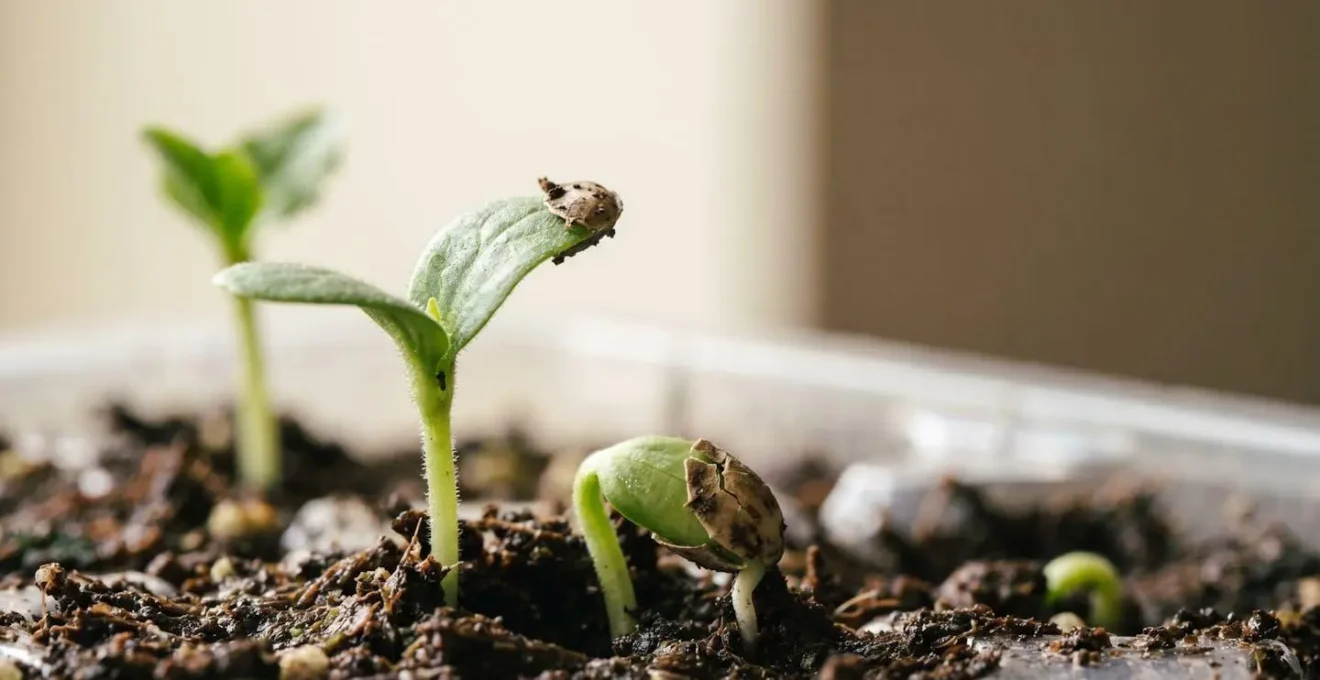
The heartbreaking failure of precious heirloom seeds often stems not from a lack of care, but from a misunderstanding of their fundamental botanical needs.
- Success lies in mimicking the specific environmental signals—temperature, light, moisture—that a seed is genetically programmed to need for germination.
- Generic advice is insufficient; factors like light quality (DLI/PPFD), soil biology, and genetic history (Heirloom vs. F1) are critical for success.
Recommendation: Stop treating all seeds equally. Approach your next sowing by first identifying the unique ‘unlock code’ for each variety to dramatically increase your germination rates.
There are few things more disheartening for a dedicated gardener than a tray of eagerly sown heirloom seeds that stubbornly refuses to sprout. You followed the packet instructions, you provided water and warmth, yet the soil remains bare. For gardeners passionate about cultivating unique heritage varieties—the kinds you can’t simply buy at a local garden centre—this failure feels particularly personal. It’s a waste of time, precious seeds, and the potential for a season of unique flavours and colours.
The common advice often circles around generic platitudes: “don’t plant too deep,” or “ensure good drainage.” While not incorrect, this advice barely scratches the surface. It fails to address the complex biological triggers that govern germination, especially in older, more genetically diverse heirloom varieties. The real key to unlocking a seed’s potential isn’t about following a simple checklist; it’s about becoming a ‘botanical detective’ and understanding the ‘why’ behind each action.
But what if the solution wasn’t just about avoiding mistakes, but actively providing the precise environmental signals that a seed is waiting for? This is where the perspective of a specialist nursery owner becomes invaluable. It’s about shifting your mindset from merely planting a seed to orchestrating the perfect conditions for its genetic programming to activate. It requires understanding that some seeds need to believe they’ve survived a winter, while others need a flash of light to know they’ve reached the surface.
This guide will deconstruct the most common and costly seed-starting failures. We will move beyond the superficial to explore the underlying science of germination. We’ll cover the critical role of cold stratification, the unseen war against fungal diseases in your soil, the quantitative truth about light requirements, and the fundamental genetic differences that dictate why you can save seeds from one tomato plant but not another. Prepare to transform your approach and finally achieve the germination success your rare seeds deserve.
To help you navigate this detailed guide, we’ve broken down the core concepts into distinct sections. Each part tackles a critical aspect of seed propagation, providing the scientific reasoning and practical steps needed for success.
Summary: Understanding the Science Behind Seed Starting Success
- Why Some Seeds Need a ‘Winter Chill’ in the Fridge Before Sowing?
- How to Sterilize Soil to Stop Damping Off Killing Seedlings?
- Windowsill vs Grow Light: Is Natural Light Enough for February Sowing?
- The Depth Rule: Why Surface Sowing is Vital for Tiny Seeds
- When to Prick Out: The ‘True Leaf’ Sign You Must Wait For
- Heirloom vs Hybrid: Why You Can Only Save Seeds from One?
- Why Standard Grow Lights Fail During British Winters?
- Why Robust Heirloom Vegetable Varieties Taste Better Than F1 Hybrids?
Why Some Seeds Need a ‘Winter Chill’ in the Fridge Before Sowing?
Many gardeners are puzzled when seeds from native plants or certain perennials fail to germinate in a warm, cozy propagator. The reason is often a lack of cold stratification. This process is essentially about tricking a seed into thinking it has gone through winter. Many seeds, particularly those from temperate climates, have a built-in dormancy mechanism that prevents them from sprouting prematurely during a warm spell in autumn, only to be killed by the coming frost. They are genetically programmed to wait for a prolonged period of cold and moisture before they will even consider germinating.
By placing these seeds in a moist medium (like damp paper towels or sand) and storing them in the refrigerator, we are mimicking the natural winter conditions they require. This cold, damp period breaks down germination-inhibiting hormones within the seed, signalling that winter has passed and spring—a safe time to grow—has arrived. Without this crucial environmental signal, the seed’s internal ‘off switch’ remains flipped. The difference is not trivial; research demonstrates that properly stratified seeds often achieve 80-90% germination, compared to a mere 10-20% for untreated seeds. This single step can be the difference between a full seed tray and a complete failure.
As you can see in the setup above, the process is simple but must be precise. The seeds must be kept consistently moist but not waterlogged, and the temperature needs to remain steadily cool, typically around 35-40°F (1-5°C). The required duration varies significantly by species, so it is essential to research the specific needs of your chosen variety. Common garden plants requiring this treatment include:
- Milkweed species: 30-60 days cold-moist stratification
- Purple Coneflower (Echinacea): 30 days cold stratification
- Black-Eyed Susan (Rudbeckia): 30-60 days cold-moist treatment
- Flowering Dogwood: 60-120 days cold stratification
How to Sterilize Soil to Stop Damping Off Killing Seedlings?
One of the most swift and devastating problems to strike a tray of new seedlings is damping off. One day you have a promising batch of healthy-looking sprouts, and the next they have all keeled over at the base, their stems constricted and withered as if pinched. This is not a random failure; it’s a disease caused by several soil-borne fungi that thrive in the cool, damp, and still conditions of indoor seed starting. As experts point out, you are fighting a hidden enemy.
Damping off isn’t just one bad guy. You’ve got three main fungal culprits hanging out in your soil: Pythium, Rhizoctonia, and Fusarium.
– Elm Dirt Gardening Experts, Damping Off Disease: Prevention & Treatment for Seedlings
Since these pathogens are often present in unsterilized garden soil, compost, or even on reused pots and tools, prevention is the only effective cure. Once a seedling shows symptoms, it cannot be saved, and the fungus will spread rapidly to its neighbours. The most effective strategy is to eliminate the threat before you even sow the seeds by sterilizing your starting medium. While purchasing a commercial sterile seed mix is the most convenient option, you can also effectively sterilize your own mix using several household methods. Each method has its own trade-offs in terms of convenience, safety, and unfortunately, smell.
The following table provides a clear comparison of the most common sterilization methods, helping you choose the best approach for your situation. As detailed in analyses of damping off prevention, the heat-based methods are generally most effective.
| Method | Effectiveness | Safety (with children) | Convenience | Smell Factor |
|---|---|---|---|---|
| Oven Baking (180°F for 30 min) | High – eliminates most pathogens | Moderate – requires supervision | Low – time intensive, batch process | High odor – strong earthy smell |
| Microwave (2-3 min per lb) | High – kills fungi and bacteria | High – quick process, less exposure | High – fast for small batches | Moderate odor – brief duration |
| Boiling Water Pour-Over | Moderate – surface level treatment | Very High – simple, low risk | Very High – immediate application | Low odor – minimal smell |
| Commercial Sterile Seed Mix | Very High – pre-sterilized | Very High – ready to use | Very High – no preparation | No odor – clean product |
Windowsill vs Grow Light: Is Natural Light Enough for February Sowing?
A common mistake for gardeners starting seeds early in the year, particularly in climates with short winter days like the UK, is overestimating the power of a windowsill. While a south-facing window seems bright to the human eye, it often provides a fraction of the light intensity and duration that seedlings need for strong, healthy growth. The result is classic “etiolation”—the seedlings become pale, long, and spindly as they stretch desperately towards the weak light source. These leggy seedlings have weak cell structure and are far more susceptible to disease and damage when transplanted.
Case Study: Broccoli Seedling Light Comparison
A side-by-side broccoli seedling comparison revealed that light-grown specimens exhibited stockier stems, superior chlorophyll color, more upright growth habit, larger leaf development, and dramatically better root system architecture compared to windowsill seedlings which showed pale spindly stems approximately twice the length with significantly weaker structural integrity.
The solution is supplemental lighting. A dedicated grow light is not a luxury; it’s an essential tool for serious seed-starters. It provides the consistent, high-quality light needed to produce compact, robust seedlings. The key is to provide not just brightness, but the right intensity and duration. For seedlings, according to University of Minnesota Extension recommendations, this means providing 16-18 hours of light at an intensity of 50-150 µmol·m⁻²·s⁻¹, with the light fixture positioned just 4-6 inches above the plants. A windowsill in February simply cannot compete with these numbers.
Investing in a simple LED grow light setup and a timer is one of the single best investments you can make to improve your seed-starting success. It removes the guesswork and environmental variability, allowing you to provide the optimal “botanical signal” of long, bright spring days, regardless of the weather outside. The resulting sturdy seedlings will have a much greater chance of surviving transplanting and thriving in the garden.
The Depth Rule: Why Surface Sowing is Vital for Tiny Seeds
The age-old advice is to plant a seed to a depth of “twice its diameter.” While a decent rule of thumb for many common vegetables, it’s a catastrophic mistake for a huge number of seeds, especially tiny ones like lettuce, petunias, or snapdragons. The reason lies in a fascinating botanical phenomenon: many seeds are photoblastic, meaning they require exposure to light to trigger germination. Burying these seeds, even under a fine dusting of soil, effectively signals them to remain dormant. They are genetically programmed to believe that if they are in darkness, they are buried too deep to have enough stored energy to reach the surface.
This is not a minor quirk of a few obscure plants; botanical research indicates that almost one third of common garden seeds need some exposure to light to break dormancy. For these varieties, the correct sowing method is to press them gently onto the surface of moist, prepared soil. The contact with moisture starts the germination process, and the exposure to light provides the final, essential “go” signal. If you are concerned about them drying out, you can cover the tray with a clear plastic dome to maintain humidity, which still allows light to penetrate.
Failing to understand this single requirement is a primary reason gardeners fail with certain flower and herb seeds. They provide perfect moisture and temperature, but by “tucking them in” under a blanket of soil, they are inadvertently telling the seeds to stay asleep. It is crucial to check the specific requirements for each seed type you are sowing. Many popular garden plants fall into this category and require careful surface sowing:
- Lettuce: Press seeds gently into the surface; do not cover with soil.
- Snapdragons: Surface sow or cover with an extremely thin layer of fine vermiculite only.
- Dill: Requires light exposure for germination; sow on the soil surface.
- Petunias: Tiny seeds need light contact; press into a moist surface.
- Celery: Lightly cover at soil surface level, not deep burial.
- Coleus: Surface sowing is essential for the germination trigger.
When to Prick Out: The ‘True Leaf’ Sign You Must Wait For
Once your seeds have successfully germinated, the next critical stage is transplanting them from their crowded seed tray into individual pots or modules—a process known as “pricking out.” A gardener’s natural eagerness can lead to a fatal error: doing it too soon. Many beginners see the first two small leaves emerge and immediately reach for the dibber. However, these are not ‘true’ leaves. They are, in fact, temporary food storage structures.
The first leaves to appear (cotyledons) are not ‘true’ leaves. They are part of the seed embryo and act as a temporary food source.
– Botanical Interests Expert Gardening Team, Avoid These 12 Common Seed-Starting Mistakes
These cotyledons provide the initial burst of energy the seedling needs to push through the soil and establish itself. The true leaves, which appear as the second set, look like miniature versions of the adult plant’s leaves. It is the appearance of this first set of true leaves that is your non-negotiable signal to begin pricking out. There are two crucial reasons for this. First, the seedling has now started photosynthesizing for itself and is less reliant on its seed-based energy reserves. Second, and more importantly, its root system has developed enough to form a small, coherent root ball that can withstand the trauma of being moved.
Case Study: Transplant Timing and Root Development
Handling seedlings before true leaf development damages fragile, undeveloped root systems that lack sufficient root ball structure to survive transplant shock. Waiting for the true leaves ensures a more robust root architecture has formed, one that is capable of withstanding the stress of separation and relocation and quickly re-establishing itself in a new pot.
When you do prick out, always handle the seedlings by their leaves (either the cotyledons or true leaves), never by the delicate stem. A damaged leaf can be regrown, but a crushed or bruised stem is a death sentence for a young plant. Patience at this stage is a virtue that pays dividends in the form of strong, resilient plants.
Heirloom vs Hybrid: Why You Can Only Save Seeds from One?
For gardeners passionate about self-sufficiency and preserving biodiversity, saving seeds is a rewarding practice. However, it’s crucial to understand the fundamental difference between heirloom (or open-pollinated) and F1 hybrid varieties. Attempting to save seeds from a hybrid plant will almost certainly lead to disappointment in the next generation. The key difference lies in genetic stability.
An heirloom variety is one that has been passed down for generations, selected for desirable traits like flavour, and its pollination has been uncontrolled or “open.” When you save seeds from an heirloom tomato, you can be confident that, if it hasn’t cross-pollinated with another nearby variety, the resulting plants will be “true-to-type,” meaning they will look and taste like the parent plant. This genetic stability is what makes seed saving possible. The analogy of dog breeds is surprisingly apt.
An heirloom is like a purebred dog—its offspring will be reliably true-to-type. A hybrid F1 is like a wonderful mutt created from two specific purebred parents.
– Growing Joy with Maria Failla, Top 5 Seed Starting Mistakes with Joe Gardener
An F1 hybrid, on the other hand, is the “first generation” offspring of a deliberate cross between two different, genetically distinct parent varieties. Plant breeders do this to create a plant with specific desirable traits from both parents, a phenomenon known as “hybrid vigour.” However, this genetic combination is highly unstable. Seeds saved from an F1 hybrid plant (which would be the F2 generation) will not produce plants like the one you grew. Instead, they will revert to a random and unpredictable mix of traits from the original grandparent plants, often resulting in inferior or strange-looking fruit. This is why you must repurchase F1 hybrid seeds every year. This comparison table clearly illustrates the key differences for a seed saver, with data highlighting the stark contrast in viability for saved seeds.
| Characteristic | Heirloom Varieties | F1 Hybrid Varieties |
|---|---|---|
| Seed Saving Viability | Highly reliable – offspring match parent | Unreliable – F2 seeds show unpredictable traits |
| Genetic Stability | Stable across generations (open-pollinated) | Unstable – reverts to grandparent genetics |
| Cost Efficiency | Free perpetual seeds through saving | Must repurchase seeds annually |
| Flavor Profile | Selected for complex taste over generations | Bred for uniformity and shipping durability |
| Variety Access | Rare varieties preserved through community exchange | Limited to commercially available selections |
| Cross-Pollination Risk | Requires isolation to maintain purity (squash, corn) | Not applicable – seeds not saved |
Key Takeaways
- Successful germination is not about luck; it’s about actively mimicking the specific environmental signals—light, temperature, moisture—that a seed’s genetics require.
- Light quality is more important than perceived brightness. Metrics like Daily Light Integral (DLI) and PPFD are crucial for producing strong, compact seedlings and cannot be matched by a winter windowsill.
- Heirloom seeds offer a legacy of flavour and biodiversity, but they are genetically programmed for specific conditions. F1 hybrids offer vigour but are a genetic dead-end for seed saving.
Why Standard Grow Lights Fail During British Winters?
Many gardeners in the UK invest in grow lights only to be disappointed by weak, leggy seedlings, even with supplemental light. The problem often isn’t the concept of the grow light, but the quality and application of it. Standard, low-powered lights or those positioned too far from the plants simply cannot overcome the profound light deficit of a British winter. The days are short, the sun’s angle is low, and ambient light levels are minimal. As Iowa State Extension research confirms that even the brightest windowsill has only a fraction of outdoor light intensity, and winter levels are particularly abysmal.
To compensate, a grow light must do more than just “be bright.” It needs to deliver a specific quantity and quality of light, measured in scientific terms, not just lumens (which measure brightness to the human eye). For strong seedling growth, you need to focus on metrics like PPFD (Photosynthetic Photon Flux Density) and DLI (Daily Light Integral). PPFD measures the amount of usable light for photosynthesis reaching the plant each second, while DLI is the total amount of light delivered over a 24-hour period. Seedlings need a high DLI to replicate a long spring day. A weak light, even if on for 16 hours, may not deliver a sufficient DLI, leading to etiolation just as a dim windowsill would. Understanding these metrics is the key to choosing and using a grow light effectively.
This checklist provides the critical technical specifications you need to assess your lighting setup and ensure it’s powerful enough to beat the winter gloom and produce truly robust seedlings.
Your Action Plan: Key Light Metrics for Successful Indoor Seed Starting
- Check PPFD Requirement: Ensure your light can deliver 100-200 µmol/m²/s to your seedlings. This is a key technical spec for any true grow light, not just a standard LED bulb.
- Calculate Daily Light Integral (DLI): Use an online calculator or the formula (PPFD × hours of light) to ensure your seedlings receive a total of at least 10-12 mol/m²/day.
- Set Your Duration: Use a timer to provide a consistent 14-16 hours of daily light exposure. Consistency is as important as intensity.
- Mind the Distance: Position lights just 4-6 inches above the seedlings. Remember the inverse square law: doubling the distance quarters the light intensity. Adjust as they grow.
- Verify the Spectrum: A good seedling light should have a strong peak in the blue wavelength (400-500nm), which is critical for promoting compact, leafy growth.
Why Robust Heirloom Vegetable Varieties Taste Better Than F1 Hybrids?
Anyone who has tasted a sun-warmed, garden-grown heirloom tomato like a ‘Brandywine’ and compared it to a standard supermarket tomato knows there is a world of difference in flavour. This isn’t just nostalgia or the placebo effect of growing it yourself; it is a direct result of their differing genetic purposes. Heirloom varieties are, in essence, a living library of flavour, selected and passed down by families and communities for generations specifically because they tasted good.
F1 hybrids, by contrast, are products of modern commercial agriculture. Their primary breeding objectives are not flavour, but traits that benefit a long and complex supply chain. As breeding experts confirm, taste is often an afterthought.
F1 hybrids are often selected for commercial traits: uniform size/ripening, disease resistance, and thick skins for long-distance transport. Flavor is often a secondary or tertiary consideration.
– Seed Starting Education Resources, Heirloom vs Hybrid Seed Comparison Analysis
This focus on durability has a direct biochemical consequence. Traits like thick skins for transport and uniform ripening (often achieved by switching off ripening genes) come at the expense of developing the complex sugars, acids, and volatile organic compounds that create a rich, memorable taste. An heirloom tomato, which may have a shorter shelf life and a more irregular shape, was never selected for those things. Its only job, for a hundred years, was to be delicious.
Case Study: The Flavor Chemistry of Tomatoes
Heirloom varieties like ‘Brandywine’, selected over generations by families and communities, prioritize complex flavour profiles that combine a delicate balance of sugars, acids, and dozens of volatile organic compounds. In contrast, many commercial F1 hybrid tomatoes are bred primarily for shelf stability, high yield, and transportation durability, with the complex chemistry of taste often being a lower-priority breeding objective that is sacrificed for physical robustness.
By choosing to grow heirloom varieties, you are not just planting a seed; you are cultivating a piece of culinary history. You are opting into a genetic lineage where flavour, not shelf-life, was the ultimate selection criterion. This is why the extra effort required to master their specific germination needs is so profoundly rewarding.
Now that you are equipped with the scientific principles behind successful germination, the next step is to put this knowledge into practice. Start your next seed tray not just with hope, but with the confidence of a botanist, ready to provide the precise signals your precious seeds are waiting for.