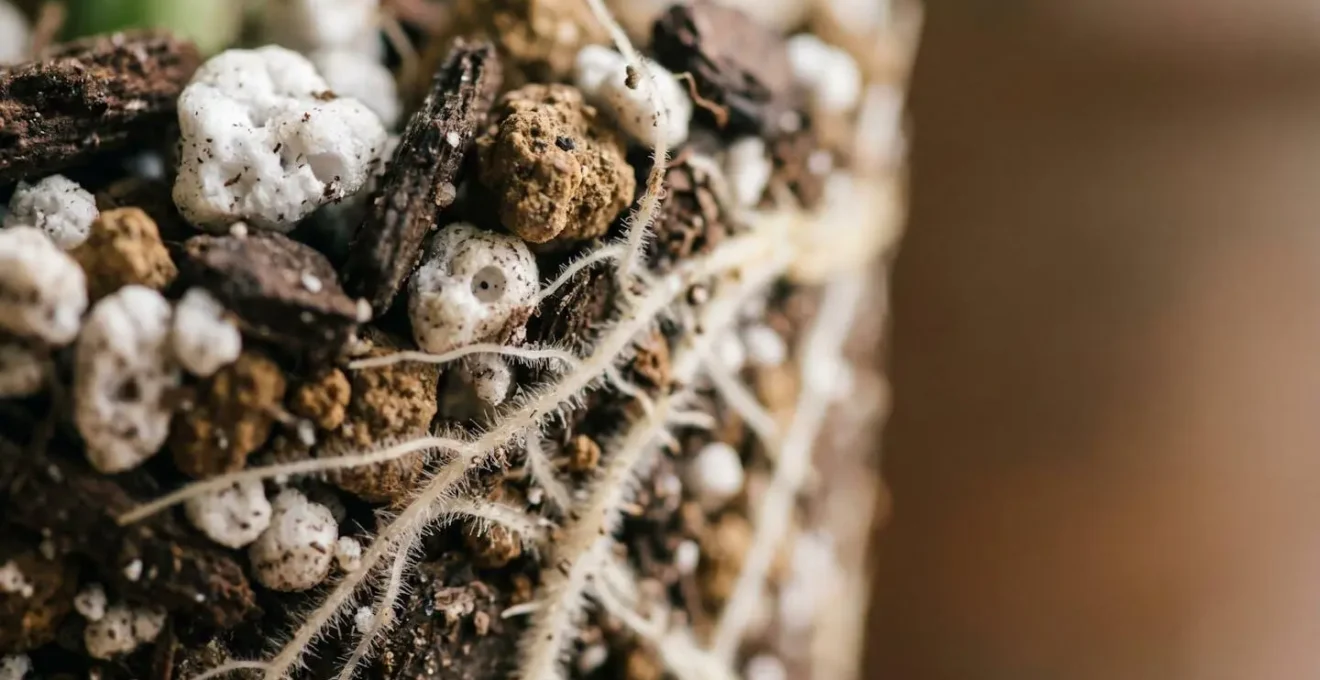
Contrary to popular belief, feeding a struggling potted plant is often a death sentence. The real issue isn’t hunger, but root suffocation caused by poor substrate porosity. This guide deconstructs the physics of soil aeration, revealing why prioritizing air in the root zone is far more critical for plant health than simply adding more nutrients. Mastering this single concept is the key to resolving most common houseplant failures.
It is the most common and frustrating cycle in container gardening. A beloved plant shows signs of distress—yellowing leaves, stunted growth. The immediate reaction is to provide care, which almost always means watering and adding fertilizer. Yet, instead of reviving, the plant’s decline accelerates. You’ve provided food and water, the very building blocks of life, only to be met with further decay. This paradox is where most plant owners get trapped, blaming themselves for a “black thumb.”
The conventional wisdom of “don’t overwater” or “feed on a schedule” is not wrong, but it is dangerously incomplete. It treats the symptoms without diagnosing the underlying disease. The true problem is rarely a simple lack of nutrition. In a closed pot environment, the plant’s most critical and most limited resource is not food, but oxygen for its roots. The health of a potted plant is dictated first and foremost by the physical structure of its growing medium.
But what if the key wasn’t in the chemical composition of your fertilizer, but in the physical architecture of your soil? This guide shifts the focus from feeding the plant to enabling the plant to breathe. We will treat the potting mix not as a nutrient soup, but as a mechanical support system whose primary job is to manage the delicate balance of air and water. Force-feeding a suffocating plant is like force-feeding a person who can’t breathe; the solution is not more food, it’s to clear the airway.
Throughout this technical analysis, we will deconstruct the science of substrate structure, from selecting the right mineral additives to diagnosing soil compaction and executing emergency rescue techniques. By understanding the paramount importance of air-filled porosity, you will gain a foundational skill that elevates you from a plant owner to a true substrate engineer.
Table of Contents: A Substrate Formulator’s Guide to Root Aeration
- Perlite or Vermiculite: Which Additive Suits Water-Loving Plants?
- The Drainage Test: How to Calculate Air-Filled Porosity in Your Pot?
- The ‘Slump’ Effect: Why Potting Mix Lose Porosity After 6 Months?
- How to Re-Oxygenate Old Potting Soil Without Replacing It?
- Grit to Soil Ratios: The Perfect Mix for UK Succulent Survival?
- The Pot-Bound Trap: When Fibrous Roots Strangle Your Container Plants
- The Decorative Pot Trap: Why Cover Pots Cause 50% of Houseplant Deaths?
- Preventing Fatal Root Rot: The Hydrogen Peroxide Rescue Technique
Perlite or Vermiculite: Which Additive Suits Water-Loving Plants?
The foundation of any high-performance substrate is the selection of inorganic amendments. These components are not filler; they are the architectural engineers of the root zone. The most common choice gardeners face is between perlite and vermiculite. Though often confused, their physical properties are nearly opposite, making their correct application critical. Perlite is a volcanic glass, expanded by heat into a lightweight, porous material. Its primary function is to create air space. It holds very little water on its surface and promotes rapid drainage, making it essential for plants that require excellent aeration like succulents and epiphytes.
Vermiculite, a hydrated laminar magnesium-aluminum-ironsilicate, acts like a sponge. It has an exceptional water-holding capacity, absorbing many times its weight in water and releasing it slowly. This makes it suitable for seed starting and for moisture-loving plants like ferns, but a significant liability in a general-purpose houseplant mix. Overusing vermiculite dramatically reduces air-filled porosity (AFP) when saturated, increasing the risk of anaerobic conditions that lead to root rot. For most “water-loving” plants, the goal is not constantly wet soil, but consistently available moisture with persistent aeration. Therefore, even for a Calathea, a mix high in perlite is often superior to one with vermiculite.
The following table, based on an analysis of soil amendment characteristics, clarifies the distinction:
| Characteristic | Perlite | Vermiculite |
|---|---|---|
| Water Retention Capacity | Absorbs 4x its weight in water | Absorbs 16x its weight in water |
| Primary Function | Improves drainage and aeration | Retains moisture for longer periods |
| Best For | Succulents, cacti, well-draining mixes | Seed starting, moisture-loving plants |
| Physical Behavior | Increases air space in soil | Keeps soil damp for extended periods |
| Risk When Overused | May reduce water retention excessively | Increases risk of root rot and fungal diseases |
More experienced growers often move beyond these common options to more stable materials. For instance, pumice is increasingly preferred for long-term plantings. Unlike perlite, it is heavier, chunkier, and does not float to the surface during watering. Its robust structure provides permanent drainage channels that do not break down over time, making it a superior choice for mature Monsteras, Philodendrons, and other aroids that remain in their pots for several years.
Choosing the right amendment is a strategic decision that directly engineers the physical environment of the roots, pre-emptively solving problems that fertilizer can never fix.
The Drainage Test: How to Calculate Air-Filled Porosity in Your Pot?
Air-Filled Porosity (AFP), also known as macroporosity, is the volume of a substrate that holds air after it has been saturated with water and allowed to drain freely. It is the most critical metric for root health, yet it cannot be easily measured at home with precision. However, you can develop a deep, intuitive understanding of your pot’s AFP using simple sensory tests. These are not scientific measurements, but qualitative diagnostics that train your senses to recognize the difference between a well-aerated medium and a suffocating, waterlogged one.
The goal is to assess the physical state of the soil immediately after drainage. A substrate with high AFP will feel noticeably lighter and sound more hollow than one with poor aeration, which will retain a large volume of water, feel dense, and sound dull. This is because water has displaced the air that should be occupying the large pores between soil particles. Learning to perform these quick checks before and after watering is a powerful diagnostic habit.
You can perform these three simple sensory tests to gauge your substrate’s aeration without any special equipment:
- The Lift Test: After watering thoroughly, wait 10 minutes then lift the pot. A well-aerated pot feels pleasantly moist but surprisingly light. A waterlogged pot feels heavy like a brick.
- The Tap Test: Gently tap the side of the pot with your knuckle. A well-aerated pot produces a hollow, resonant sound. A compacted, waterlogged pot sounds dull and thud-like.
- The Chopstick Aeration Test: Gently poke the soil with a wooden chopstick to check for resistance. Well-aerated soil offers minimal resistance and the chopstick comes out with visible air pockets along its length. Compacted soil feels dense and hard to penetrate.
Mastering these tests transforms your plant care from a routine schedule into a responsive dialogue. You are no longer just “watering on Tuesday”; you are actively assessing the physical condition of the root environment and responding accordingly. This is the fundamental difference between a gardener who follows rules and a substrate engineer who understands principles.
This hands-on assessment of porosity is far more valuable than any generic watering schedule, allowing you to catch and correct aeration issues long before they manifest as visible plant stress.
The ‘Slump’ Effect: Why Potting Mix Lose Porosity After 6 Months?
A fresh bag of potting mix feels light and airy, full of promise. Six months later, the same mix is often a dense, compacted mass that has visibly sunk in the pot. This phenomenon, which can be termed the ‘slump’ effect, is the primary reason why container plants require repotting. It is not about “running out of food”; it is about the physical degradation and collapse of the substrate structure, leading to a catastrophic loss of air-filled porosity. The main culprit is the decomposition of organic matter.
Components like peat moss, coir, and fine bark, which initially provide structure and water retention, are consumed by microorganisms. As they break down, their particles become smaller and smaller, filling the large air pockets (macropores) that are essential for root respiration. The mix becomes finer, denser, and more compact with each watering cycle. This is a purely physical process that chokes the roots, and it is exacerbated by the downward pressure of watering. As horticultural studies confirm, soil compaction decreases oxygen diffusion and increases waterlogging risk, creating the perfect environment for anaerobic pathogens.
The visual difference between a fresh and a degraded substrate is stark, yet often overlooked inside an opaque pot. This structural collapse is a primary driver of plant failure in long-term container growing.
As this illustration shows, the initial lofty structure filled with visible air pockets is completely lost over time. The soil on the right has not only lost volume but has also lost its most vital function: the ability to hold air. At this stage, the root system is under severe stress. Adding fertilizer to a plant in this condition is not just ineffective; it’s harmful, as the stressed roots cannot absorb nutrients and the added mineral salts can further damage them.
Understanding the ‘slump’ effect shifts the gardener’s perspective from a purely chemical one (feeding) to a physical one (maintaining structure). It clarifies that repotting is not just about providing more space, but about restoring a breathable environment for the roots.
How to Re-Oxygenate Old Potting Soil Without Replacing It?
When you’ve diagnosed compacted soil and the ‘slump’ effect has set in, repotting into a fresh, airy mix is the ideal solution. However, this is not always practical, especially for large, unwieldy plants or when you are outside of the ideal growing season. In these situations, there are several techniques a substrate formulator can employ to perform an “in-situ” re-oxygenation, creating temporary air channels to provide immediate relief to suffocating roots.
These methods are not a permanent replacement for repotting, but they can serve as a critical intervention to bridge the gap and prevent the onset of fatal root rot. The objective is simple: to mechanically re-introduce macropores into the compacted soil profile, improving gas exchange at the root zone. This can be achieved from the top down or by creating vertical channels through the soil mass. It’s a form of palliative care for the substrate, buying the plant valuable time until a full repot can be performed.
The following checklist provides three distinct methods to restore aeration to a compacted pot. They can be used individually or in combination for maximum effect.
Action Plan: Reviving Compacted Soil
- The Soil Kebab Technique: Use a chopstick or wooden skewer to gently poke 6-8 deep vertical holes all the way through the soil to the bottom of the pot. This creates instant vertical air channels directly to the lower root zone where gas exchange is most critical.
- Top-Dressing for Air: Remove the top inch of compacted soil and replace it with a 1-inch layer of a very coarse, airy material like orchid bark, coco husk chips, or LECA clay pebbles. This improves gas exchange at the soil surface and prevents a hard crust from forming.
- Biochar Amendment: Carefully work a small amount (10-15% by volume) of horticultural charcoal or biochar into the top 2-3 inches of soil. Its hyper-porous structure creates thousands of permanent micro-pockets of air and also provides a habitat for beneficial microbes.
These techniques directly address the physical problem of compaction. The “Soil Kebab” method is particularly effective as it bypasses the dense upper layers and delivers oxygen directly to the deeper roots. Combining this with an airy top-dressing creates a comprehensive aeration solution that can significantly improve a plant’s condition within weeks.
By applying these physical fixes, you are acting as a true soil engineer, manipulating the substrate’s structure to restore its primary function: providing a stable, breathable environment for the root system.
Grit to Soil Ratios: The Perfect Mix for UK Succulent Survival?
The principles of porosity become even more extreme when dealing with succulents, especially in a climate not native to them, such as the damp and often overcast conditions of the United Kingdom. For succulents, which are adapted to arid environments with rapid drainage, a standard commercial potting mix is a guaranteed death sentence. The high organic content holds too much moisture for too long, leading inevitably to rot. The “perfect mix” for succulent survival in such a climate must prioritize drainage and aeration above all else, even at the expense of water and nutrient retention.
The goal is to create a substrate that is barely hospitable to moisture. A common and effective starting ratio for a “gritty mix” is a simple 1:1 ratio of inorganic grit to organic soil. However, for the UK’s climate, a more aggressive ratio of 2:1 grit-to-soil is often safer. This means the final mix is composed of roughly 66% mineral components and only 33% organic matter. This ensures the pot dries out quickly, even with high atmospheric humidity and lower levels of sunlight for evaporation.
The components of this mix are chosen for their physical properties:
- Inorganic ‘Grit’ (66%): This is the structural foundation. An ideal blend would be equal parts pumice (for porous structure), coarse horticultural grit or fine granite chips (for drainage and weight), and perhaps some Akadama or LECA for varied particle size. These materials do not break down and provide permanent macroporosity.
- Organic ‘Soil’ (33%): This component’s role is minimal, primarily to hold a tiny amount of moisture and nutrients for the roots to access. A coarse-grade coco coir or a sifted, bark-heavy compost is far superior to fine peat moss, as it resists compaction longer.
This approach fundamentally flips standard potting mix formulation on its head. We are not trying to create a moist, rich medium. We are creating a dry, airy pile of rocks with just enough organic matter to prevent the plant from dying of thirst between waterings. This is the structural secret to succulent survival in a damp climate.
By engineering the substrate to counteract the environmental challenges, you provide the plant with the conditions it needs to thrive, proving once again that structure trumps nutrition.
The Pot-Bound Trap: When Fibrous Roots Strangle Your Container Plants
Roots only circle the pot because they are searching for oxygen along the pot’s edge. A loose, well-aerated soil encourages roots to explore the entire soil volume.
– Darryl Cheng, House Plant Journal
The term “pot-bound” or “root-bound” is often misunderstood as a simple lack of space. The reality, as highlighted by experts like Darryl Cheng, is a far more desperate search for a vital resource: oxygen. When the central soil mass becomes compacted and anaerobic (due to the ‘slump’ effect), the only place left with adequate gas exchange is the thin gap between the soil and the pot wall. Roots, in their search for oxygen, are driven to this outer perimeter. They don’t circle because they’ve hit a wall; they circle because the wall is the only place left to breathe.
This creates a self-strangulating system. A dense mat of fibrous roots forms a barrier around the soil ball. This root-shield becomes hydrophobic when it dries, making it difficult to re-wet. It also prevents any new roots from penetrating the central soil mass, which may still hold water. This leads to the classic pot-bound paradox: the outer roots are desiccated, while the central roots may be rotting in stagnant, unaerated soil. The plant is simultaneously dying of thirst and drowning.
The visual of a pot-bound plant is a clear indictment of a failed substrate. The tangled, circling roots are a physical record of the plant’s struggle against suffocation.
This dense cage of roots must be physically broken up during repotting. Simply placing this tangled mass into a larger pot is one of the most common gardening mistakes. The roots will continue to circle within their old memory, failing to colonize the new soil. You must manually tease apart the bottom roots and even make a few vertical cuts along the side of the root ball to break the circular pattern and encourage outward growth into the new, well-aerated substrate.
Understanding this biological driver reframes the problem entirely. A pot-bound plant is not a sign of vigorous growth that needs a bigger home; it is a sign of a failing substrate that needs to be replaced.
The Decorative Pot Trap: Why Cover Pots Cause 50% of Houseplant Deaths?
The decorative pot, or cachepot, is an essential element of interior design, but it is also one of the most lethal devices in a novice gardener’s arsenal. The problem is simple: it has no drainage hole. When a nursery pot is placed inside a cachepot, it creates a closed system—a perfect reservoir for excess water. This “trap” is likely responsible for a vast number of houseplant deaths attributed to “overwatering,” when the true culprit is drowning by design.
Every time the plant is watered, excess liquid drains from the nursery pot and collects in the bottom of the cachepot. The bottom inch or two of the soil in the nursery pot is now sitting in a stagnant pool of water. This creates a “perched water table” inside the pot. The soil in this zone becomes 100% saturated, with zero air-filled porosity. Roots in this zone are not just wet; they are submerged, cut off from all oxygen. Anaerobic bacteria begin to thrive, and root rot is initiated within hours.
The gardener, seeing only the dry surface of the soil, may water again, compounding the problem. They are completely unaware of the swamp festering at the bottom of the decorative pot. Fortunately, this common and deadly trap can be completely avoided with two non-negotiable habits.
- The Secret Lift Solution: Always create a buffer zone. Place a 1-2 inch hidden layer of gravel, LECA clay pebbles, or even inverted plastic bottle caps in the bottom of the decorative pot. This physically elevates the nursery pot, ensuring its base is never sitting in the collected water.
- The 15-Minute Rule: This is the most crucial habit. After watering the plant (ideally in a sink), allow it to drain freely for at least 15 minutes. Then, and only then, place it back in its decorative pot. If you water in-situ, you must physically lift the nursery pot 15 minutes later and tip out any and all water that has collected in the cachepot. Every single time.
These two habits transform the decorative pot from a death trap into a safe and stylish accessory. They are simple, mechanical solutions to a simple, mechanical problem.
By acknowledging the risk and implementing these protocols, you ensure your aesthetic choices do not compromise the fundamental aeration needs of your plants.
Key Takeaways
- Root health is primarily dictated by the physical structure and air-filled porosity of the substrate, not its nutrient content.
- Potting mix degrades over time, leading to a ‘slump’ effect where compaction eliminates air pockets and suffocates roots.
- Common practices, like using decorative pots without proper drainage protocols, create anaerobic swamps that are a leading cause of plant death.
Preventing Fatal Root Rot: The Hydrogen Peroxide Rescue Technique
Root rot is the inevitable outcome of prolonged anaerobic conditions in the substrate. It’s a fungal disease that thrives in the absence of oxygen. As horticultural research consistently shows, plant roots unable to breathe in saturated soil will quickly begin to decay, turning from healthy, firm white roots to brown, mushy, and foul-smelling ones. Once it starts, it can spread rapidly and kill an entire plant. While prevention through proper substrate engineering and watering is paramount, there is a chemical intervention that can be used as a last-ditch emergency rescue: a hydrogen peroxide (H₂O₂) drench.
Hydrogen peroxide’s chemical formula is H₂O₂. When it comes into contact with organic material in the soil, it rapidly breaks down into water (H₂O) and a free oxygen radical (O). This has two effects. First, the release of the oxygen radical kills off the anaerobic bacteria and fungal spores causing the rot. Second, it provides an immediate, powerful blast of oxygen to the surviving, suffocating roots, giving them a chance to recover. This is an aggressive, “scorched earth” treatment and should not be used regularly, as it is non-selective and will also kill beneficial microbes in the soil.
This technique is the emergency room surgery of plant care. It’s a high-risk, high-reward procedure for a plant that is already on the verge of death. The protocol must be followed precisely for any chance of success.
- Safety and Dilution: Use only standard 3% pharmacy-grade hydrogen peroxide. The dilution is critical: mix one tablespoon of 3% H₂O₂ per one cup of water. Never use it undiluted.
- Application: Carefully remove the plant from its pot. Gently rinse away as much of the old, infected soil as possible. Using sterilized scissors, meticulously trim away all roots that are brown, black, soft, or mushy. Soak the remaining (hopefully white and firm) root ball in the diluted H₂O₂ solution for 10-15 minutes. You will see fizzing; this is the oxygen being released.
- Aftermath and Recovery: Immediately repot the plant in a brand new, sterile, and extremely well-draining potting mix. Do not reuse the old soil. Water sparingly. Do not use the H₂O₂ treatment again for at least six months. Focus on rebuilding soil health with organic inputs like worm castings once the plant shows signs of recovery.
This rescue mission is a testament to the importance of aeration. The very act of chemically forcing oxygen into the root zone highlights what was missing all along.
Ultimately, mastering the principles of substrate aeration is the definitive step to moving from a reactive plant owner, dependent on emergency rescues, to a proactive container gardener who engineers success from the soil up.